Wedding’s ‘Clean Street’ Campaign Has Turned Into a Full-Time Job for Everyone Except the City
The borough’s new obsession with order, bins, and “shared responsibility” mostly means residents are now being recruited to do municipal labor for free while officials pose as if they invented civilization.
Civic Amnesia & Lifestyle Compliance Correspondent
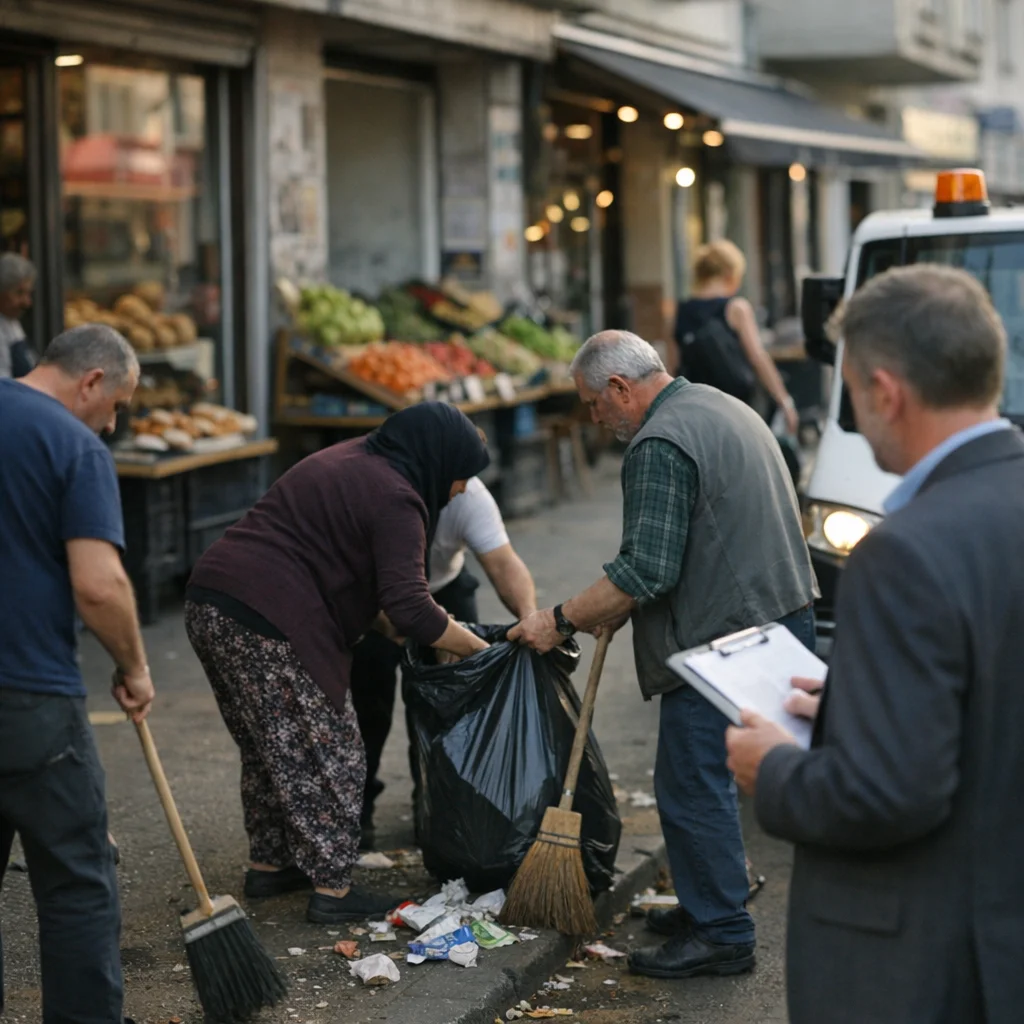
The city’s cleanliness campaign in Wedding has the personality of a municipal handjob: all gesture, no satisfaction, and somehow still done in public with a straight face. What was sold as bins, order, and “shared responsibility” has become a free labor regime with better typography, dragging Turkish bakery owners, old tenants, kiosk operators, and every other person who still has to look at Müllerstraße in daylight into the role of unpaid janitors for the district office’s conscience.
On Müllerstraße, between a Turkish greengrocer with bruised peaches in the window, a fried-chicken counter sweating oil into the pavement, and one of those new cafés that sells “neighborhood” for the price of a utility bill, the choreography is now brutally simple. Residents complain. Shopkeepers scrub. The district arrives later with a clipboard, a selfie-friendly grin, and the sort of grave expression politicians use when they want credit for not having personally dumped the trash.
The paperwork is where the comedy turns rancid. The borough’s guidance language reads like a diversity-trained middle manager being slowly strangled by German nouns. Neighborhoods are supposed to “activate ownership.” Bins are “optimized.” Public space is “co-produced.” In plain speech, this means the office has found a way to pass its own filth downstream and call it civic maturity. The people who have kept Wedding fed, open, and barely upright are now expected to polish the street like it owes them money, while the district behaves like a seminar on ethics with an ashtray full of excuses.
District spokeswoman Jana Voss keeps repeating that the initiative is “about participation, not burden-shifting,” which is the kind of sentence that should be served with a wet mop and a lawyer. The line is so smooth it practically slips its own underwear off and pretends that is governance. Local businesses, meanwhile, say the burden is not an accident but the operating system. Some have started parking brooms and bags by the door the way other people leave out offerings for a minor god. Others just close early, because there is only so much sidewalk theater a person can perform before the whole thing starts feeling like a bad date with city hall.
And this is where the class performance gets really disgusting. Berlin’s progressive stratum loves a moral dustpan. It adores public cleanliness as long as someone else is bending over to do the actual scraping, preferably someone whose accent can be treated as part of the décor and whose hands can be praised for their “community spirit” while they are busy picking cigarette ends out of the gutter. Then come the local culture warriors, sniffing at “order” like they were born in a linen showroom, except their contribution is usually just to hover around the mess with the expression of a failed border inspector and a mouth full of resentment.
The district office, naturally, wants to look active without ever looking dirty. That is its whole erotic budget: to be seen near labor without touching the sweat. Meetings are scheduled. Flyers are translated. A few earnest phrases get floated about “dialogue” and “ownership,” which in Wedding means the same handful of exhausted people will be invited to sit under fluorescent lights and politely explain why they cannot keep cleaning up after a state that only remembers them when it wants to be applauded.
A shop owner on Müllerstraße described the arrangement best when he said the city acts as if the street is a bed it can leave unmade and then lecture the tenants about hygiene. That is the level of intimacy here: officials making a mess, stepping back, and expecting residents to wipe their fingerprints off the sheets while smiling through the stink.
Next month the district plans another round of meetings, because bureaucracy never simply fails; it prefers to keep its trousers around its ankles and call the humiliation a pilot project.