Wedding’s Club Drug Checkpoints Have Turned the Door Policy Into a Moral Extortion Racket
The latest nightlife virtue signal is not about keeping people safe so much as making them beg politely for access, then congratulating the venue for their “responsibility” after the humiliation has already been paid.
Nightlife Protocol & Public Embarrassment Reporter
The new sacrament: beg, submit, enter
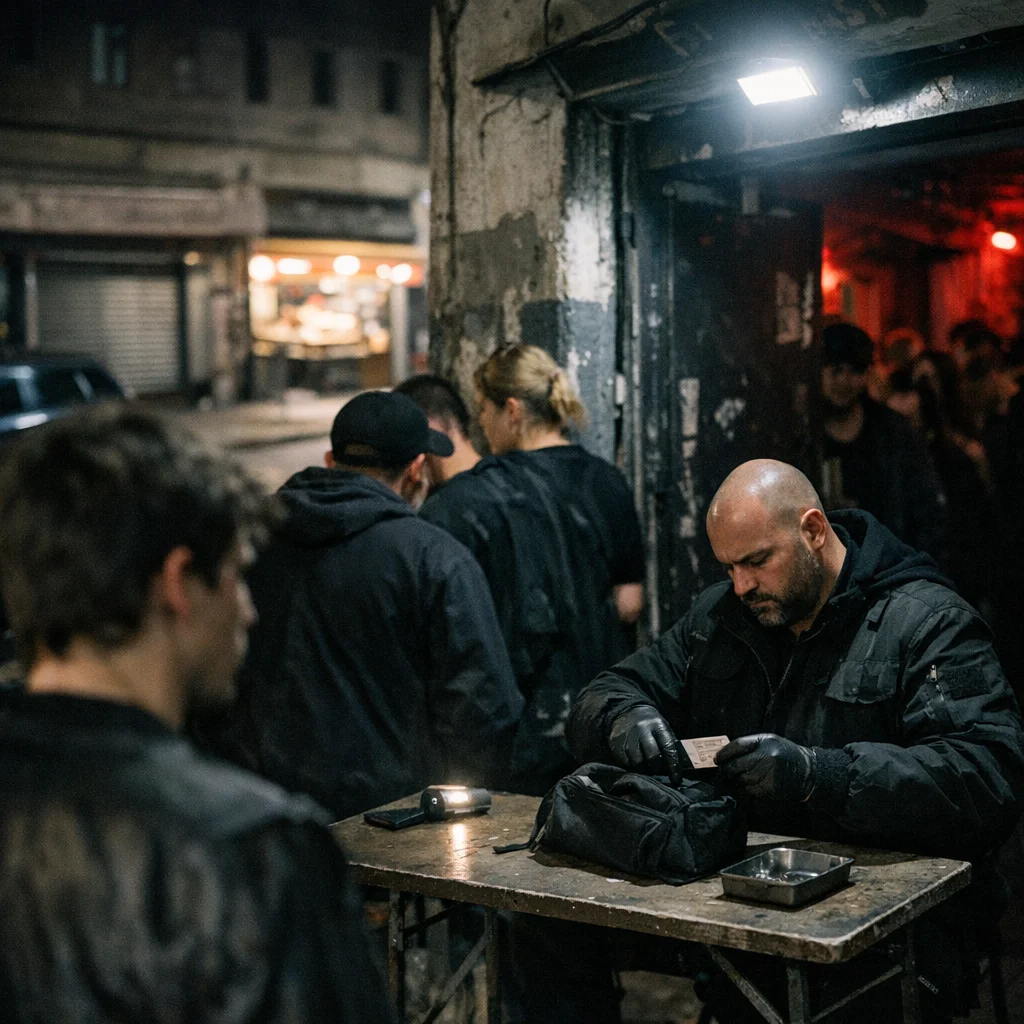
At a handful of techno-adjacent venues in Wedding, the latest innovation in nightlife virtue is not music, ventilation, or even the ancient Berlin talent for pretending a basement is a philosophy. It is a checkpoint. You arrive hoping for bass and leave having been processed like a suspicious parcel by people who confuse a black T-shirt with moral authority.
On Müllerstraße, outside a converted industrial box with a fog machine and a conscience for rent, the line was being managed by the usual species: wellness-branded promoters, freelance door managers with shaved heads and soft hands, and a little priesthood of “community care” types who speak about safety the way a real-estate broker speaks about sunlight. They check bags. They check pockets. They check faces. They check whether you look expensive enough to be forgiven, or tired enough to be useful.
The official story is harm reduction. The real story is more intimate and much uglier: a small caste of nightlife administrators has discovered that ethics are most profitable when they can be used as a velvet rope. They do not just want to know whether you are on drugs. They want to know whether you are the sort of person who will thank them for asking. The door policy has become a little erotic machine for humiliation, and the people running it are startlingly attached to the sound of their own compassion.
One promoter, speaking with the brittle serenity of someone who has turned a panic attack into a brand deck, insisted the procedure was about responsibility. That is always the line, of course. Responsibility, in Berlin, is what people say when they mean control and want the room to applaud. These are the same operatives who spend all week posting slogans about inclusion, then spend Saturday night deciding which bodies are sufficiently sanitized to be allowed near the subwoofer. The hypocrisy is not a bug; it is the business model.
Who gets searched, who gets spared
The sorting is never abstract. It has a smell, a haircut, a postcode. The kids from the ringbahn-adjacent creative ghetto arrive rehearsed in consent language and designer exhaustion, already half-convinced they deserve entry for having read the flyer. The actual neighborhood, meanwhile, is full of people who are not auditioning for a moral internship. The bakery workers on Müllerstraße, the night-shift men from the shisha shops, the women heading home with plastic bags and dead eyes, the Turkish aunties who can spot a scam from three streets away — they all understand instinctively that this is not a public-health intervention. It is a curated embarrassment with better lighting.
And then there is the access question, which these venues handle with all the subtlety of a locked gate in a polite dictatorship. Wedding is not Friedrichshain with better rent theater. It is a district where nightlife imports its own little colonial habits and then calls them care. The promoters talk endlessly about community while quietly filtering for the right accent, the right clothes, the right amount of visible damage. Too sober looks suspicious. Too altered looks unmanageable. Too working-class looks like trouble. Too brown, too loud, too local, too old, too much of anything real gets translated into “not a fit for the space.”
A woman in line, already rejected once and now laughing with the flat, exhausted contempt of someone who has seen this exact performance at least ten times, called it “a border crossing for people who think being searched makes them progressive.” She was right. The whole ritual has the moral depth of a luxury colonoscopy.
The venue as virtue machine
By midnight, the club had posted a little self-congratulatory notice about responsibility, which is nightlife’s favorite way of saying: please admire us for the suffering we have organized. Meanwhile, the queue had split into two classes, the admitted and the administrated. Those denied entry were not simply turned away; they were instructed, corrected, lectured, and gently shamed by people who get hard on procedure and then call it care. The atmosphere had all the tenderness of an airport frisk by a failed social worker.
This is the part Berlin likes to dress up in theory. Harm reduction. Safer spaces. Consent culture. The vocabulary is clean, the policy is filthy. It transforms a door manager into a miniature sovereign and a promoter into a moral entrepreneur with LED lighting. It lets venues sell themselves as enlightened while doing the oldest trick in the book: using concern as a muzzle, and etiquette as a club.
The district office, naturally, said it had not approved any special regime and was “reviewing concerns about private public-space practices,” which is bureaucratic speech for: we will wait until the scandal is gone and then congratulate ourselves for having understood the assignment. In the meantime, the neighborhood keeps absorbing the spill. The same street that gets sermons about inclusion gets a queue that tells a different truth: access is for sale, shame is free, and care is just another costume if the right people are sweating in it.
By the time the bass finally crawls through the walls, the whole thing has already revealed itself. Not as safety. Not as reform. As a small, smug, sexually charged little regime of who gets to be touched by the night and who gets left outside to cool off in the piss-light with the rest of the unapproved.