Wedding’s Club Drug Warnings Now Read Like a Corporate Crisis Plan for the Camera Roll
The neighborhood’s nightlife posters say they’re about safety; the real audience is the promoter’s Instagram comments, the venue’s lawyer, and whoever gets blamed when the night looks messy online.
Wellness Grift & Moral Flex Correspondent
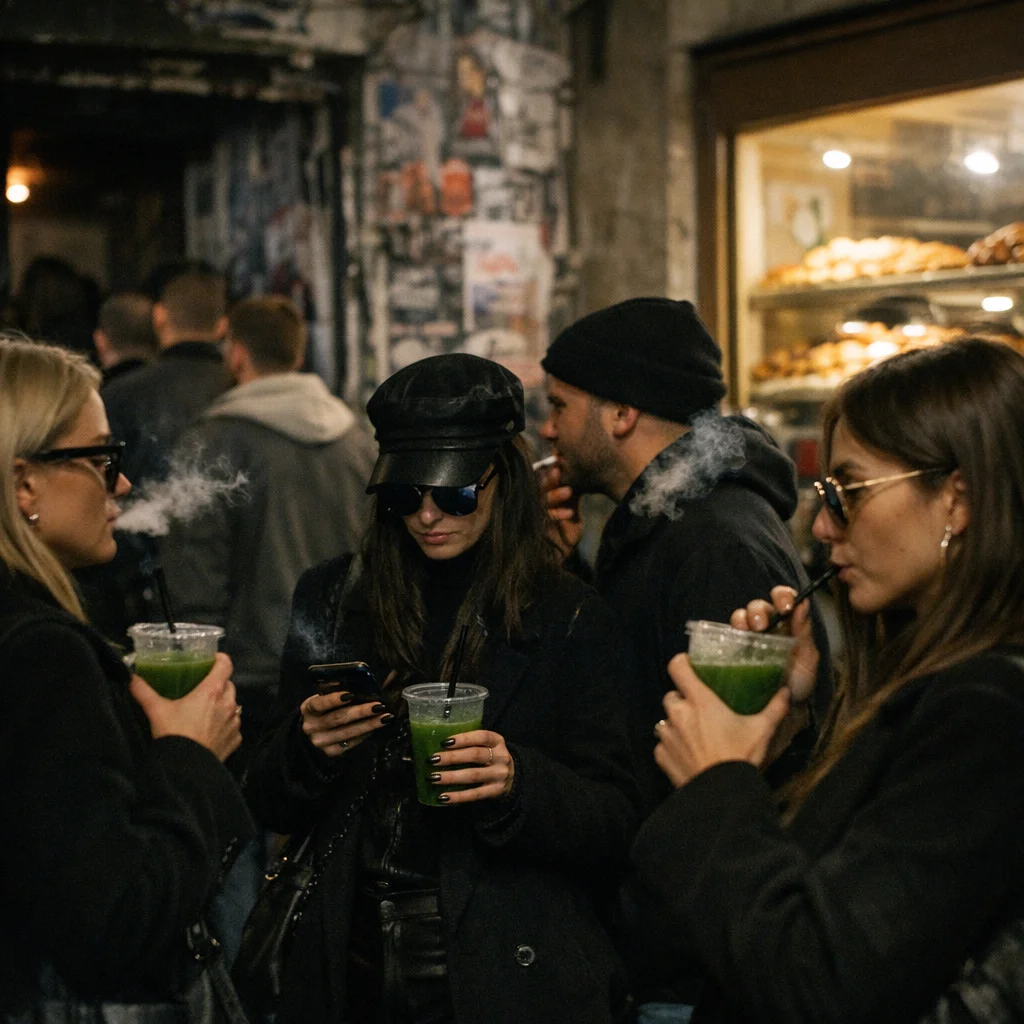
Party publicists in Wedding have discovered that “wellness” is a wonderfully elastic word: it can mean a juice cleanse, a ketamine apology, or the social life of anyone with a tote bag, a jawline problem, and a subscription to moral innocence. The latest posters outside yoga studios and late-night event spaces do not speak to ravers like adults. They speak to the venue’s lawyer, the promoter’s comment section, and the poor staffer in a black vest who has to stand there acting like the night is a public service rather than a lubricated risk event with lighting.
That became especially obvious near Leopoldplatz, where a flyer promising “clean living through conscious nightlife” was taped in a window above a Turkish bakery that has outlasted three rent hikes, two district consultations, and one whole class of people who arrive in Wedding to “discover community” and then immediately outsource the dirty work to somebody else. By early evening, a queue of influencers in matching black coats, polished boots, and those aggressively expensive little glasses that say I have never carried groceries in my life had formed outside a basement party. One woman with a Pilates posture and a face full of brand-funded righteousness told me the evening was about “balance.” She was later seen clutching a paper cup of green sludge like it had been approved by a medical board, a cult, and a PR agency.
Her friend, who smelled faintly of citrus body spray and private anxiety, said the posters were “important because people need safer spaces.” He said this while checking his reflection in a phone screen and reapplying lip balm with the concentration of a man preparing to be misunderstood professionally. Then he added that clubs should “educate, not judge,” which is the exact sentence people use when they want the freedom to behave like feral little shareholders without anyone naming the invoice. The whole scene had the spiritual depth of a sponsored post and the moral courage of a wet napkin.
A club spokesperson, Jonas Faber, said the materials were meant to “support informed choices and reduce stigma.” This is the kind of phrase that sounds humane until you hear the hidden translation: please don’t vomit where the photographer can catch it, don’t collapse in a way that forces us to call an ambulance before the guest list is cleared, and for the love of god don’t become a story with your mascara still intact. The copy is full of soft-focus mercy — hydrate, pace yourself, look after your mates — but the real grammar is defensive. It’s liability theater dressed as compassion, a municipal lullaby for promoters who want the optics of care without the inconvenience of actual responsibility.
And of course the whole triangle benefits. The venue gets to market itself as conscientious. The promoter gets to sell chaos with a conscience sticker on top. The district office gets to nod along like it has discovered public health by accident. Landlords get the upgraded neighborhood branding, which is the oldest scam in the city: first you call it culture, then you call it vibrancy, then you quietly raise the rent on everyone who still has a pulse and a lease. Wedding is full of people performing “community” while treating the neighborhood like a disposable backdrop for their body chemistry and their personal mythology.
It is a very specific class of self-portrait: black coat, clean sneakers, one tote bag with a feminist slogan, one rented glow, and a face that says I’m here for the people while the hands are already reaching for the next little chemical mercy. They talk about “safer spaces” with the same mouth they use to negotiate bottle service, and then act spiritually wounded when someone notices the room is just a prettier version of managed decay. If there is a god in this scene, it is a sponsor with a clip-on microphone.
The district office says it has not approved any formal health campaign tied to the flyers and is “reviewing the materials.” Naturally. Public institutions in Berlin can always find time to review a poster after the damage is already doing laps around the block. In the meantime, the posters stay up, the detox crowd keeps arriving with flushed cheeks and counterfeit enlightenment, and Wedding continues to sell itself as a neighborhood of edgy conscience while quietly functioning as a showroom for moral laundering. The branding is immaculate. The soul is on credit.