Wedding’s Club Promoters Have Turned Consent Into a Premium Feature, and the Rich Kids Are Thrilled to Pay for It
A growing nightlife circuit in the neighborhood now sells “safer space” like a VIP upgrade: separate entrances, special wristbands, a code of conduct nobody enforces, and enough trauma language to make the whole thing.
Nightlife Identity & Self-Deception Correspondent
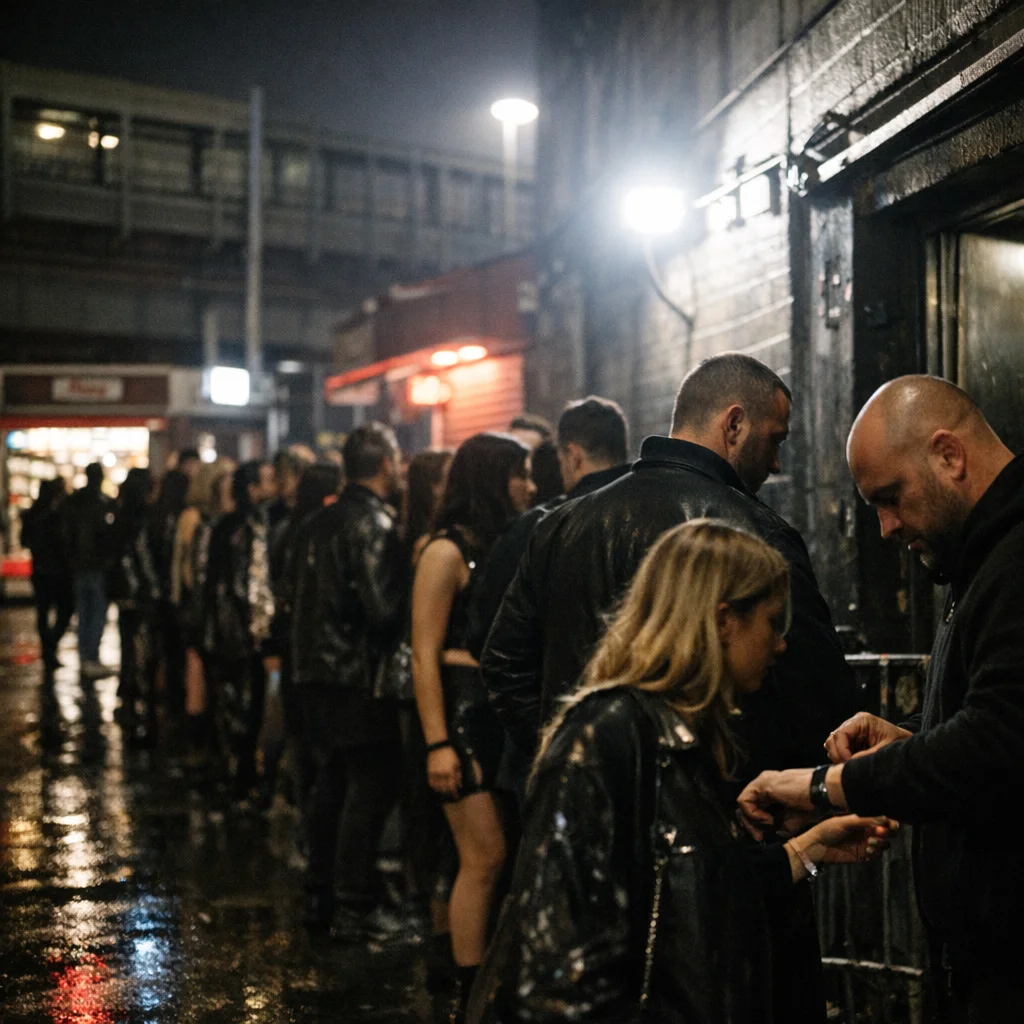
At a packed warehouse venue off Müllerstraße in Wedding on Friday night, the city’s favorite little fraud was on full display: consent, but with a cover charge. The promoters were selling reassurance the way a dead-eyed startup sells inconvenience as innovation. Separate entrance. Special wristband. Code of conduct. Reporting channel. Support team. All the furniture of ethical nightlife, arranged with the solemnity of a tax scam.
Outside, the line curled past a closed kebab shop, a butcher with fluorescent lights still buzzing behind the glass, and a Späti doing what Spätis do best: absorbing the spillover from everybody else’s bad decisions. A U6 train screamed through the dark, full of people going home, work, or nowhere worth naming. That was the neighborhood’s actual pulse. Inside, a certain class of very online ravers were paying extra to cosplay conscience while pretending they had not spent the entire week cultivating the exact appetites they were now condemning.
The whole setup was a masterpiece of institutionalized self-pleasure. The door staff looked like they had been hired from a border checkpoint and trained by a branding agency. The hosts spoke in the damp, therapeutic vocabulary of people who say “accountability” the way developers say “community”: as a decorative lie for rent. Guests were promised boundaries would be “held,” which in Berlin usually means held until someone important arrives, smells expensive, and wants the rules adjusted around their erection of the evening.
“We’re trying to make the night more responsible,” said Maja Feld, 29, one of the event’s organizers, who requested anonymity because she understands, on some level, that naming yourself while laundering hierarchy is a bit too much face for one life. She described the premium lane as “a tool for safer access.” Translation: the anxious rich can buy their absolution in advance, while everybody else can remain in the line, sweating through their thrift-store fetishwear and pretending they chose this humiliation freely.
The target audience was obvious. Not regular club kids. Not the broke, horny, sleep-deprived people who actually make nightlife possible. This was for the promoter caste that learned to speak in workshop language, for the freelance consent consultants, for the art-world dependents with the dead eyes of people who have never paid full price for a moral position. They arrive dressed like a dissertation on desire, then act shocked when the room treats them like inventory.
A Turkish Späti owner nearby, who asked to be identified only as Cem because his cousin already thinks he is too generous with the ice machine and too opinionated about Berlin virtue, watched the queue with the expression of a man observing a new religion built out of old cowardice. “They want safety,” he said, “but only if it comes with a guest list.” He was not wrong. The city’s favorite scam is always the same: call class sorting care, call social anxiety ethics, call the velvet rope a community intervention and hope nobody notices the bruise underneath.
That is the real politics here. Consent has become a premium product, a brand asset, a risk-management strategy for people too vain to admit they are part of the problem. The language of harm reduction gets clipped onto the same machinery that already decides who is desirable, who is tolerated, who gets the side eye at the door, who gets dragged out for being inconvenient, and who gets to keep their hands clean while everyone else gets searched, scanned, and silently judged. It is not liberation. It is administrative foreplay.
And because Berlin cannot resist turning its shame into a concept, the whole thing came wrapped in anti-fascist manners and tasteful panic. The left-leaning guests got to feel protected while being appraised. The cynical hangers-on got to sneer at “woke club culture” while desperately trying to get inside it. The promoters, those little priests of controlled access, got to monetize fear and call it care. It was Foucault with bottle service, Debord with a guest list, and the aftertaste of a group chat that should have been left to rot.
By 3 a.m., the separate entrance was packed with people who wanted to be selected, the main room was hot enough to make everyone look slightly guilty, and a pair of men in immaculate black were arguing about boundaries in the exact tone used by landlords discussing deposits. One woman in a silver top kept repeating that she was “here for the politics,” which is usually what people say when they want the social thrill without admitting they came to be seen, desired, and mildly disciplined.
The venue says it will review feedback after the weekend. Naturally. Every racket in this town eventually learns to speak in the passive voice. For now, Wedding has a fresh little monument to elite discomfort: a night out where the rich can buy a cleaner conscience, the promoters can keep playing social worker with a velvet whip, and everybody else can stand in the cold pretending this is what progress smells like.