Wedding’s Club Safety Plans Are Just Brochures for Promoters Who Want Police Distance Without Police Shame
The official pitch is de-escalation, but the real service is reputational insurance: a laminated code of conduct, a volunteer wristband, and enough ‘community care’ language to make the same crowd that books coke.
Nightlife Identity & Self-Deception Correspondent
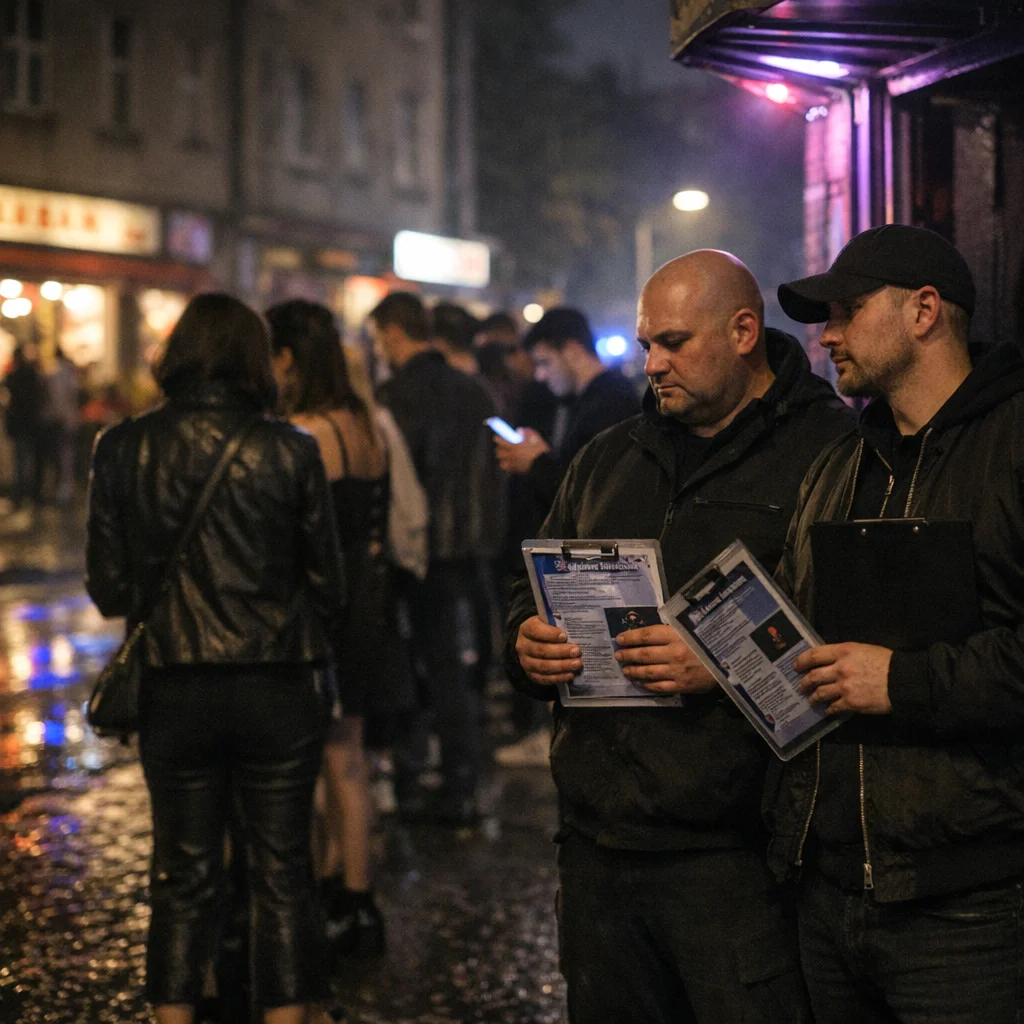
The promoters showed up with clipboards, immaculate sneakers, and that special expression common to people who confuse administrative language with a personality. By dusk, a handful of Wedding clubs and event spaces were already passing around a laminated safety pack meant to demonstrate seriousness about de-escalation, inclusion, and not getting publicly dragged when the weekend starts to smell like spilled gin and ego.
The scene was not born from a sudden moral awakening. It was requested by venue owners and nightlife marketers who want police distance without police shame. They want the district to believe they have internalized the lessons of social responsibility while still selling the same damp little fantasy: come in, get stamped, disappear into the dark, and let your conscience rub up against the bass until it shuts up.
One operator near Seestrasse said the packets were useful because “everyone needs to be on the same page.” That is how you know the page is fake. The real audience is not the dancers or the neighbors; it is the brittle little ecosystem of people who keep club culture alive by embalming it. PR interns with borrowed black outfits. NGO-adjacent promoters who say “community” the way landlords say “renovation.” Techno dads in expensive coats pretending they are still dangerous because they once bought ketamine from someone with taste.
The under-noticed detail is where this little morality play actually lives. Not in some generic “the city,” but in the Wedding circuit around Seestrasse, Müllerstraße, and the side streets where old workshop shells have been turned into nightlife containers with the emotional depth of a shoe box. The landlords like the new language because it makes their rent extraction feel civic-minded. The venue operators like it because it helps them survive resident complaints, neighborhood mediation sessions, and the municipal theater of “early dialogue” that always ends with everybody speaking in the same dead office voice while pretending the bass did not already win.
A resident consultation meeting was mentioned more than once by people involved, which is bureaucratic code for a ritual in which everybody gets to pantomime democracy while nothing changes except the font on the PDF. Police, for their part, are happy to admire any brochure that reduces the chance they will have to do actual work. The district office calls it “responsible event communication,” which is the sort of phrase that smells like toner and cowardice. It means: please keep the mess legible enough that we can continue funding the mess.
The safety pack itself is the kind of object that makes cynics feel briefly tender toward paper shredders. Laminated pages. Incident flowcharts. Pronouns on one page, emergency exits on another, a stern little paragraph about consent as if consent were a brand partnership. In practice, it gives staff a prop to hold when the room is already steaming with sweat, cocaine confidence, and the desperate friction of people who want to be touched without admitting they came here to be seen.
That is the real service on offer: not safety, but plausible deniability with a wristband. The clubs want the right to market danger as ambience while insulating themselves from the consequences of their own flirting with collapse. It is nightlife as a compliance fetish, a velvet rope around the same old appetite. The crowd calls it “community”; the owners call it “sustainability”; the city calls it “culture” and then asks for three copies.
A promoter who had spent most of the night rehearsing a statement about care said the pack helped venues “signal values.” Of course it does. So does a man in a cheap suit tugging at his collar before lying to your face. The whole arrangement is a little erotic in the ugliest possible way: the room wants to be dirty, the operators want to be respectable, and the district wants to be able to say it noticed the nudity without having to look directly at the organs.
By next month, several Wedding venues are expected to test the pack during staff briefings and door meetings, where the actual lesson will be simple: keep the vibe lubricated, keep the complaints procedural, and keep the public believing someone, somewhere, has taken responsibility. The city will call that progress. The promoters will call it care. Everyone else will be left standing outside in the wet, watching the same old appetite go back in through the side door with a fresh badge.