Wedding’s Cocaine Delivery Apps Have Turned Sobriety Into a Customer-Service Problem
The neighborhood’s party crowd now wants all the old drug chaos with none of the old inconvenience, so dealers are acting like fintech founders while users review them like bad restaurants.
By Lina Paypass
Night Economy & Digital Vice Reporter
The District Where Even Dealing Wants a Brand Strategy
Wedding has perfected a special kind of civic rot: the kind that arrives in a tote bag, says “creative sector,” and still expects you to Venmo it before the powder hits the table. The neighborhood’s cocaine-delivery-app crowd is not some glamorous underworld. It is a spreadsheet with cheekbones. It is freelancers, club promoters, gallery ghosts, and half-employed little governors of nightlife all pretending the mess is a lifestyle instead of a mortgage emergency with better lighting.
The product is never just the product. The pitch is frictionless vice for people who would rather not be seen sweating in the wrong stairwell. One tap, one encrypted chat, one anonymous drop near a bakery in Müllerstraße, and suddenly the same people who lecture everyone about sustainability are arranging narcotics with the bland efficiency of ordering oat milk. They want the old sins, but optimized. They want the old ruin, but with customer service and a receipt they can later delete.
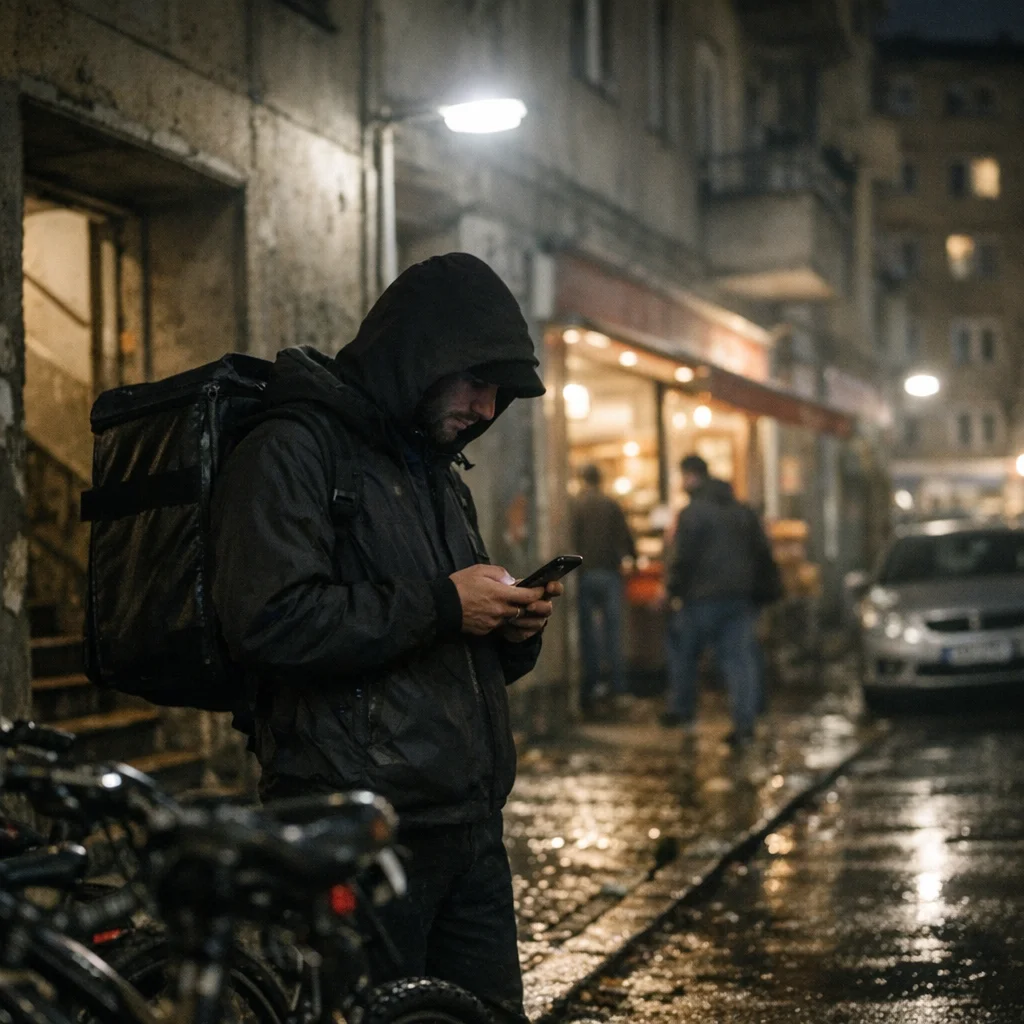
A typical transaction in Wedding now looks less like crime and more like outsourced humiliation. The courier arrives on a rented bike, looks apologetic, and checks a payment app while standing outside a stairwell that smells like urine, damp plaster, and somebody else’s expensive cologne. Upstairs, in a shared flat with two dead plants and a landlord email pinned to the fridge like a threat, the buyer pretends this is all very transgressive. It is not. It is a middle manager’s idea of danger: soft, punctual, and unlikely to interrupt brunch.
The social mechanism is not mysterious. It is just ugly.
The cocaine-app economy thrives because Berlin has made precarity feel artisanal. Rents keep climbing, wages stay ridiculous, and every “creative” job is really a waiting room with better typography. So the neighborhood learns to monetize restlessness. The club kid becomes a micro-distributor. The promoter becomes a logistics coordinator. The culture freelancer becomes a customer with opinions. The city calls this nightlife; the landlords call it proof of demand; the district office calls a meeting and then leaves by 7 p.m. to preserve its innocence.
And the city, naturally, loves the brand value. Wedding gets praised for its edge, its diversity, its “energy,” which is administrative language for: we enjoy the noise as long as it doesn’t reach our own street. Officials posture about nuisance and safety while happily enjoying the tax base, the headlines, the trendy decay, and the little halo of danger that makes an area feel alive to people who can always leave. They police the sidewalk, not the system. They fine the visible nuisance and ignore the economic scam that keeps producing it.
The users are no less theatrical. They speak in the language of harm reduction while behaving like bored aristocrats in borrowed sneakers. They complain about supply, as if they were reviewing a restaurant that has disappointed them with the wrong kind of poison. They want discretion, quality, and a dealer who “communicates well,” which is exactly what everyone says when they have confused intimacy with convenience and paid extra for the privilege.
There is even a kind of moral vanity in it. Nobody wants to be seen as the person who still buys from a stranger in a bathroom, because that would suggest a human appetite. Better to let an app absorb the shame. Better to let the interface do the corruption. Better to make vice look like a subscription, because then you can pretend you are not participating in a black-market bloodstream, only curating an experience.
A district youth worker can still mutter about prevention, a club owner can still pretend he is shocked, and some exhausted parent on the phone can still ask whether their child is “getting enough sleep” while the child is literally awake in a basement with the face of a startup and the morals of a leaking drain. But Wedding already knows the joke. The neighborhood is full of people who can’t afford dignity, so they rent the feeling of it by the gram.
And that is the real delivery service here: not cocaine, but self-respect, arriving late, overpriced, and already slightly cut.