Wedding’s Cocaine ‘Hygiene Briefings’ Are Just Dealer Customer Service in a Reflective Vest
Everyone wants to look civic-minded while the ketamine tray goes by. The underreported twist is that these briefings don’t reduce drug use — they train promoters, bar staff, and wellness-brand harm reducers to perform concern in a way that keeps the line moving, the optics clean, and nobody.
Dancefloor Etiquette & Chemical Sociology Reporter
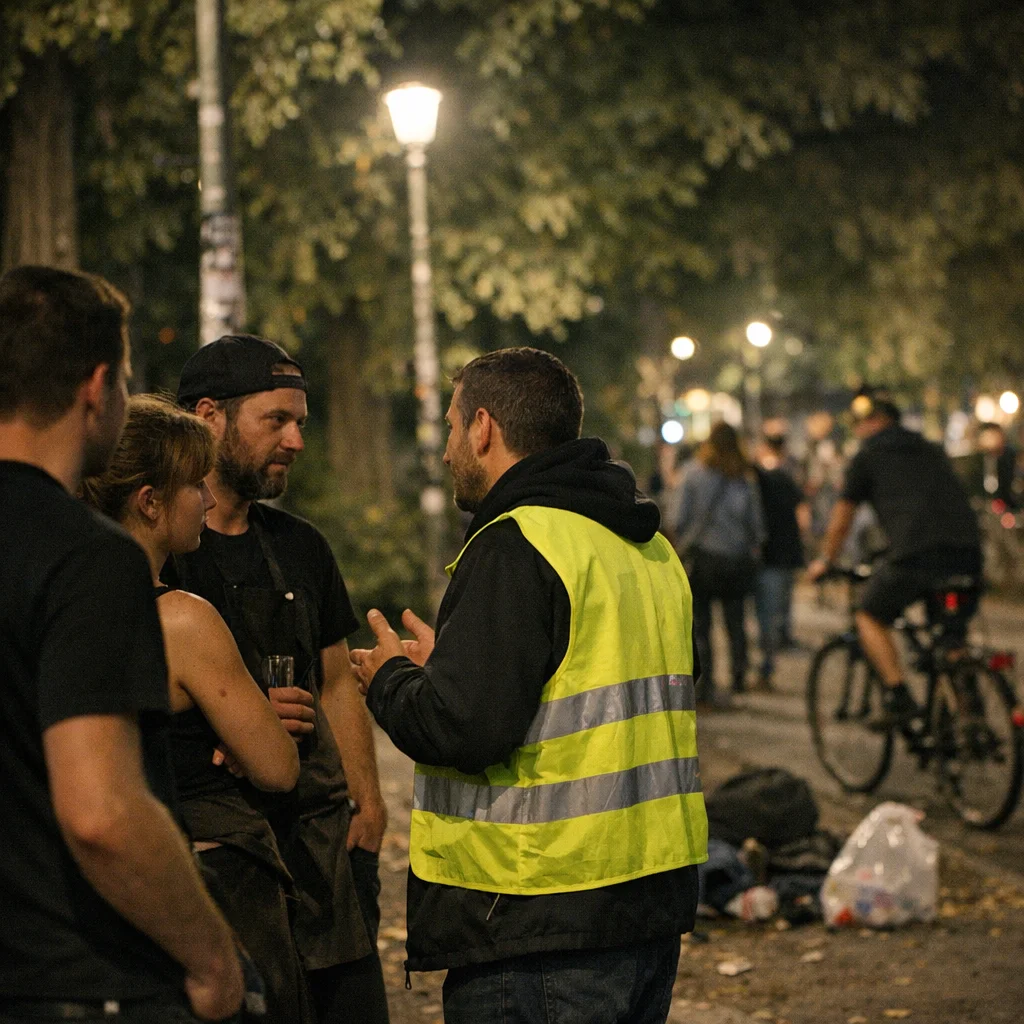
Görlitzer Park’s drug trade is being managed like a boutique logistics firm, and the people pretending to be shocked are mostly the same ones who came to Berlin to cosplay danger with better lighting. On a damp evening near the park’s north edge, staff from nearby bars, a harm-reduction worker in a reflective vest, and a club promoter with expensive exhaustion gathered for one of the city’s now-routine “hygiene briefings.” The official script was familiar: stay calm, observe, de-escalate, call the right number. The actual lesson was less civic and more managerial — how to keep customers moving while the market on the grass keeps moving faster.
By the time the slides were over, the room had that dead-eyed, seminar-room obedience that only thrives in a city where everyone claims to hate capitalism while privately worshipping efficiency. A bartender from a neighboring venue, who asked not to be named because his employer still pretends to run a cultural program and not a funnel, said the training was “less about safety than about knowing who to smile at and who to ignore.” He added, “It’s customer service with moral language. Everybody wants a clean conscience and a full till.”
The under-noticed contradiction is obvious once you stop performing innocence: nobody in this corner of Kreuzberg is trying to stop the trade so much as organize its friction. The park has its own hierarchy, its own patrol routes, its own dispute resolution system, and its own app-friendly etiquette for the people who arrive in all black and leave in borrowed shame. The right-wingers get to scream about law and order for the cameras; the left-wing professionals get to say “community care” while staying selectively blind to the fact that the community is already running a full-spectrum service economy.
A district spokesperson said the briefings were intended to reduce conflict “through coordinated communication” and to protect residents, visitors, and staff alike. Which is adorable, in the way a velvet glove is adorable when it’s being used to avoid touching the fist. The real coordination appears to happen between promoters who need their guest list to keep flowing, venue workers who need to avoid scene collapse, and a street market that has no interest in waiting for anyone’s ethics to catch up.
One organizer at the session compared the situation to a bad Fassbinder film: everyone is trapped, everyone knows the script, and everyone still wants to be the noble one in the final frame. By the end of the night, the group had agreed on reporting channels, emergency phrases, and a discreet way to steer panicked tourists away from the obvious transactions. In other words: the city has not solved the problem. It has trained a nicer class of people to describe it without flinching.