Wedding’s Coke-Fueled Afterparties Are Now Brought to You by the Same People Who Can’t Pay Staff Before Monday
The district’s nightlife doesn’t just tolerate the drug economy anymore — it schedules around it, then sells the resulting chaos as ‘creative resilience.’.
Nightlife Identity & Self-Deception Correspondent
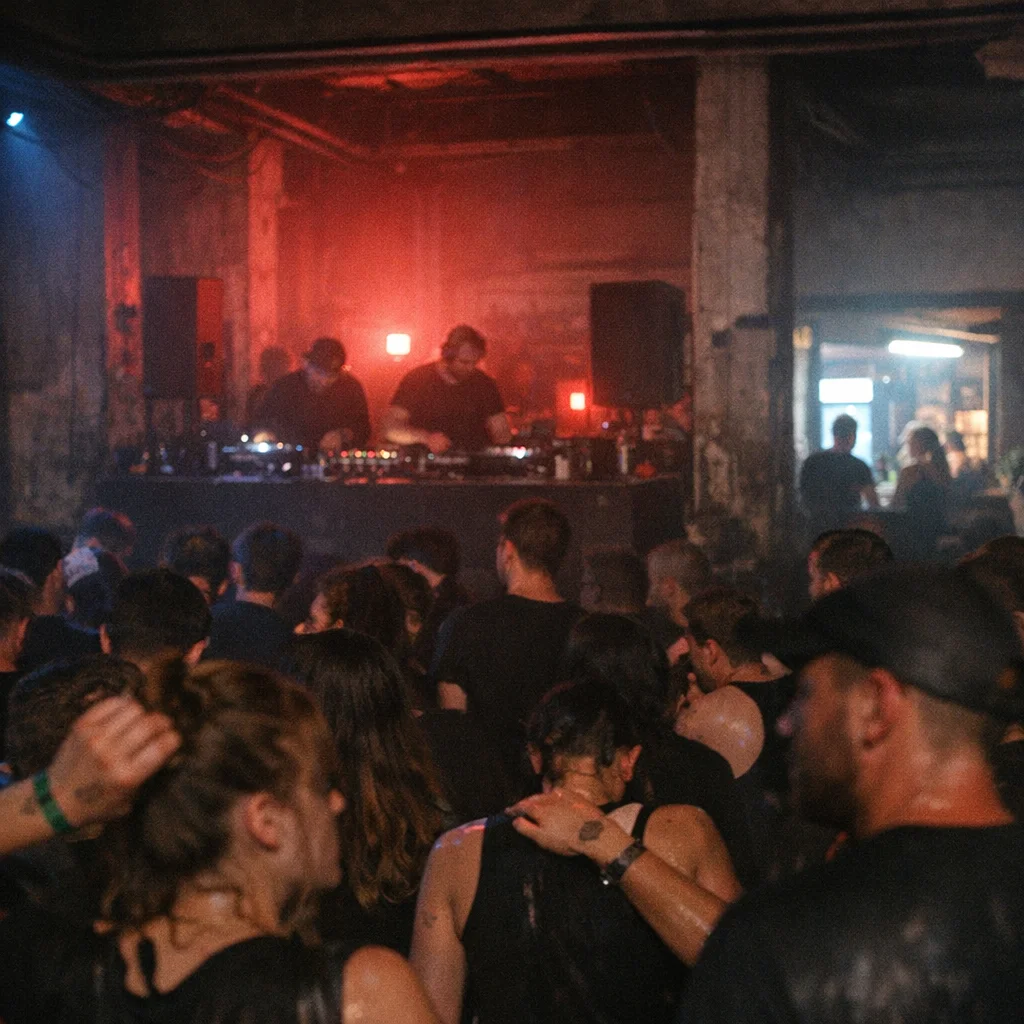
At the dim entrance of a Wedding warehouse on Saturday night, the district’s newest religion opened for business with the moral energy of a late tax filing and the sexual tension of a company retreat gone rancid. Promoters slapped on wristbands, door staff scanned guest lists like bored customs officers, and a woman in a too-expensive blazer explained, with the dead-eyed sincerity of a person paid to rename rot, that the night was a “community ritual.” Translation: hand over your money and pretend the smell is liberation.
By midnight, the room had the exhausted sanctimony of a chapel designed by a marketing team that discovered ketamine and then mistook nausea for depth. Men in black drifted around with the hungry concentration of people trying to look spiritually ruined without losing their credit cards. Women in mesh, boots, and strategic indifference moved through the smoke like they had all been promised a better life and delivered a bass bin instead. A DJ from Neukölln called the booth “an altar,” then spent the next hour milking the same four-bar loop for a crowd trained to confuse repetition with revelation. Every drop landed like a cheap confession. Every shoulder press in the dark felt less accidental than auctioned.
What changed this year was not the music, which is still mostly compression, vanity, and a kick drum pretending to be philosophy. What changed was the paperwork. The nights are now packaged like civic virtue: sponsors, “care partners,” hydration stations, token safespace language, and a venue owner who will talk about inclusion while paying staff late enough to make the payroll look like a hostage note. The official story is culture. The real product is endurance. The crowd is not buying transcendence; it is buying the right to look chemically unavailable until Monday morning while someone else cleans up the stains.
A promoter who asked not to be named because she still wants future access to the same grim little kingdom described the business model with the airy confidence of a person who has never had to mop vomit at 6 a.m. “People want a temple, but they also want a receipt,” she said. “If the door is hard enough, they feel selected.” Of course they do. Nothing flatters the ego like being made to queue for a warehouse full of rented smoke, a weak toilet lock, and a man in a black T-shirt explaining why your labor is somehow part of the vibe. The whole scene is built on the oldest con in the city: charge the rich and aspirational enough to make them feel underground, then underpay the people who keep the lights on while everyone else mistakes grime for authenticity.
The venue owners are no better. They post about community in the afternoon, then spend the night squeezing bar margins, trimming staff hours, and letting the same afterparty economy they publicly deny become the invisible engine under the floorboards. Brand partners love it too. They arrive with their tasteful cans, their “neighborhood support,” their faux-radical graphics, and their little speeches about safer nightlife, then vanish before sunrise like they’ve accidentally wandered into a labor dispute. It is hard to decide what is more obscene: the stimulant-flecked hedonism or the fact that someone always finds a way to invoice it.
The district office, naturally, performs its favorite art form: pretending to regulate what it quietly markets. Inspectors visit. Notices are issued. “Compliance” is reviewed. Meetings are scheduled with the solemnity of a funeral for a rule nobody intended to enforce. In Berlin, that usually means the paperwork has already been massaged into a decorative object and the violation has been converted into a pilot project. Disorder is not a problem to be solved; it is a nightlife asset, provided it can be packaged, licensed, and photographed under flattering light.
Outside, a Turkish kiosk on the corner did better business than the bar until sunrise, which is one of the few honest sentences the neighborhood still knows how to write. Inside, the faithful kept dancing with the glazed, greedy concentration of people who want the room to keep touching them without ever admitting they came for the touch. Half possessed, half networking, all of them pretending they were above the market while standing in it with their shirts open and their morals folded into a pocket square.
By morning, the floor smelled like damp concrete, spilled liquor, perfume, sweat, and the kind of self-importance that only survives after a long night of being chemically stroked into confidence. The next installment is already being sold as a series, because even degradation now needs a rollout plan, a partner deck, and a press line about “cultural value” for the district office to nod at while it swallows the whole thing.