Wedding’s 'De‑ID' Caps Turn Nightclubs into Firmware Battlefields
LED beanies that scramble facial‑recognition algorithms are now sold on subscription—clubs demand active firmware at the door and cops quietly buy the master key.
Nightlife Identity & Self-Deception Correspondent
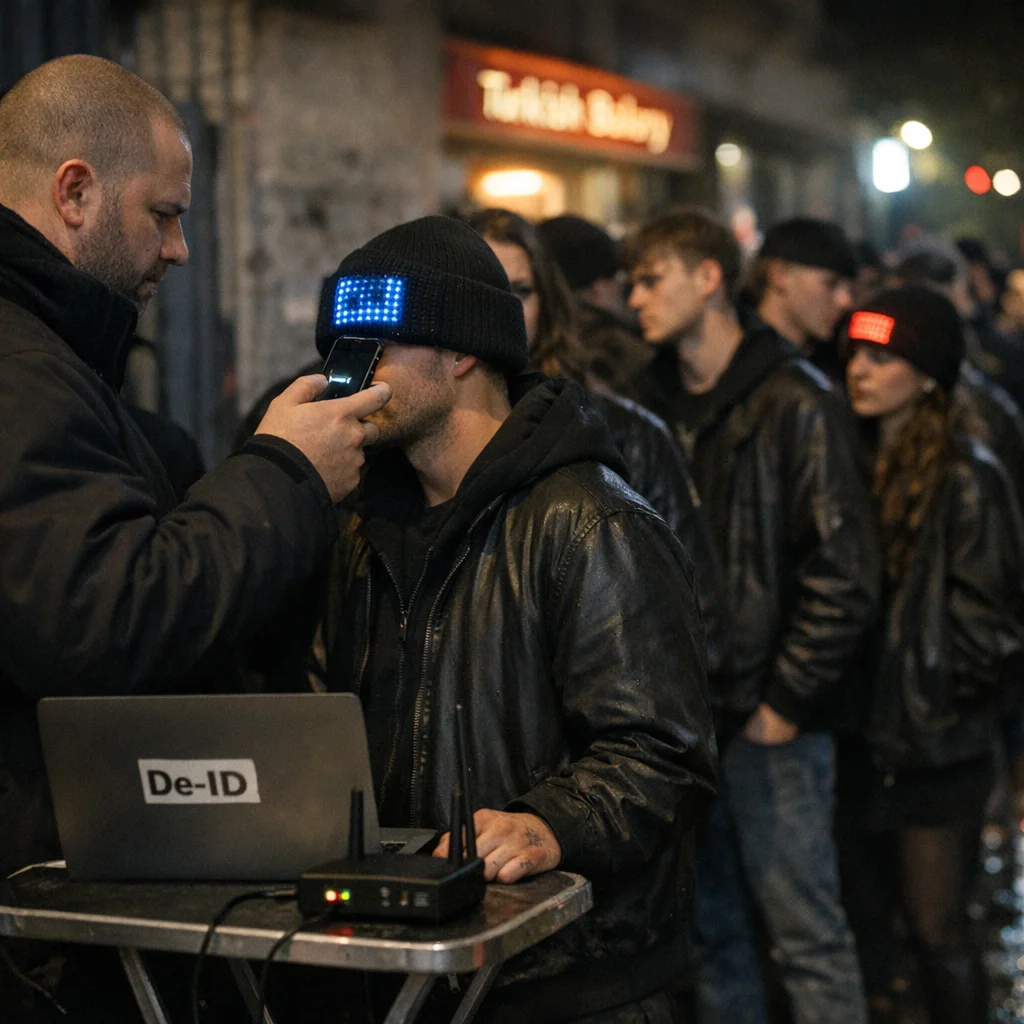
Who: a Wedding collective called De‑ID and Berlin club queues; What: LED beanies that scramble facial‑recognition algorithms sold on subscription; Where: outside major techno clubs and the endless line that passes for character judgment in this city.
The De‑ID Collective began stitching cheap LED panels into knit hats earlier this month and quickly turned the update server into a recurring‑revenue model: €4.99/week for new anti‑camera patterns, they said, and a recent‑arrival discount that required proof of three rejections in one night. "We made something that protects people from corporate cameras and then discovered people were using it like competitive kit," said Mert Aydin, who co‑founded De‑ID. "Now firmware is a social signal — the more elaborate the flicker, the better your chances in line."
First came the prototypes: pulsing sequences that confuse off‑the‑shelf recognition. Then club door staff quietly began to insist on active firmware as a condition of entry, checking beanies with an app as they check shoes and names. "We ask for the De‑ID handshake so doormen don't have to be judges of faces," said Sophie Richter, spokeswoman for a well‑known club on Am Wriezener Bahnhof. "It's faster than profiling by accent and less exhausting than asking someone's politics."
The queue changed overnight. What had been a cosmetic exam in black clothes became a firmware battlefield: campers upgrading hourly to new patterns, traders in front of Turkish bakeries swapping sequences like baseball cards, and Instagram influencers live‑streaming their LED specs while getting stamped (the club ink stamp now merely a consolation prize). For some, the line was less about music than about proving you could keep a pattern running through a three‑hour wait — an endurance trial half performance, half personality test.
Then the quiet theft: a municipal procurement invoice shows a single‑line purchase labeled "De‑ID master key" sold to an unnamed law‑enforcement account. Police would only say, "We do not comment on operational capabilities." The Berlin Data Protection Authority confirmed it has opened an inquiry into bulk purchases of anti‑surveillance firmware and the legality of forced updates at private venues.
Aydin calls it predictable: "You create a tool to resist being watched and someone will monetise the middleman, then the cops will buy the manual. It's Foucault with an LED — Bentham would have sold tickets."
Consequences are immediate: clubs face liability if their firmware checks fail, the authority may demand transparency on master‑key sales, and the queue will keep getting longer and meaner. For now the ritual stands: show your pattern, hold your breath, get in — or get left outside demonstrating your moral purity by freezing in the cold while others trade better light shows. A firmware arms race, with the first casualty already clear: spontaneity.