Wedding’s Doctors Are Learning the New Berlin Skill: Refusing to Treat Anyone Without an App, a Number, and a Nervous Breakdown
The borough’s clinics now sell “efficiency” the way every German institution does: by making sick people do administrative labor until they become less urgent than the system’s calendar.
Administrative Grief Correspondent
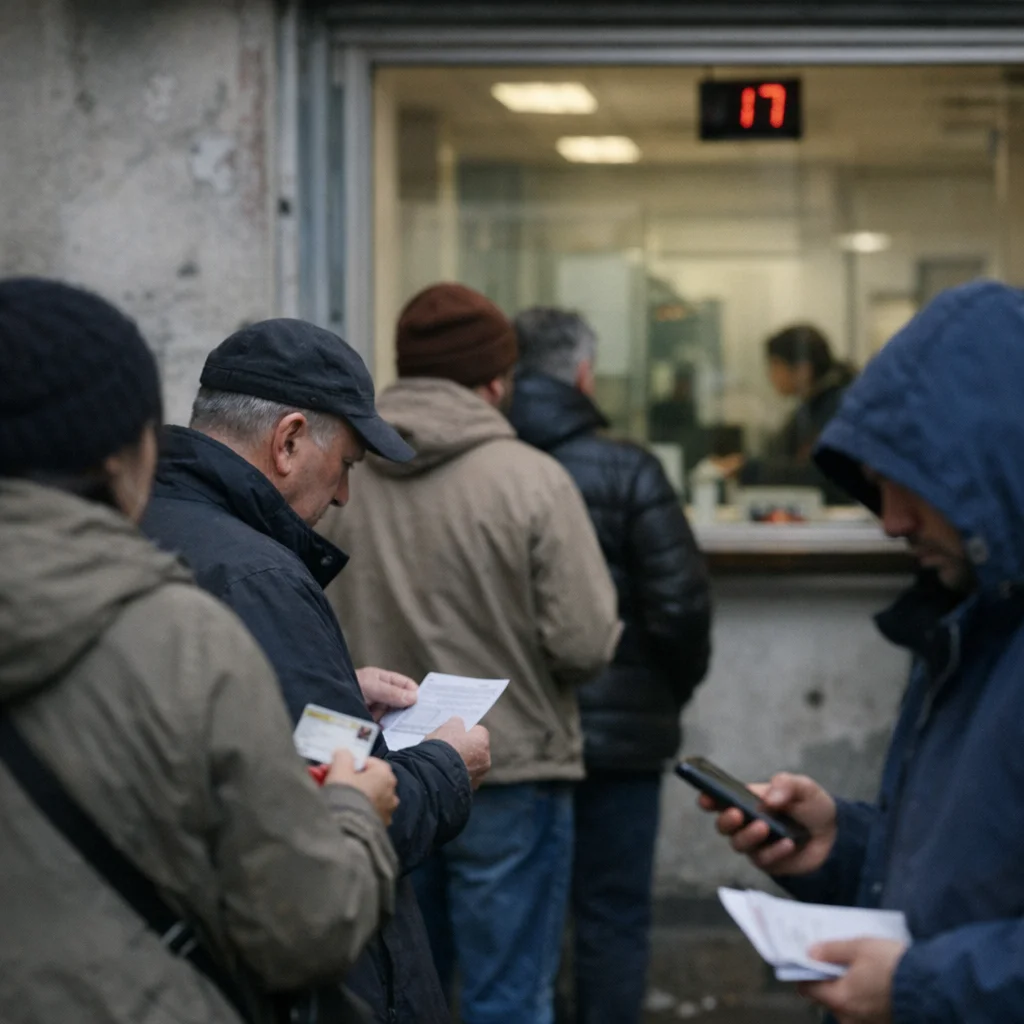
At the district clinic in Wedding, the diagnosis is no longer medical. It is administrative, which is Berlin’s preferred form of sadism because it arrives wearing sensible shoes. Patients do not come to be treated; they come to be audited for the privilege of being looked at.
On Tuesday morning, the line bent out of the entrance and down toward Müllerstraße, where people with coughs, sprains, chest pain, and the glazed expression of citizens who have already been intimate with the wrong end of an insurance form stood in the damp cold. Some had an appointment code on their phone. Some had a paper slip folded so many times it looked like it had been through a breakup. One elderly man carried his ePA printout, his Versichertenkarte, and a referral sheet with the solemn panic of someone smuggling evidence across a border. He was turned away because the QR code had not been “properly synchronized.”
If you live in this part of Wedding, you learn the local sacrament quickly: first the Doctolib confirmation, then the waiting room, then the second waiting room, then the receptionist's face hardening into that special German expression that means your suffering has not been denied, merely scheduled. The clinic near Leopoldplatz now makes patients check in on an app that times out if you blink too long, then asks for a number that no one can explain, then sends them to a desk where a plastic sign points in three directions and all of them are wrong.
“I came in because my asthma was flaring,” said Leyla Demir, who runs a small shop nearby and has the exhausted patience of someone who already knows the city thinks paperwork is a personality trait. “They told me to sit down, then stand up, then go to another line, then come back because the referral was missing one box. By the time they found the box, I knew the receptionist's lunch break schedule better than my own pulse.”
This is what Berlin calls efficiency when it has had a few years to sexually confuse public service with management theater. The district office and its favorite consultants talk about “digitization” the way a wellness influencer talks about boundaries: with glassy eyes, a fixed smile, and the smug conviction that making things harder is the same as making them better. Every new system arrives dressed as liberation and functions like a hand on the back of the neck.
The result is not healthcare but a little bureaucratic peep show in which sick people must undress their dignity one document at a time. Bring your insurance card. Bring your email. Bring your old referral. Bring the password you forgot when you were vomiting. Bring proof that your body has already suffered enough to deserve attention. Then wait while a district administrator with a headset and a municipal god complex tells you the printer is down again.
The smug urban professionals are all over this performance. The temp agency manager who calls it “streamlining.” The co-working father who loves public healthcare in theory, once he’s finished complaining about the queue in English. The foundation darling from Mitte who says “accessibility” with the same mouth he uses to chew on grant money. They all worship the same altar: the fantasy that a person is easiest to govern when they are tired, embarrassed, and half-convinced the fault is theirs.
A nurse, speaking quietly because the wrong label can still trigger a small bureaucratic vendetta, said the staff are trapped in the same machinery. “We spend half the shift hunting signatures and the other half explaining to people that the app is not actually the clinic,” she said. “Sometimes the app sends them to the wrong entrance. Sometimes it eats their number. Sometimes it tells them to come back tomorrow, which is a lovely thing to say to someone whose chest is making that wet little panic sound.”
Near the reception desk, a man with a swollen wrist was asked to fill out a missing consent field on a tablet while standing up because there were no chairs left. He tried to type with one hand. The form timed out. He started again. That, in miniature, is the city: a public system kneeling in front of technology it does not understand, while the patient performs the unpaid labor of making his own humiliation legible.
The health authority says a review is underway, which in Berlin usually means the problem will be lovingly laminated and circulated until everyone has forgotten why they were angry. In the meantime, patients are advised to arrive early, bring every document they own, and prepare for the special Wedding treatment: being made to prove you are sick enough while standing outside in the wind like a person auditioning for triage.
And when the next glossy modernization pitch arrives from some district office drone or startup-adjacent policy florist, promising relief through another app, another portal, another “smooth experience,” remember the local truth. In Wedding, the clinic does not cure you first and process you later. It processes you until your body is too tired to argue, then offers you a number and calls that care.