Wedding’s Doctors Are Now Triaging Patients Through a Digital Queue That Treats Panic Like a Scheduling Problem
The borough’s clinics have embraced “efficiency” in the most German way possible: patients must first negotiate an app, then a hotline, then a receptionist who speaks in exhausted software terminology before anyone is.
Administrative Grief Correspondent
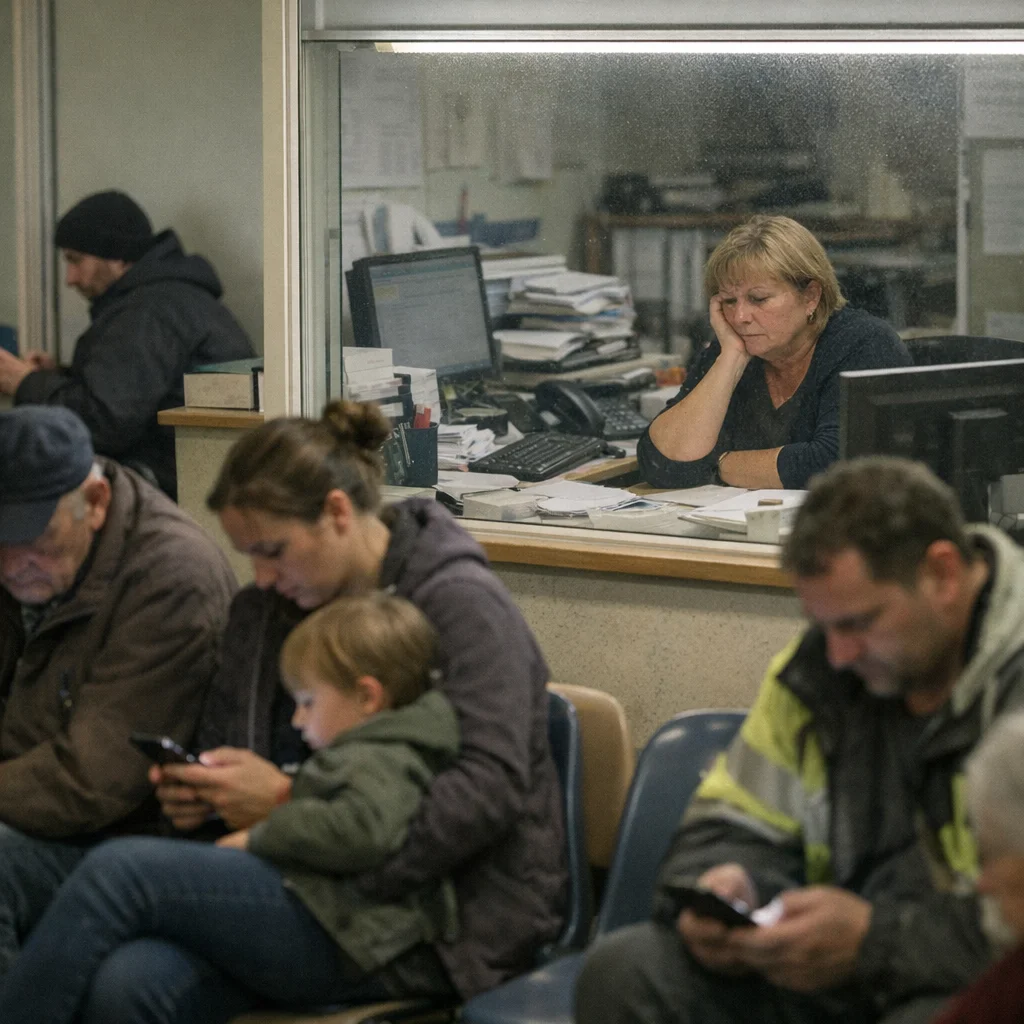
In Wedding, where people still drag themselves to work with fevers, bad backs, and the stubborn belief that public life might occasionally include mercy, the clinics have introduced a digital queue that treats panic like a calendar conflict. First comes the app. Then the hotline. Then the receptionist, who now speaks in the deadened dialect of platform management: not human, not quite machine, just a tired woman at a desk pretending the system is the one with boundaries.
The borough says this is modernization. Of course it does. Modernization is what officials call it when they make your body crawl through software before anyone is allowed to look at your face. In the waiting room near Leopoldplatz, the chairs still smell faintly of disinfectant and old raincoats, but the real odor is elsewhere: a warm, administrative contempt. You can almost taste it on the fluorescent air.
On Monday morning, residents arrived expecting the ancient, shabby ritual of being ignored in person. Instead, they were instructed to open an app, confirm their identity, describe their symptoms in approved language, and wait for a call back that landed with the tenderness of a debt collector. One man with a swollen hand was told to select between “acute,” “non-acute,” and “administrative.” A mother with a coughing child was put on hold by a voice menu so bland it felt designed by a hedge fund with a wellness podcast.
By noon the line had split into the neighborhood’s most honest social hierarchy: those who could navigate the digital maze, and those who needed a younger relative, a neighbor, or some exhausted kid from the block with working thumbs and enough patience to interface with the state’s little humiliation machine. The app is not neutral. It is a velvet rope for the insured conscience. The people who glide through it are the same ones who can say “accessibility” with a straight face while sitting in Prenzlauer Berg and drinking something steamed into foamy moral innocence.
“We are not against modernization,” said Emine Yilmaz, 61, after being told her same-day request had been moved into a “priority review state,” which sounds like a spa treatment for despair but is actually a bureaucratic way of telling a sick woman to wait until the system finishes flirting with itself. She had stopped at a bakery on Müllerstraße on the way and was still holding a paper bag of bread like a talisman. “If I need four screens and a code to say I am ill, then this is not care. It is a flirtation with neglect.”
That is the trick of the whole arrangement: it turns refusal into etiquette. Nobody tells you to fuck off. They simply make you prove, repeatedly and in the correct format, that you deserve to be allowed into the building of your own body. The district office calls this “streamlining access,” which is bureaucratic drag with a middle-management erection. Consultants call it “patient flow,” a phrase so bloodless it could be printed on a coffin and still sound like a pilot project.
A receptionist at one clinic, speaking on the condition of anonymity because she has seen what office revenge looks like in the staff WhatsApp group, said the platform had reduced shouting at the front desk but increased what she called “digitized begging.” Her job, she explained, is now to translate software cowardice into human denial. She is the final valve in the system: not powerful enough to help, not free enough to admit it, and expected to smile as if that were professionalism rather than a public act of self-erasure.
The district’s favorite phrase is “efficiency,” which in Wedding usually means the poor do the labor twice and the comfortable do it never. The app is for the already-organized. The hotline is for the patient enough to wait. The clinic desk is for whatever is left: the elderly, the overworked, the under-remembered, and the people whose lives are too messy to fit inside a tidy symptom tree. If you can work the interface, you are welcomed as a customer. If you cannot, you are processed as weather.
The winners, naturally, are the people who sold the platform and the managers who got to pose beside it with their soft, bloodless smiles and their vocabulary of care. They love a pilot program. They love “scalability.” They love a neighborhood they can study from above without ever having to sit in its waiting room with a fever and a cracked phone screen. The class logic is obscene and simple: the well-equipped get through, the rest are filtered into patience until patience becomes surrender.
By next week, the clinics plan to extend the system to follow-up visits, which is Berlin’s favorite kind of progress: the kind that asks the same residents to be slightly more compliant every month while offering them slightly less human contact. Until then, the neighborhood will keep doing what it does best under polite assault—lining up, lowering expectations, and hoping the machinery of care eventually opens wide enough to let someone in before the throat closes up. The middle class will call this resilience. The rest of us know it as rehearsal for being told, again, to log in and lie down.