Wedding’s Film School Honors Robert Duvall With a Photo Retrospective of Men Explaining Things in Dim Rooms
As “Robert Duvall: A Life in Pictures” circles the cultural bloodstream, a local institute proves Berlin can turn any actor’s legacy into a grant application and a personality disorder.
Culture Paper-Cut Correspondent
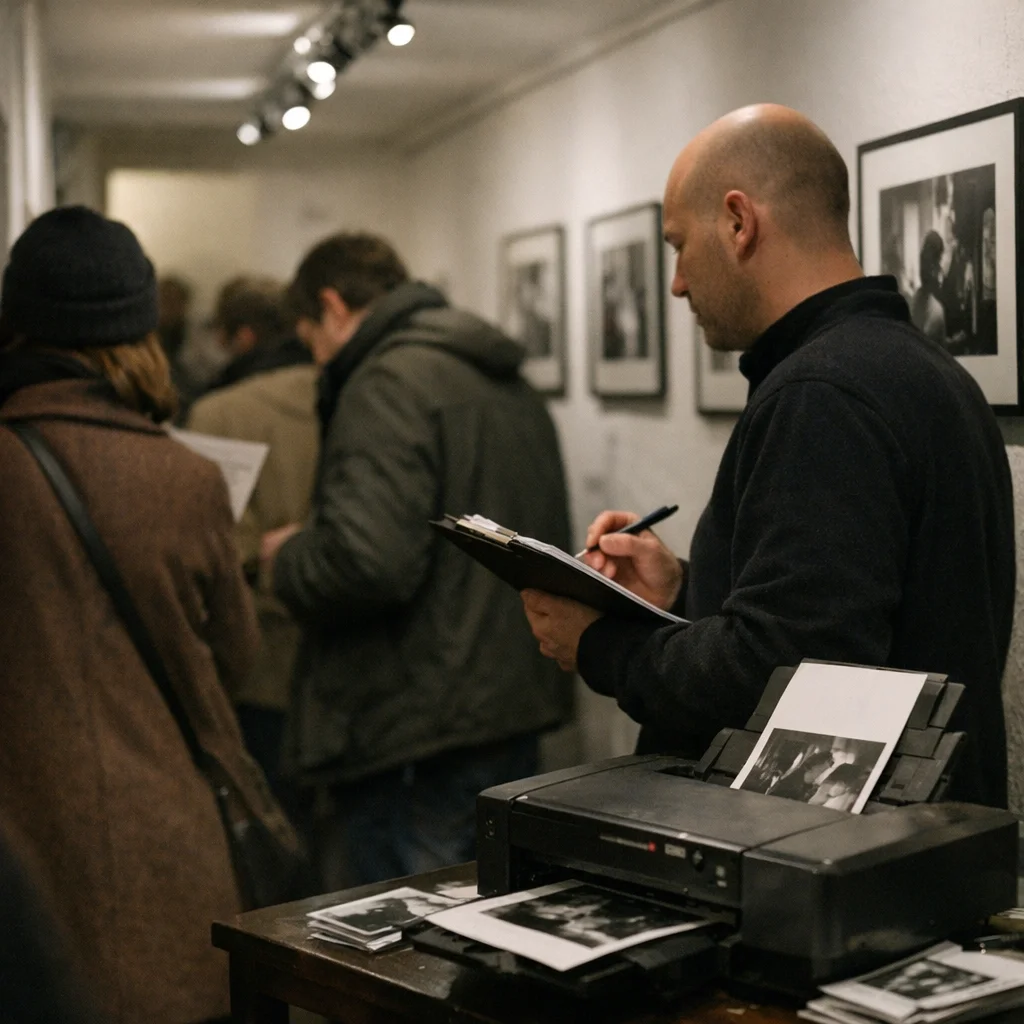
News of “Robert Duvall: A Life in Pictures” reached Wedding the way all American cultural artifacts do: not as art, but as permission. Permission for a municipal-funded film school near Müllerstraße to host a retrospective that bravely asks, What if we took a celebrated career and made it about ourselves?
The event, officially titled “Duvall, But Make It Local: A Life in Pictures (and Deliverables)”, features a hallway of black-and-white prints: Duvall squinting, Duvall brooding, Duvall silently judging a room the way Berliners judge an elevator conversation. Curators called it “a meditation on masculine interiority.” Translation: a series of photos of a man standing still while other people talk around him, which is also how every neighborhood mediation meeting ends.
The school’s director, wearing a scarf with the moral confidence of a minor bureaucrat, explained that the exhibit is “about the gaze.” Specifically, the gaze of a city that has replaced sincerity with artistic statements and replaced responsibility with applications. Walter Benjamin wrote about mechanical reproduction; Wedding has advanced the theory by reproducing the same cultural pose until it becomes rent-seeking.
Local Turkish shop owners on the street reportedly wandered in, looked at a print of Duvall staring into a middle distance, and left with the expression of people who’ve seen enough men do this for free. “My uncle does that face whenever the electricity bill arrives,” one visitor said, refusing to be quoted because he still believes shame is a civic virtue.
A panel discussion followed, naturally, because Berlin cannot allow an image to exist without someone climbing on top of it. A visiting lecturer compared Duvall’s on-screen authority to “the architecture of power.” A student asked whether power can be “decentered” through a more ethical lighting plan. Somewhere, Michel Foucault rolled over in his conceptual grave and asked to be invoiced.
The only genuinely daring moment came when the photo printer began producing extra Duvalls on its own—every third sheet emerging with a perfectly framed shot no one had selected. Staff interpreted it as “the work resisting curation.” They pinned the rogue prints anyway. In Wedding, even a malfunction eventually finds a firm grip on the narrative.
By closing time, attendees lined up to sign a guestbook that doubles as an impact report. People left satisfied, like they’d had a full cultural experience without anything messy—no plot, no context, no risk—just the soothing sensation of being seen while staring at someone else’s face.