Wedding’s ‘Free’ Kulturwürfel Has a Token Machine — You Pay to Book the Free Stage
City marketing calls it an open, rent‑free cube for locals; the booking form’s tiny checkbox and the wall-mounted token dispenser tell a different story.
Gentrification Symptoms & Pretend-Creative Economy Reporter
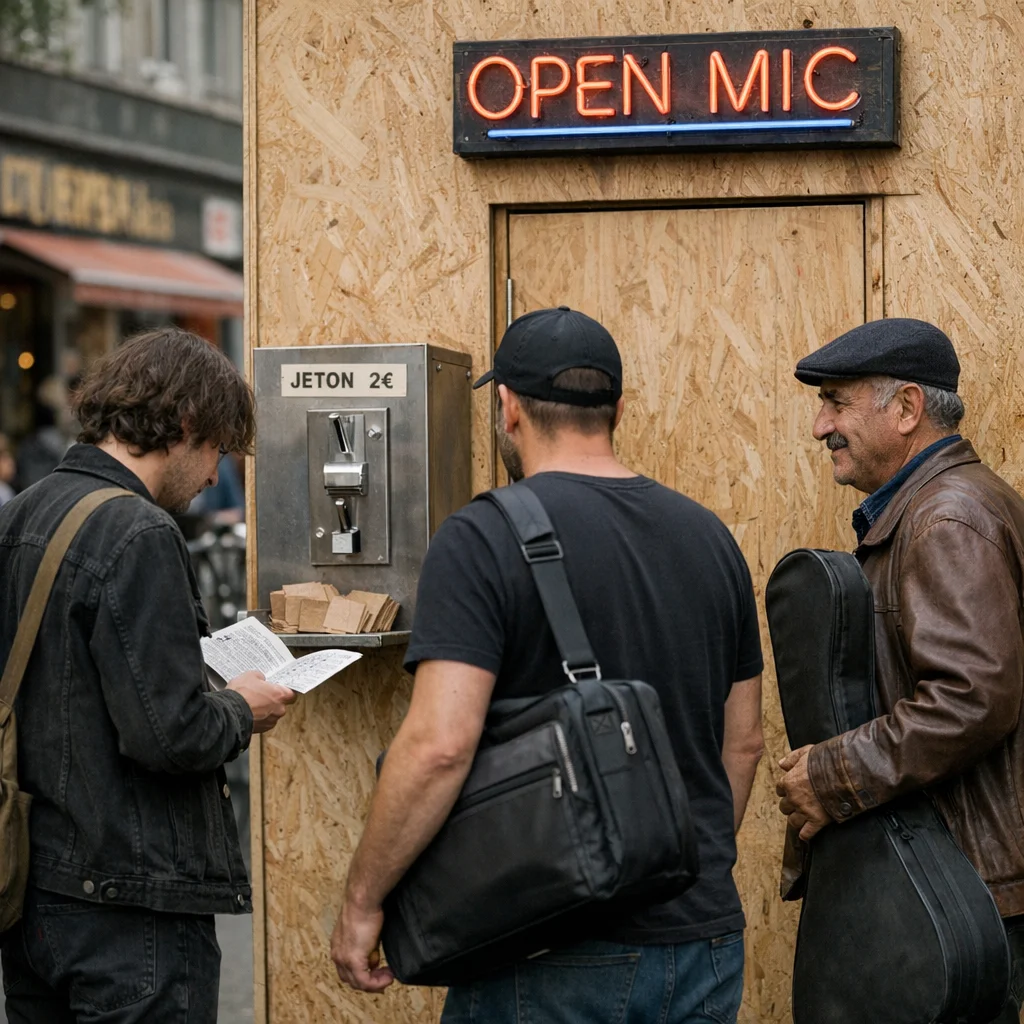
WEDDING — The city pitched a plywood cube on Müllerstraße last month as a free Kulturwürfel: an "open, rent‑free" stage for poets, DJs and zine‑makers. The ribbon‑cutting photos showed beaming officials and a neon sign reading OPEN MIC. Walk behind the sign and the friendliness ends in small print and a wall-mounted slot: to actually book that supposedly free stage you must purchase event tokens — available only in 10‑pack bundles.
At first glance the official story reads like civic generosity. The booking portal invites "community use" and asks applicants to describe their art in 200 characters. The portal also hides a near‑invisible checkbox beneath the form's consent lines: "I acknowledge event token requirement and purchase policy." Click it and a second page appears directing you to a stainless steel dispenser bolted to the cube's side. The dispenser sells cardboard sleeves of hand‑stamped tokens — €3.50 a piece, ten minimum — because open culture, apparently, must be pre‑paid in artisanal currency.
"We thought it was literally free," said Aylin Demir, a local poet and mother of two who runs readings in a back room above a Turkish bakery. "I put in an application and then found out I needed thirty‑five euros before I could even pick a date. It's like renting rehearsal time from a cube." Demir added that buying in bulk forces small groups to overcommit to dates they might not fill — "you end up paying for nights you don't use, like a subscription to optimism."
City marketing defended the Kulturwürfel as an experiment in low‑cost programming. "Maintenance and scheduling require a minimal contribution," said Elke Brandt, spokeswoman for the district cultural office, in an email, adding that token revenue covers lighting and repairs. She declined to say who runs the dispenser, citing an "operational partner" contract.
That tiny contractual clause flips the official narrative: instead of a public stage that guarantees access, the cube functions as a prepaid booking market. Artists without spare cash or a cushion of parental wires are nudged out of the scheduling loop; the cube becomes, in practice, a short‑term lease on attention. Kafka would have appreciated the checkbox, and Guy Debord the spectacle of publicness sold back to citizens in ten‑packs.
On Müllerstraße a Turkish saz night that had been on the community calendar for years canceled after its organiser declined to buy tokens. A protest is scheduled for next week: performers plan a "token strike" — handing out counterfeit paper coins while demanding true free access. The district office says it will review the token policy "in the coming weeks." For now the Kulturwürfel stands open to view, closed to ownership — a metaphor, and a reminder that in this city permanence still feels like a fantasy you can only rent, pre‑paid and boxed.