Wedding’s Free Snack Plan Is a Brand Orchard in Disguise
Officials tout waste-cutting generosity; residents discover a loyalty app logs every bite and sells the data to advertisers and city vendors.
By Hakan Wilde
Crime & Kiez Satirist
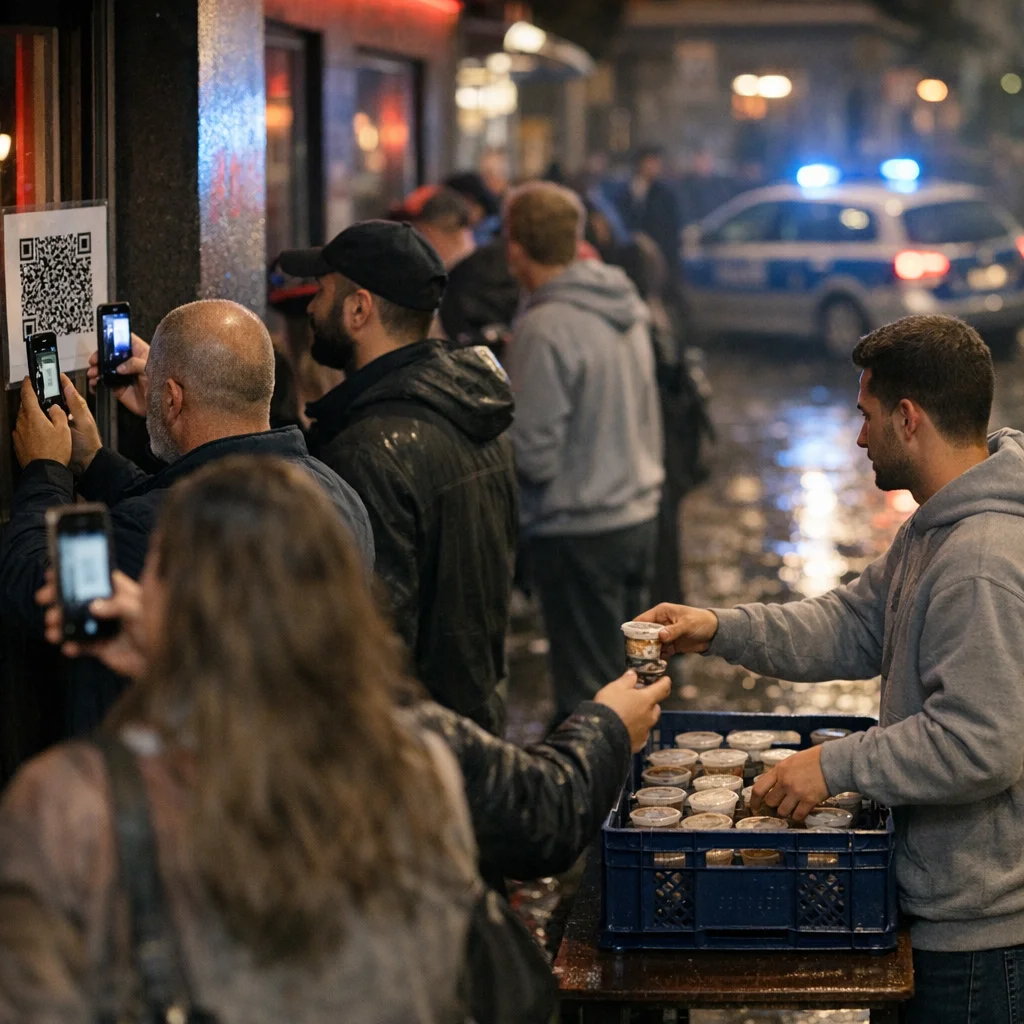
A new district-backed program in Wedding, “Snack on the Block,” began this week with the kind of moral theater Berlin loves: free small plates handed out at participating shisha bars and “community cafés,” framed as waste reduction and social cohesion. Volunteers in matching hoodies carried crates of pre-portioned bites down side streets, smiling like they’d personally solved hunger with a clipboard.
By early evening, the line outside Bar Alhambra (one of several venues named like a fantasy vacation you can’t afford) had formed for what officials described as “unconditional access.” The condition, residents quickly learned, was not money. It was a phone.
At the entrance, a laminated card instructed guests to scan a QR code, create a profile, and “confirm dietary preferences.” The app asked for age range, neighborhood, and “usual evening routine,” then required location permissions “to prevent duplicate servings.” The snacks were free the way a first date is free: you’ll pay later, just not with euros.
“It’s one olive cup and a mini börek,” said Mehmet Arslan, a nearby shopkeeper, watching people hold their phones out like they were being blessed. “They talk about dignity, but you have to beg your screen to let you chew.”
Then came the small print that did the real work. In the terms, buried beneath the heartfelt language about “civic nourishment,” the operator grants itself the right to share “consumption events” with “sponsors, city vendors, and program partners.” In other words: every bite becomes a data point, every craving a sales lead. Berlin has finally found a way to make you feel guilty and horny at the same time—mounting pressure to be a good citizen, with a firm grip on your snack history.
A spokesperson for the district office, Jana Krüger, defended the system as “necessary for evaluation and fairness.” She added, “No personal data is sold.” She did not explain why the app’s pop-up offered “personalized nearby deals” the moment a user selected “sweet.”
Police, asked about rumors that several participating shisha bars are linked to clan-controlled business networks, issued a statement saying they “monitor developments” and encouraged residents to “report suspicious activity.” The statement did not address whether a publicly endorsed snack pipeline is an ideal way to launder legitimacy—Duchamp would call it a readymade, except the urinal has an affiliate link.
By the next morning, two venues reportedly ran out of snacks but not sign-ups. A district committee is now scheduled to “review partnership criteria,” which in Wedding translates to: the app will get a new privacy policy, and everyone will keep chewing.