Wedding’s Free Tree Giveaway Has Become a Loyalty Test for Residents the District Forgot
The saplings are pitched as climate action, but the real program is a municipal loyalty campaign that rewards people for proving they still believe the district can do basic services.
Administrative Grief Correspondent
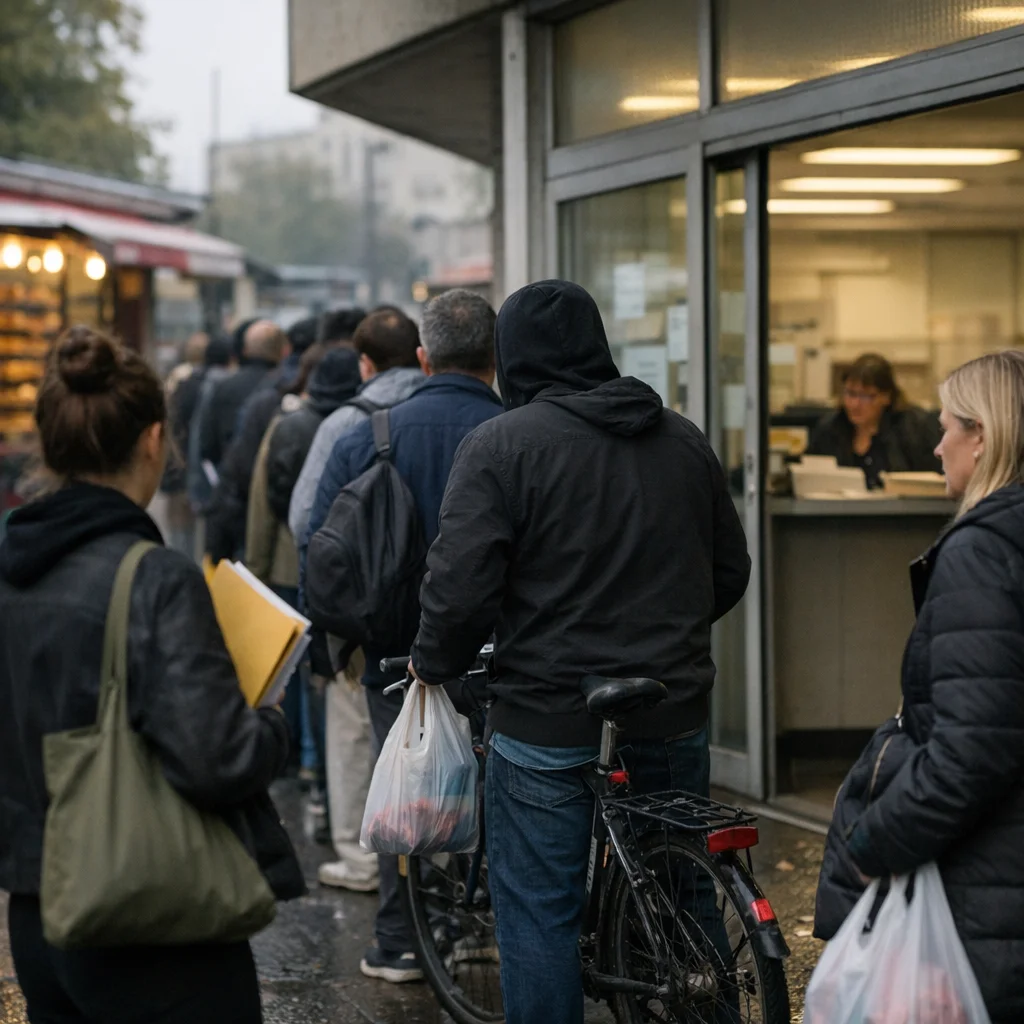
Wedding’s district office has turned a tree giveaway into a loyalty exam for people who already know they are being managed. The promise is simple: free saplings, a greener street, a little civic tenderness. The execution is the usual municipal tease — a polite form, a waiting list, a pickup window, and enough conditions to make generosity feel like a strip search with paperwork.
The office likes to present this as climate action, which is adorable in the way a landlord calling a paint scrape “urban renewal” is adorable. Residents are told to apply online, then confirm by email, then come pick up their tree at a specific counter on a specific day, as if a sapling were a controlled substance and not a small woody apology for decades of neglect. The whole thing carries that district-house perfume Wedding knows too well: damp wool, floor polish, stale coffee, and the faint administrative musk of people who have never once had to beg a clerk to release their own life back to them.
At the pickup desk, the performance is immaculate. One sustainability officer in a clean shirt can speak for ten minutes about resilience, biodiversity, and neighborhood participation while a pensioner with a shopping trolley waits in front of him clutching proof of address like a hospital bracelet. This is the modern civic orgasm: a career administrator getting off on the sound of his own inclusion language while everyone else is left dry, blinking, and still unserved.
A woman from Müllerstraße said she was told to bring a measuring tape, a photo of the planting site, and a signed commitment to water the tree for the first summer, because apparently the district can imagine the future only when it has delegated the thirst to residents with day jobs and bad knees. “They want us to nurture it like a pet and worship it like a policy,” she said. “But first they made me come back twice because the form said ‘front yard’ and I live above a kiosk.”
A bakery owner near Leopoldplatz described a similar pilgrimage for a tiny patio expansion: one counter for the application, another for “clarification,” another for “coordination,” and a fourth where a man with a gel pen and a joyless smile informed him the file was “complete except for the part that matters.” That is Wedding’s district office in miniature: a machine that can detect missing punctuation faster than it can detect a neighborhood bleeding out small businesses.
The residents who need these permits and saplings are not abstract stakeholders. They are the baker trying to keep the ovens hot enough to survive rent increases, the barber with three chairs and one exhausted apprentice, the family in a sublet who wants shade on a courtyard that turns into an oven by July, the delivery rider who needs a curb not designed by a sadist in a shared office. For them, a delay is not a procedural inconvenience. It is a lost season, a missed opening, a chair left empty, a customer gone elsewhere, a little more money leaking out through the cracks while the district performs compassion in a well-lit room.
The office insists the program is “inclusive” and “low-threshold,” which in bureaucratic German usually means the opposite: everyone is welcome to suffer in the same line. Nothing gets refused outright, because refusal requires courage. Nothing gets approved quickly, because speed would deprive the staff of their favorite fantasy — that they are guardians of fairness rather than custodians of a slowly rotting queue. The neighborhood gets to watch its own green future being rationed by people who would probably describe a cactus as a stakeholder engagement opportunity.
And so the free trees become what all Wedding promises eventually become: a test of patience, a performance of virtue, and a small public lesson in who is allowed to wait comfortably. The district office calls it service. The residents call it what it is — a soft, elegant way of saying: we have your address, now sit still and be grateful.