Wedding’s 'Heat Havens' Come With Cash Registers: The Borough’s Emergency Cool‑Downs Are Actually Sponsored Pop‑Ups
The press release promised free refuge from the heat; the procurement paperwork quietly limits hosts to VAT‑registered hospitality businesses and sells every seat to advertisers.
By Jax Delayski
Transit Meltdown & After-Hours Logistics Reporter
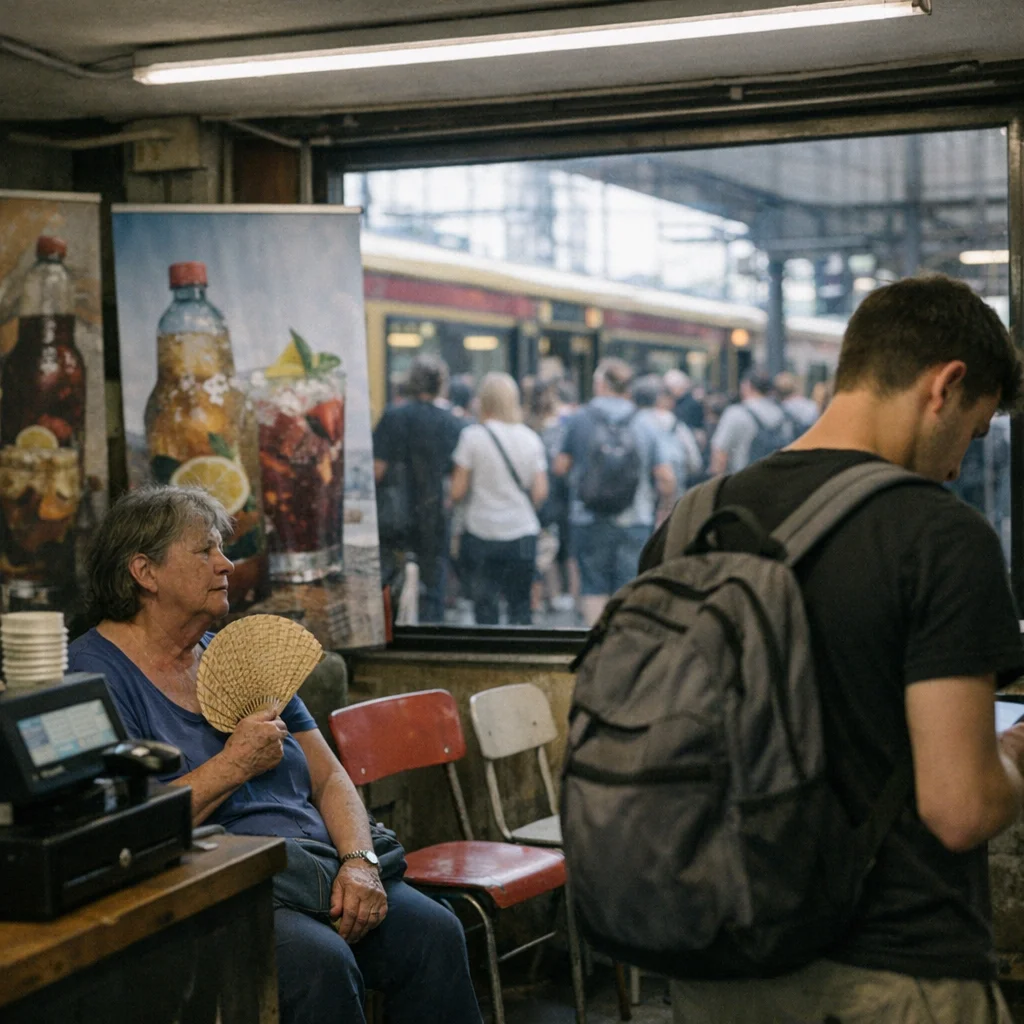
Wedding — The district office rolled out a summer safety plan this week claiming to shield overheated commuters when U‑Bahns and S‑Bahns grind to a halt. What the glossy press release called "Heat Havens" were described as free, low‑threshold refuges for elderly people, parents with prams and anyone stranded by transit delays. The procurement paperwork flips that promise: only VAT‑registered hospitality businesses with a point‑of‑sale and a “sponsor messaging” clause were eligible, effectively outsourcing cooling to cafés and hotel lobbies that must run ads and log every visitor.
Officials announced the program after a week of platform chaos left packed trains idling in tunnels and platforms swelling like soup. Within 48 hours the district published a tender that required venues to prove they could invoice and provide “controlled audience exposure” to sponsor materials — language that meant every seat could be sold to the highest bidder. "They promised a cool bench and a kind hand," said Aylin Kaya, who runs Kaya Backstube on a side street. "What arrived was an espresso machine with brand banners and a till that keeps staring at you."
On Tuesday, an S‑Bahn signal fault stranded riders at Gesundbrunnen. Volunteers tried to shepherd older passengers to a community room around the corner; they were turned away because the room lacked a registered POS. Instead, riders were directed to a branded pop‑up café whose staff asked people to sign a waiver and offered a “sponsored water” in exchange for sitting down.
"This was designed to be fast and scalable," said Lukas Reuter, district social‑services spokesperson, who defended the tender as a way to mobilize already‑open hospitality spots during emergencies. "We wanted partners who could handle payments for incidentals and take donations responsibly." BVG emphasized it had merely shared transit delay data and that the cooling plan was a municipal initiative; a BVG spokeswoman, Martina Klein, added the operator had been consulted but not involved in procurement.
Advocates say the paperwork prioritizes corporate comfort over civic duty and excludes exactly the places most likely to help: Spätis, mosques and the Turkish cultural centers without formal POS systems. "It’s biopower with a cash register," said Dr. Jonas Weber of a local tenants' collective, invoking Kafka and Debord in the same breath. A legal aid group is preparing a challenge, and a council hearing is scheduled next week.
Until then, commuters will keep arriving hot and angry; the trains keep stalling; and the municipality will keep prescribing solutions that require a receipt. The immediate consequence: if you want shade during a transit meltdown, bring cash, brace for ads, and try not to let the procurement penetrate the very notion of public care.