Wedding’s Housing Office Has Discovered the Miracle of “Digital First” — Right After Making Everyone Print Their Own Proof of Existence
The borough now celebrates efficiency by asking tenants to scan, upload, and re-upload the same documents until the process becomes less a service than a stress test for who still has access to a printer, a scanner,.
Door Policy & Daylight Shame Correspondent
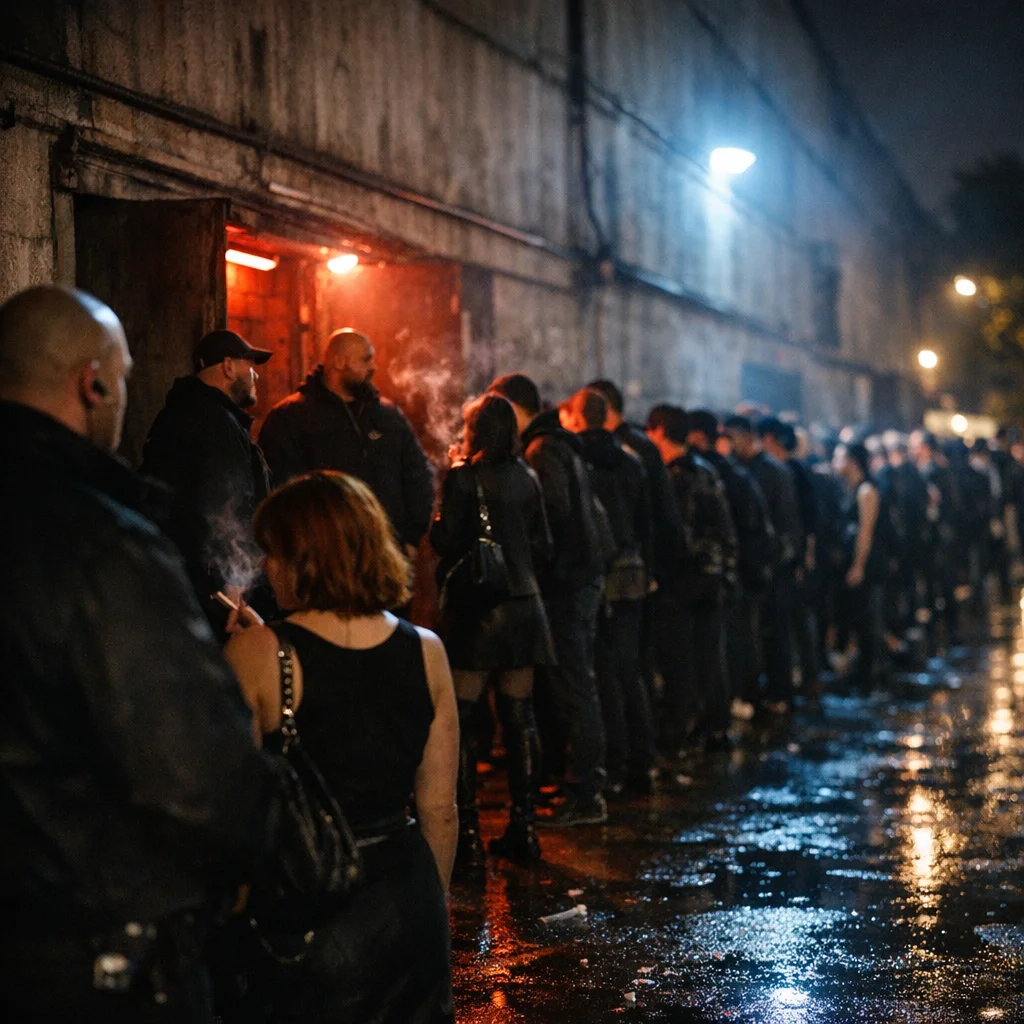
At RSO in Alt-Treptow, the industrial techno scene has reached the kind of self-knowledge that usually comes right before bankruptcy or a police raid. It packages itself as resistance while running on the most obedient machinery in the city: curated scarcity, emotional blackmail, and the sacred little tyrant at the door deciding who gets to feel chosen for the night.
The result is a queue that looks less like nightlife than a voter roll for people who hate democracy but crave its rituals. There were Wedding kids with borrowed seriousness, Mitte creatives in combat trousers purchased with grant money, freelance Marxists who can cite labor theory while checking their wrists for entry stamps, and the usual startup refugees who left corporate culture only to discover they were the corporate culture after the afterparty. Each of them stood there with the same expression: I am not desperate, I am selectively available.
That is the real Berlin export now — not techno, not freedom, but the performance of being too discerning for the very system you are currently humping for access. The queue is a moral sauna. It strips people down to status anxiety, then makes them sweat in public until they start calling it authenticity. A few of them even look sexy in the ruins of their own self-respect, which only makes the whole thing worse.
Inside, the room continued the civic lesson. The DJ from Leipzig hammered out a set so metallic it sounded like a factory manager being emotionally blackmailed by his own machinery. Bodies moved in that peculiar Berlin way: half arousal, half ideological compliance, as if everyone had agreed in advance to dance like they were too radical to enjoy themselves. The smoke machine rolled over the floor like an anesthetic for people who want their nihilism to be visible from the mezzanine.
"This place is basically a talent show for humiliation," said Yasin Demir, a bartender from Wedding, who asked not to be named because his girlfriend thinks he was at a queer reading in Neukölln. "You get the art-school sad boys, the gentrifier darlings, the people who say 'anti-fascist' like it’s a perfume, and all of them are trying to look indifferent while their whole personality is queued up outside."
RSO’s defenders call this intensity, as if naming the bruise makes it noble. A spokesperson insisted the club refuses to dilute itself for tourists, influencers, and other parasites in expensive sneakers who think rebellion should come with a QR code and a clean bathroom. Maybe so. But what it actually refuses is honesty: it will never admit that the scene survives on the same institutional logic as the rest of Berlin — funding theater, cultural branding, and the city’s endless fetish for making exclusion sound like principle.
The cultural sector loves this arrangement. Grants lubricate the myth, neighborhood politics supply the language of danger, and the nightlife economy provides the finishing touch: a room full of people pretending they came to abolish hierarchy while queueing for it in alphabetical order. The left gets its atmosphere, the promoters get their margins, and the bouncer gets to play minor sovereign over a population of professionally disappointed adults.
That is why the moralizing is so erotic and so stupid. The old punks want the room to stay ugly enough to validate their biographies. The new arrivistes want to buy danger without smudging their shoes. The NGO-left wants the bass to remain politically intelligible while they grind against strangers as if solidarity were a body contact sport. Everyone leaves with the same souvenir: a stamp on the skin and a fresh fantasy of being one of the few people who understood the room.
RSO has not revived rebellion. It has refined the city’s favorite form of social punishment: controlled humiliation with a sound system good enough to make the losers feel sophisticated about losing. In Berlin, that still passes for truth. Especially in Wedding, where everyone pretends not to want entry and then stands there, beautifully, obediently, with their face open to the door.