Wedding’s Ketamine Crowd Is Not Partying to the Music — It’s Using the DJ Booth as a Confessional
The official nightlife story is that Berlin club culture is about freedom, experimentation, and collective release.
Nightlife Identity & Self-Deception Correspondent
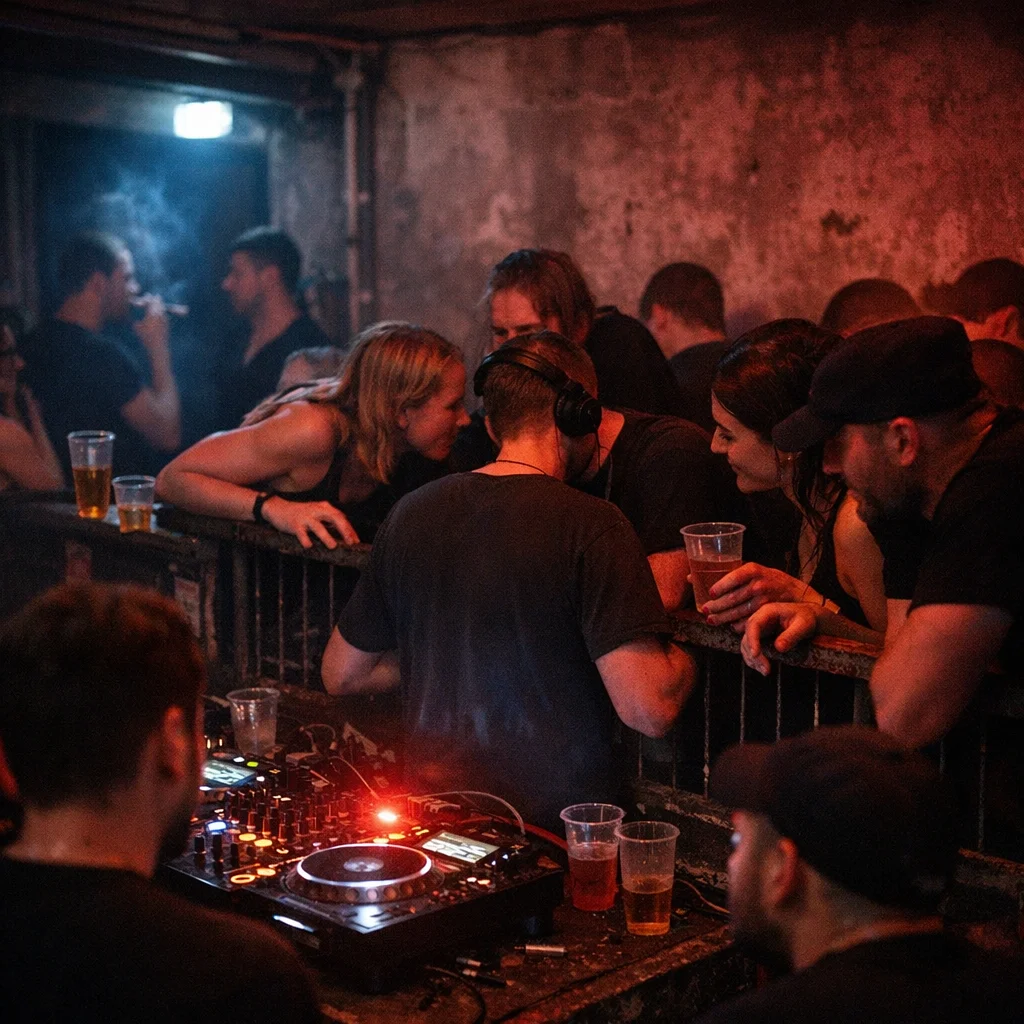
At a basement venue off Müllerstraße, a few stops from Leopoldplatz and close enough to Pankstraße to smell the rent pressure, the most reliable currency in Wedding nightlife is no longer cash, drugs, or even taste. It is confession dressed up as politics. By the time the second room was sweating through its cheap black paint, a line had formed at the DJ booth of people who did not seem interested in the set so much as in using the person selecting it as a licensed receptacle for their private collapse.
First came the usual pilgrimage class: NGO-adjacent creatives with tote bags full of recycled ethics, startup refugees pretending bankruptcy counts as character, and trust-fund techno pilgrims who say “community” with the same wet mouth they use for ketamine. Then came the regulars with pupils like pinholes and biographies like public relations injuries. They leaned over the booth rail to explain their failed app, their open relationship, their landlord, their trauma, their Somatic Awakening, their father, their father’s money, and the exquisite humiliation of being both politically fluent and impossible to tolerate after midnight. One woman asked the DJ to “hold space” while handing over a breakup, a bump, and a master’s degree in cultural theory. Nobody in the booth looked shocked. They looked paid.
“I get more intimacy up there than in any dating app, and that’s saying something in Wedding, where everyone wants a revolution until the lease comes due,” said Niko, 31, who requested anonymity because his ex still follows him on a private account and because his own self-knowledge has the moral durability of a paper straw. “People come up to the booth like it’s a confessional, a checkout counter, and a very expensive little damage clinic.”
That is the fraud at the center of the night: the official story says Berlin club culture is freedom, experimentation, collective release. The actual choreography is rent extraction with strobes. The dance floor is where people pretend to disappear. The booth is where they come to reassemble themselves into something marketable, or at least fuckable, before sunrise. A techno promoter, speaking on condition of anonymity because he once bragged about dismantling capitalism while charging 18 euros at the door, called it “community.” He meant customer service with bass. He meant a branding exercise for people who want their hedonism to have a conscience and their conscience to have a guest list.
The booth dynamic has its own etiquette, and it is as tender as a mortgage notice. Do not block the speaker stack. Do not cry on the mixer unless you want to be remembered as content. Do not ask for a request unless you are prepared to pay in money, dignity, or a little of both. If you must hand something over, do it discreetly: a note, a pill, a compliment, a phone number, a confession, a tiny vial of courage, or the emotional sludge from a week spent pretending your life is still in beta. Everyone understands the exchange because everyone is buying something. Status. Forgiveness. A place to lean while the room keeps pumping like a bureaucrat with a latex fetish.
Wedding gives the whole performance a more pathetic edge. The neighborhood is full of the kind of people who moved here for “authenticity” and now flinch when authentic poverty shows up on the same block. Outside, under the U8, old men smoke in doorways, delivery riders thread past puddles, and some bright little brand strategist in vinyl trousers talks about anti-capitalism while checking the time on a smartwatch made in a slave state and paid for with inheritance. Inside, the booth becomes a confession box for the terminally self-aware: people who have turned trauma into nightlife currency, politics into flirtation, and vulnerability into a way to get closer to the speaker stack.
The DJ is complicit, of course. They always are. They nod with the grave professionalism of someone pretending to care while deciding whether to bless the room or punish it. They absorb the stories, the sweat, the neediness, the delicate desperation of people who want to be seen suffering in exactly the right aesthetic. The booth is not a sanctuary. It is an extraction point with better lighting.
By dawn, the dancers were still moving, but the real action had already shifted to the rail, where the city’s expensive little wrecks came to audition their pain for social legitimacy. The venue said it would review access around the booth area. In Berlin, that usually means the moral panic will be laminated, sold back as a concept night, and forgotten by Thursday—right before the next crowd arrives to kneel at the same altar and call it liberation.