Wedding’s Kiezblock War Has a Strange Casualty: The Adults Who Say They Support Safe Streets
The borough’s traffic-calming politics look virtuous until you notice the same “protect the neighborhood” people begging for exemptions the moment a delivery van, a parking permit, or their own late-night ride is at.
Civic Amnesia & Lifestyle Compliance Correspondent
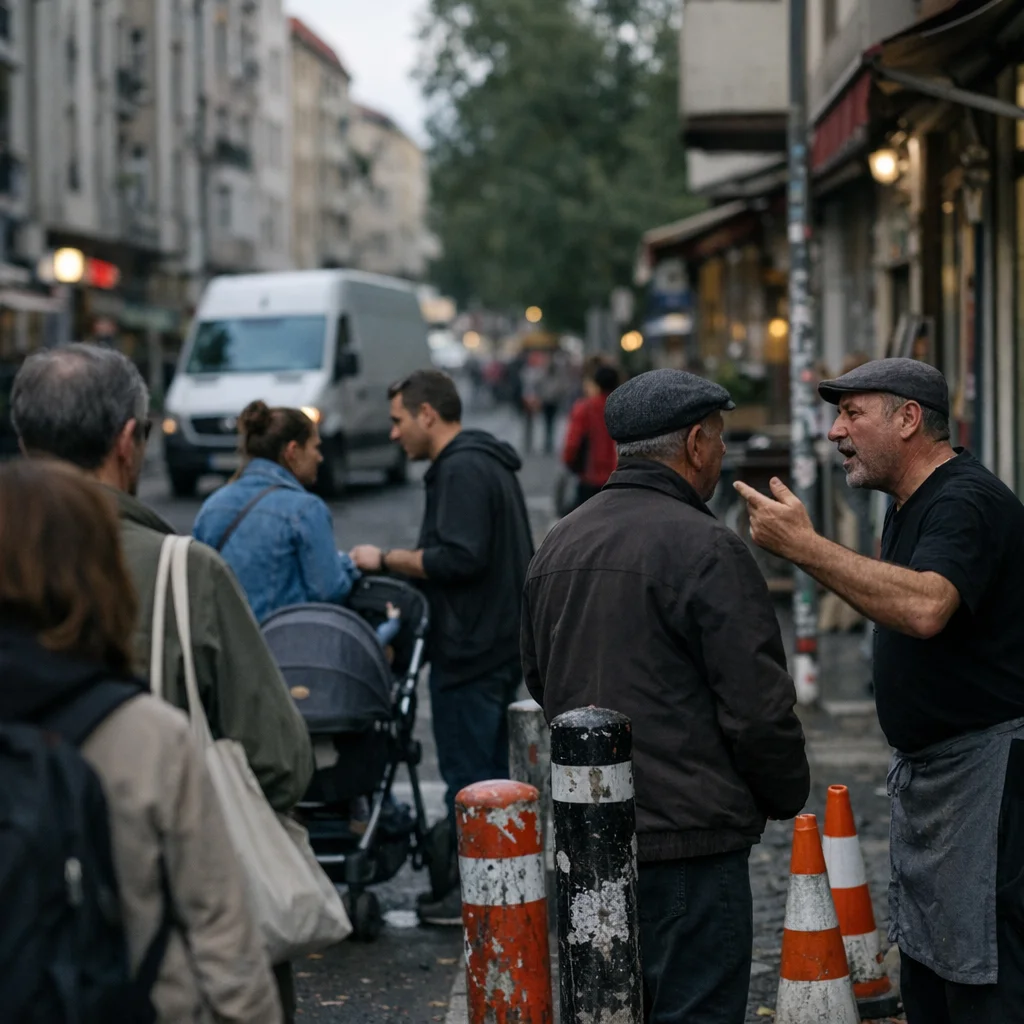
The safe-streets gospel in Wedding is beautiful right up until it asks people to lose something with a license plate attached. Then the choir starts coughing. Parents who can’t stop lecturing about safer crossings suddenly discover a passionate attachment to school drop-off. Green voters on Müllerstraße, the ones who say “reclaim the street” like it’s a sacred vow, get faintly sweaty when a parking space disappears and their weekend guests might have to walk the last humiliating 200 meters like ordinary mammals.
This is not urban politics so much as a civic striptease performed by people who want the lighting to flatter them. Around Leopoldplatz, in the cafés that sell righteousness with oat milk, the same NGO staffers and municipal consultants who write about “shared space” and “social cohesion” are often the first to ask whether their own courier, therapist, or second-hand sofa can be exempted. They speak about the neighborhood like anthropologists studying a tribe they personally intend to inconvenience. Every sentence arrives perfumed with concern and ends with: but not for me.
The neighborhood’s boutique-shop moralists are especially tender about this. They adore the aesthetics of restraint: cones, paint, bollards, a calming palette of civic obedience. It makes them feel like they have taken part in history without having to sweat. Then a delivery van blocks their window for twelve minutes and suddenly the whole philosophy develops cracks. Safe streets are lovely, they say, as long as the street remains available for their groceries, their guests, their panic purchases, and the little late-night rides that keep their conscience from going soft around the edges.
On Tuesday evening near Leopoldplatz, a meeting about traffic calming turned into a seminar in moral necrophilia: everyone had the corpse of principle in the room and kept pretending it was still breathing. A resident from the side streets off Seestraße praised the idea of fewer cars, then asked whether exceptions could be made “for practical reasons,” which is Berlin’s favorite euphemism for wanting the full benefits of restraint without any of the bruises. A bike activist responded with the usual sermon about public space, but even that sounded tired, like a slogan being massaged for rent.
One shopkeeper on Müllerstraße put it more plainly: “They love the word solidarity until it touches their own convenience. Then the whole thing becomes a little erotic—everyone rubbing up against the rules, pretending they’re not horny for exceptions.” It was crude, but not wrong. The district’s virtue crowd does not merely want access; it wants to be seen wanting the right access, in the right language, with the right facial expression of sacrifice. Their politics is all foreplay and no surrender.
And the borough office? It has the charisma of a damp filing cabinet and the moral backbone of a customer-service kiosk. It smiles, stalls, and asks for another round of consultation the way a con artist asks for one more drink before the hand slips into your pocket. “Constructive participation” is the phrase they use when they mean: we will let everyone perform outrage until it becomes administratively exhausting, then quietly approve the exception for the people with the best email signatures.
That is the true neighborhood ritual in Wedding: virtue as a costume, inconvenience as a delivery problem, and the labor of public life pushed downhill onto couriers, cleaners, nurses, grandparents, and workers who do not have the time to curate a morally photogenic commute. The safe-streets crowd wants a cleaner, calmer kiez, but only if someone else sweats, waits, carries, and walks the last ugly stretch home. They want principle with a side entrance.
So the consultations will continue. The posters will get calmer. The language will get cleaner. And somewhere between Leopoldplatz, Müllerstraße, and a side street where the vans still arrive at dawn, the same respectable people will keep performing civic virtue while hunting for their private loophole like lovers checking for a key under the mat.