Wedding’s Kindergartens Have Become the City’s Softest Gentrification Front
Young parents arrive calling themselves community-minded and leave as procurement zealots, demanding Montessori language, bilingual flyers, and municipal tenderness while quietly pricing out every family that still eats.
By Lena Veneer
Gentrification & Cultural Displacement Correspondent
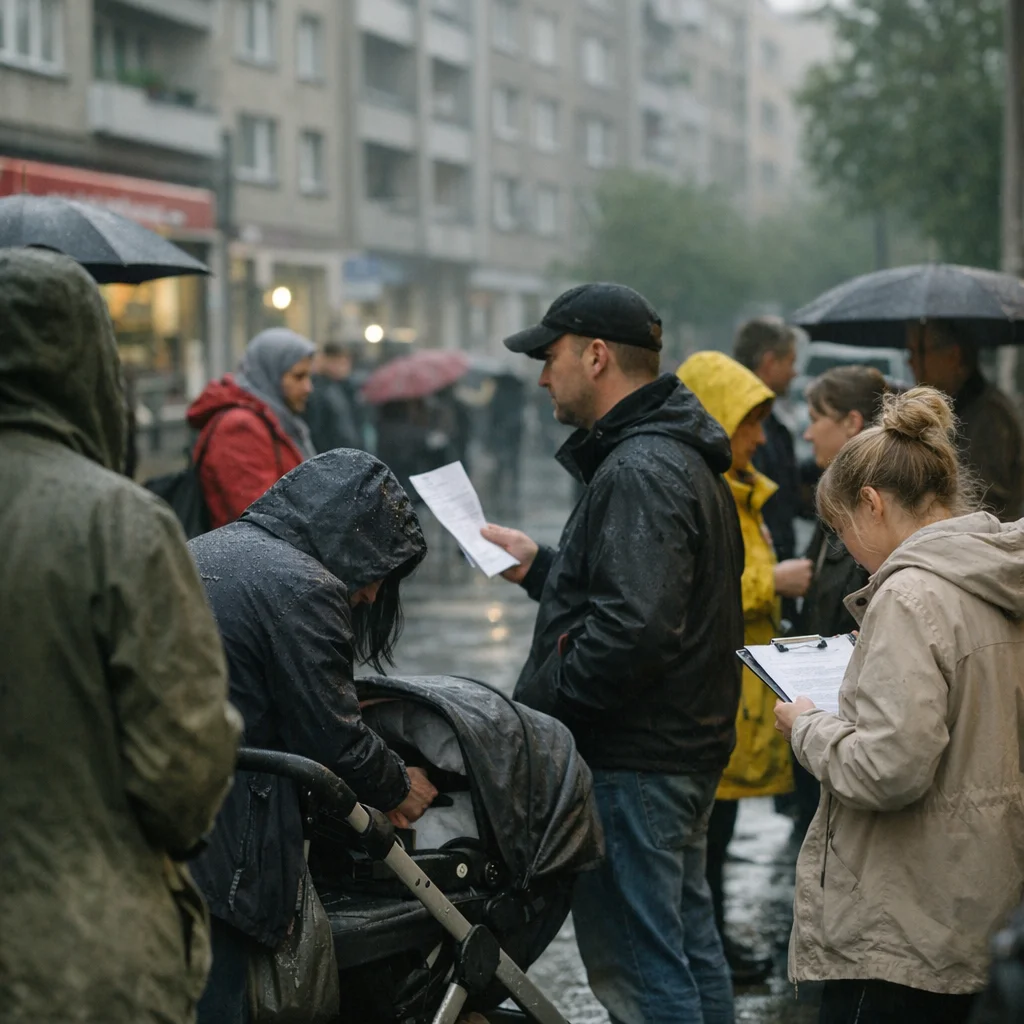
On a rainy Tuesday morning in Wedding, the municipal child-care office on the kind of street where the plaster flakes and the kebab sign flickers was packed with parents, neighborhood activists, and daycare staff trying to look alive. They were there for the neighborhood’s favorite public humiliation ritual: the kindergarten waiting list, a little administrative altar where people kneel, whisper about fairness, and then try to elbow each other out of the way with a smile that says I am one of the good ones.
The room was thick with the usual Wedding perfume of wet coats, stroller wheels, oat-milk breath, and status anxiety disguised as ethics. Parents in waxed jackets and expensive sneakers spoke in the soft, over-pronounced tone of people who have recently discovered “community” and want everyone else to know they have the correct playlist for it. They asked for “transparent placement criteria,” “inclusive hours,” “more language access,” and “Montessori-informed continuity,” which is a beautiful little phrase if you enjoy watching entitlement dress up in a cardigan and call itself social justice.
One mother, who had the steady gaze of someone used to being listened to in meetings, wanted to know why her application had not been moved up because her family was “already embedded in the neighborhood.” This was said in a room full of families who have been embedded there for decades, as if roots were something you earned with a bike seat, a tote bag, and the right way of saying solidarity without laughing.
A father near the radiator, still wearing a linen shirt that had clearly survived more brunches than labor, complained that the process lacked “pedagogical coherence.” He had the polished panic of a man who believes the state should be more tender to his convenience than he is to anyone else’s existence. His child was chewing a silicone giraffe while he explained, with almost erotic commitment, that fairness would be easier if the district could just “optimize the pipeline.” This is what neighborhood colonization sounds like now: not bulldozers, not truncheons, just a procurement fetish in soft pants.
Outside, Mehmet Kaya, who runs the bakery two doors down and has watched three waves of sincere people arrive and begin reorganizing the moral furniture, laughed when asked about the office’s appetite for “inclusion.” His daughter was denied a spot last year. “They say diversity, then they send a form that looks like it was designed by a committee of ghosts,” he said. “You need one login, two signatures, proof of residence, proof of income, proof you can read their mood, and then maybe your child gets a nap mat in six months.”
That is the real institution here: not child care, but a bureaucracy that converts moral language into a competitive sport for adults with advanced degrees and weak shame. The district office, with its laminated notices and exhausted staff, says placements follow capacity, staffing, and legal priority rules. Translation: there are not enough places, not enough workers, and more truth in the queue than in the speeches. But scarcity has become a social perfume for the new middle class. They inhale it and think it proves they belong.
The parent class of Wedding has perfected a vocabulary of benevolence that should be studied in laboratories and condemned in public. They say “community” the way landlords say “renovation.” They say “access” while checking whether the waiting list can be gamed by the people who know how to write a polite email with a subject line like a knife. They say “inclusion” and mean, with the silky hunger of a hand sliding under a table, please include my child first. The immigrant grandmother who arrives in practical shoes is expected to be patient; the freelance consultant with the ergonomic stroller is expected to be understood.
The left-wing version of this performance is only slightly less revolting than the right-wing one. The conservatives in their parish of resentment shout about “our values” until they have to pay for them. The progressive set chants solidarity until solidarity asks for a 7:30 a.m. arrival slot, three forms, and a child who can sleep on a mat that does not match the wallpaper of their self-image. They are not different moral species. They are two dialects of the same self-regard.
By noon, the room had split into familiar factions: the committee people, the transparency people, the children-should-not-suffer people, the people who had read one municipal newsletter and now spoke as if they had discovered democracy in a fermentation jar. One activist-turned-applicant proposed a “working group,” which in Berlin is often code for turning a shortage into a seminar and calling that governance. Another demanded a bilingual advisory circle, which might have been touching if it did not also function as a velvet rope for those fluent in the right kinds of concern.
Meanwhile, the daycare workers—underpaid, overbooked, and asked to absorb everyone’s ideals like a sponge under a sink—stood there with the dead-eyed patience of people who know they will be blamed for a shortage they did not invent. They are the only adults in the room not performing. They are too busy surviving the mess made by people who think administrative fluency is the same thing as virtue.
So the office promised another review, another conversation, another round of procedural tenderness. In Wedding, that means the queue gets longer, the language gets softer, and the same polished families keep mistaking their ability to navigate forms for a moral claim on the neighborhood. They did not arrive to share the city. They arrived to host it, and now they are furious the guest list includes people who still smell like work.