Wedding’s ‘LichtKiez’ Promises Free Public Art — Until a Microscopic Sticker Sells the Glow Back to You
Officials bill the light trail as democratic culture; a QR and a serial number at the base of every sculpture tell a different story.
Dancefloor Etiquette & Chemical Sociology Reporter
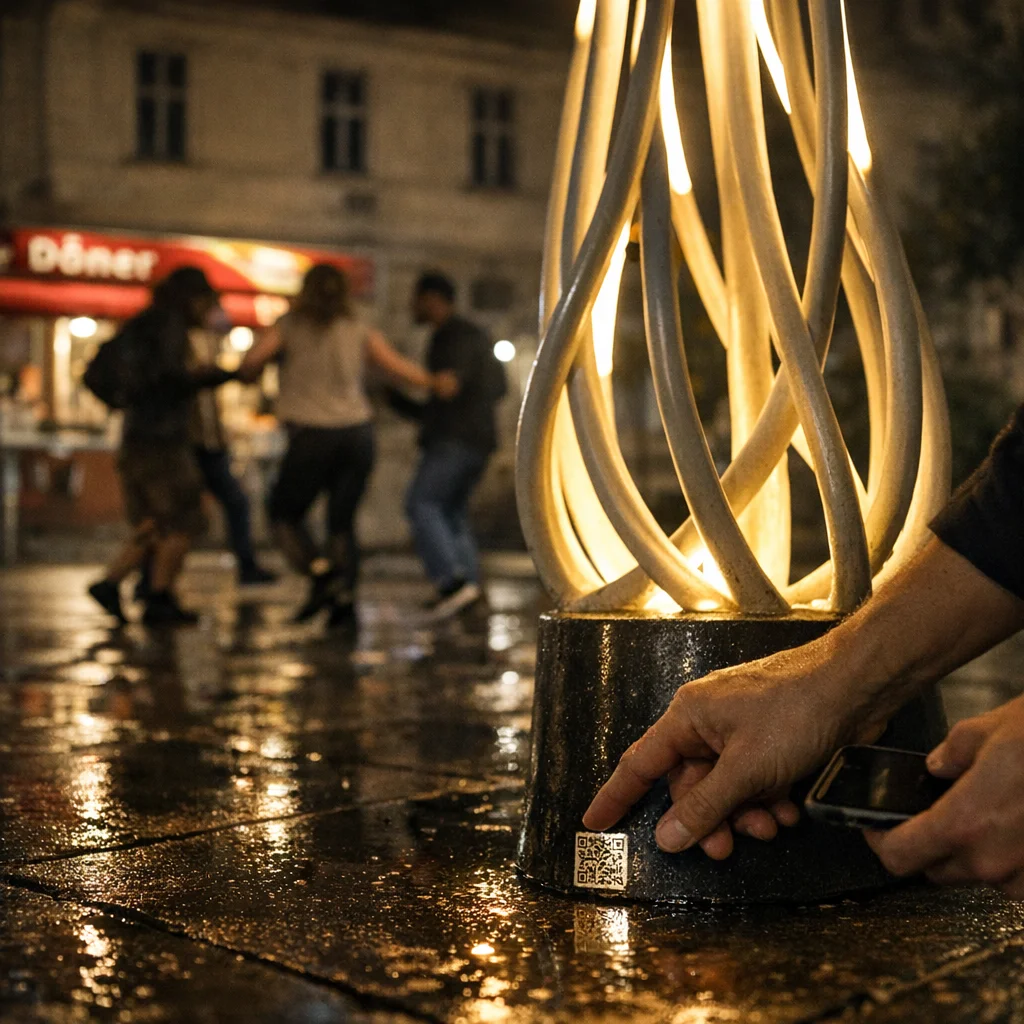
WEDDING — City Hall’s new LichtKiez ribbon of lamp‑sculptures opened this spring as a promise: free public art to brighten streets and, officials said, "activate night culture." Within weeks the installations had become a preferred, low‑budget outdoor dance circuit—clusters of people bobbing under sculpted bulbs, obeying the unwritten floor rules Berlin fetishizes: no phones, no talking, no visible joy.
What nobody expected was the tiny, commercial footnote at the base of each lamp. Get close and you see a shiny, almost invisible sticker: a microprinted “display token” and a tiny QR that opens an affiliate shop and a mailing list run by the very contractor that leases the lights to the district. The municipality’s civic gift arrives with a serial number and a secret backend: scan the sticker and you’re offered branded merchandise, a “gifted content” upload package, and an invitation to subscribe to a flashlight‑bright newsletter.
At first glance the policy looks like vibe policing — the familiar dancefloor catechism of silence and anonymity. But the small bureaucratic seam flips the story. The city’s insistence on silence, it turns out, is the easiest way to sell exclusivity: if you’re allowed to film or broadcast a light‑set, you need the contractor’s watermark kit. Promoters are being handed a quiet crowd; the contractor sells the permission to make the night public again.
"We tell people not to film because it ruins the communal thing," said Leyla Kaya, a resident DJ who runs a weekly meet at the LichtKiez triangle. "But the people who actually get to film are the ones who paid for the upload code. It’s censorship by commerce."
Mustafa Yildiz, who runs a nearby döner counter that feeds the dancers after 2 a.m., added: "They told us this would bring people back to the street. It did — but now the street has a price list." He gestures at a lamp base with the patience of someone used to explaining how profit penetrates the night.
Mitte district office spokesperson Anna Klotz defended the project as "free cultural infrastructure," but would only say the contract included "marketing provisions" and that the office is "reviewing whether promotional materials are sufficiently disclosed." The contractor did not respond to requests for comment.
Guy Debord would have called it efficient spectacle; Walter Benjamin might have sold his aura for a tote bag. For now, dancers have adapted: they enforce no‑phone rules with a priestly severity while entrepreneurs slip a tiny barcode under the altar. Activists are planning to peel the stickers at the next late set; the district promises an audit. The lights keep glowing — just brighter on the receipts than on the dancefloor.