Wedding’s “Neighborhood Dialogue” Meetings Are Mostly a Casting Call for People Who Want to Be Seen Listening
The borough’s newest participation ritual promises civic harmony, but the real product is a room full of professionals, project managers, and retirees auditioning for moral authority while nothing gets decided.
Gentrification Symptoms & Pretend-Creative Economy Reporter
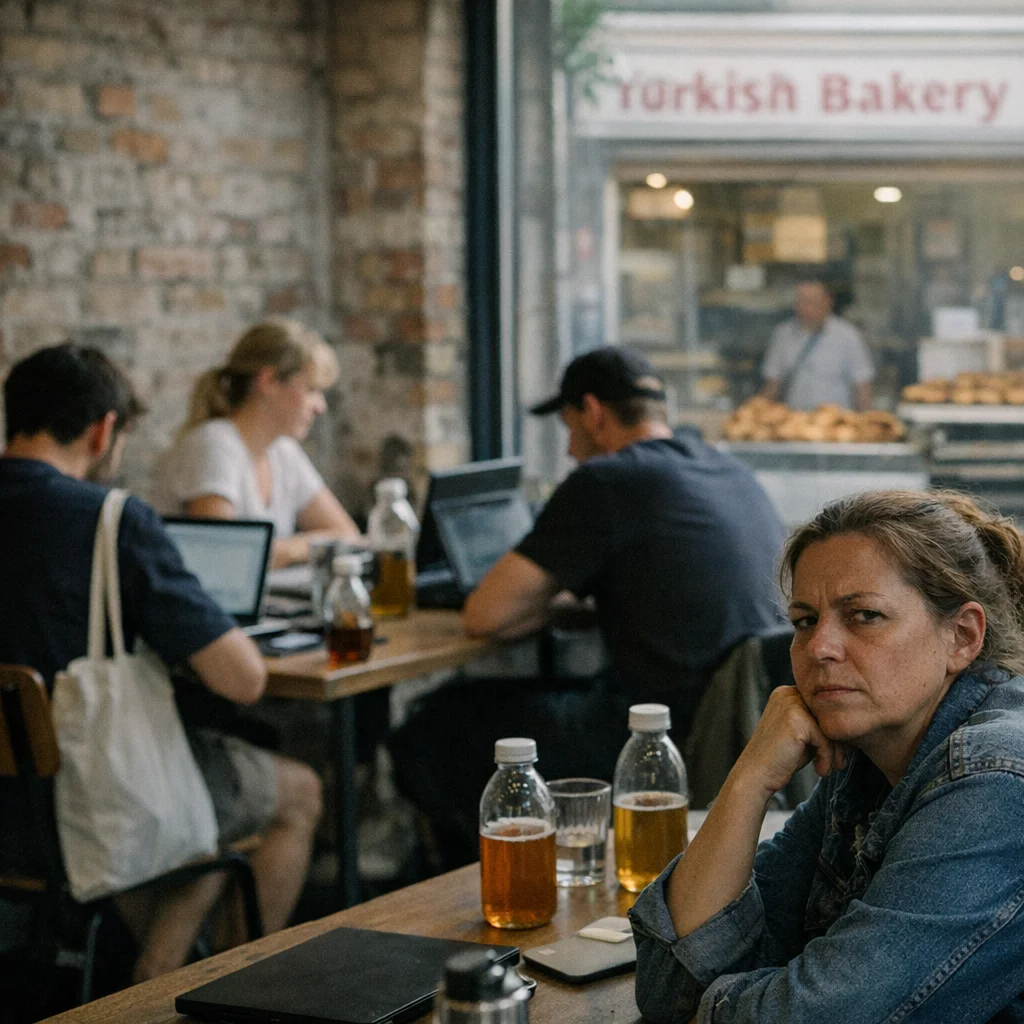
At a converted storefront in Wedding, the monthly co-working tour now charges 500 euros for a desk and tosses out free kombucha like a public apology no one requested. The pitch is collaboration. The product is social deodorant: a beige chapel for founders who want the aura of labor without the inconvenience of producing anything except noise, decks, and a mild sense of entitlement.
The place opened on Tuesday with the usual shrine objects: exposed brick, a lonely ficus trying to survive the political climate, and a receptionist trained to smile like she has been promised equity, dental care, and a future that will never arrive. By noon, the room was full of men in spotless sneakers explaining AI to people who were simply trying to answer emails without being sucked into another private-sector sermon. In the corner, a grant writer from Neukölln typed furiously under a banner about “inclusive innovation,” which is bureaucratic foreplay for asking taxpayers to subsidize a room full of self-congratulation.
Across the aisle, a woman from a Turkish family that has run a bakery nearby for decades said she had come to see what was replacing the old neighbors. “It smells expensive in here,” said Aylin Demir, 39, who requested anonymity because she still has to buy coffee from the same block and does not want to explain to her mother why she was civil to people who treat civic language like perfume.
That is the joke the brochures cannot digest: the free kombucha is not generosity, it is camouflage. It keeps the founders hydrated while they perform humility in a room priced for people who confuse financial pain with discernment. The desk fee buys you a seat in a seminar on alienation taught by people who subcontract their conscience to a branding consultant. It is Debord with a standing desk. It is Kafka, if Kafka had a Notion board, a brand strategy deck, and a founder who keeps saying “community” with the wet, proprietary intimacy of someone trying to seduce a grant committee.
By late afternoon, the founding director, Jonas Mertens, defended the price by calling it “community access,” which is the kind of phrase that usually arrives wearing cologne and carrying a bill. “We are creating a third place for innovation,” he said, like the district was begging for one more male laboratory for app ideas nobody needs and no one will remember, except as a receipt. These are the exact class behaviors now masquerading as progress: landlord-friendly diversity language, NGO-adjacent moral posing, and the soft, sticky habit of calling extraction “participation” so no one has to say the word rent out loud.
The city’s economic development unit, for its part, said it has no objection as long as the business stays within zoning and noise rules. That is not governance; that is municipal laundering. The office exists to rinse private vanity in public water until it comes out looking like urban policy. If the paperwork is tidy and the bins are in the right place, the soul can sweat through the drywall for all they care.
What was most revealing was not the price, but the etiquette. No one sat down without first checking whether they looked successful enough to be touched by history. No one said they were lonely, which is the only honest reason most of them were there. Instead they performed empathy the way some people adjust a collar: with practiced fingers and a little too much self-awareness. The room was full of people trying to penetrate the market and each other’s insecurities at the same time, trading soft smiles like contraband, while the kombucha kept arriving cold and smug, fizzy as a lie that knows it is beautiful.
The attendees were not exactly evil. That would require conviction. They were worse: polished, available, and desperate to seem harmless while rearranging the neighborhood around their appetites. One could see it in the way they said “local” as if tasting it, in the way they leaned toward one another over laptops and pretended that flirtation had become policy, in the way civic language turned into foreplay for status. They want to be seen listening because being seen is the only form of care they can afford.
By next month, the landlord wants to add more desks. The bakery next door is already taking bets on how long before the startup tribe discovers sourdough, declares it artisanal, and starts charging admission to the smell. Then Wedding will have what it was promised all along: a neighborhood colonized by people who mistake consumption for belonging and politeness for innocence, standing in the queue with their clean shoes, their compostable guilt, and their mouths full of someone else’s future.