Wedding’s 'Neighborly' Earplugs Are Snitching on Your Set
Promoters hand out foam plugs as harm reduction; a hair‑thin conductive crescent molded into each plug actually streams decibel bursts to a private 'quiet‑tech' firm—turning good manners into surveillance.
Nightlife Identity & Self-Deception Correspondent
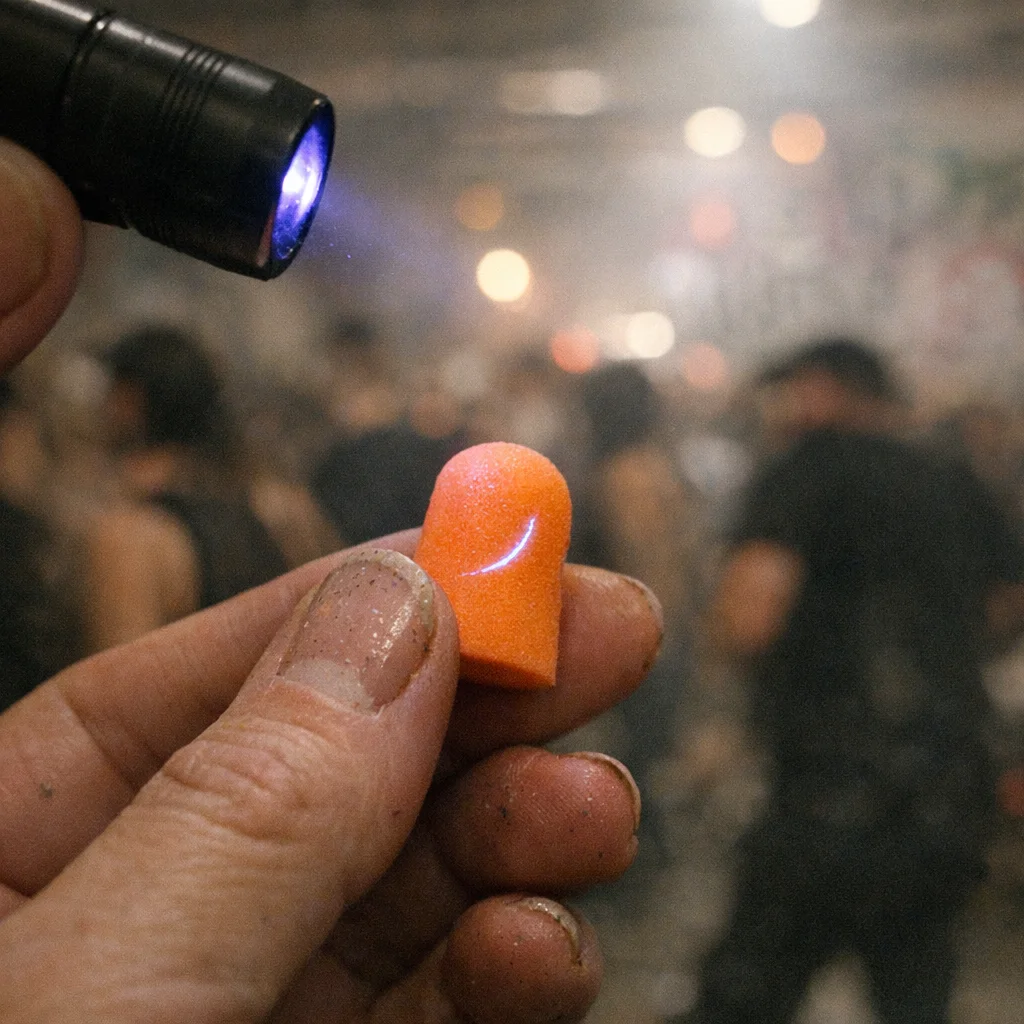
Who: promoters, clubgoers who build their identity around MDMA, and a private "quiet‑tech" firm. What: free foam earplugs handed out as harm reduction in Wedding actually contain a hair‑thin conductive crescent that pings a backend whenever worn, packaging BPM spikes and sudden volume bursts into sellable "noise profiles." Where: weekend venues and after‑parties on Müllerstraße and side streets across Wedding.
Promoters began distributing the bright orange plugs at openings and pop‑ups this winter, a pleasant gesture for residents and a neat PR prop: "We respect the neighborhood," read flyers tucked into the packs. Early last month a resistance blogger, known as TrashLamp, noticed under UV light a crescent molded into the foam. He pressed the plug onto his hand and watched his phone light up with a terse packet: timestamp, decibel curve, a crude BPM reading.
"It felt like someone stroked my party and sold it on eBay," said Selin Arslan, 29, a bartender who describes herself as "an MDMA person"—someone whose social currency is earned in glittering peaks and emotive surrender. "We were told these were for our ears. They were for their spreadsheets."
Promoters originally defended the giveaway as a bridge between loud nights and tired neighbors. Once the crescent was revealed, QuietTech GmbH — the startup behind the analytics — issued a statement: the crescent is a passive conductive tag designed to log sound exposure to help venues dial down nuisance. "Data is anonymized and aggregated," said Lukas Meier, QuietTech spokesperson. "We sell aggregated metrics back to district planners and venues for community planning."
Privacy advocates and some DJs beg to differ. "Anonymized metrics are how you discover repeat customers," said Ari Novak, who runs an after‑hours kitchen and once guestlist‑managed the same crowd that brags about living for the MDMA high. "If you base your identity around ecstatic peaks, congratulations: you're the easiest demographic to package."
The contradiction is small and precise: a device marketed as care that signals when someone is most exposed, most euphoric, and most likely to buy another round. It collapses harm reduction into commodity surveillance — a Baudrillardian safety, where the symbol of protection replaces actual protection.
Berlin's data protection authority confirmed it has opened an inquiry; the district office said it asked QuietTech for technical documentation. Several venues paused distribution and swapped plugs for generic foam that lacks the crescent.
For now the neighborhood meeting scheduled next week promises to be raucous: residents want transparency, promoters want to keep selling the illusion of neighborliness, and a subculture that defines itself by afterglow faces the prospect of being reduced to a spreadsheet. The only certainty is that the people who built their identity on MDMA now have to figure out whether they want to be a feeling or a target.