Wedding’s New “Anti-Idling” Crackdown Turns the Taxi Rank Into a Loyalty Program for Drivers Who Never Stop Complaining
The borough says it wants cleaner air. The real tell is that enforcement starts exactly where the black cars, app chauffeurs, and hotel shuttles are already paid to wait with engines on and dignity off.
Administrative Grief Correspondent
The city’s favorite vice: pretending inconvenience is ethics
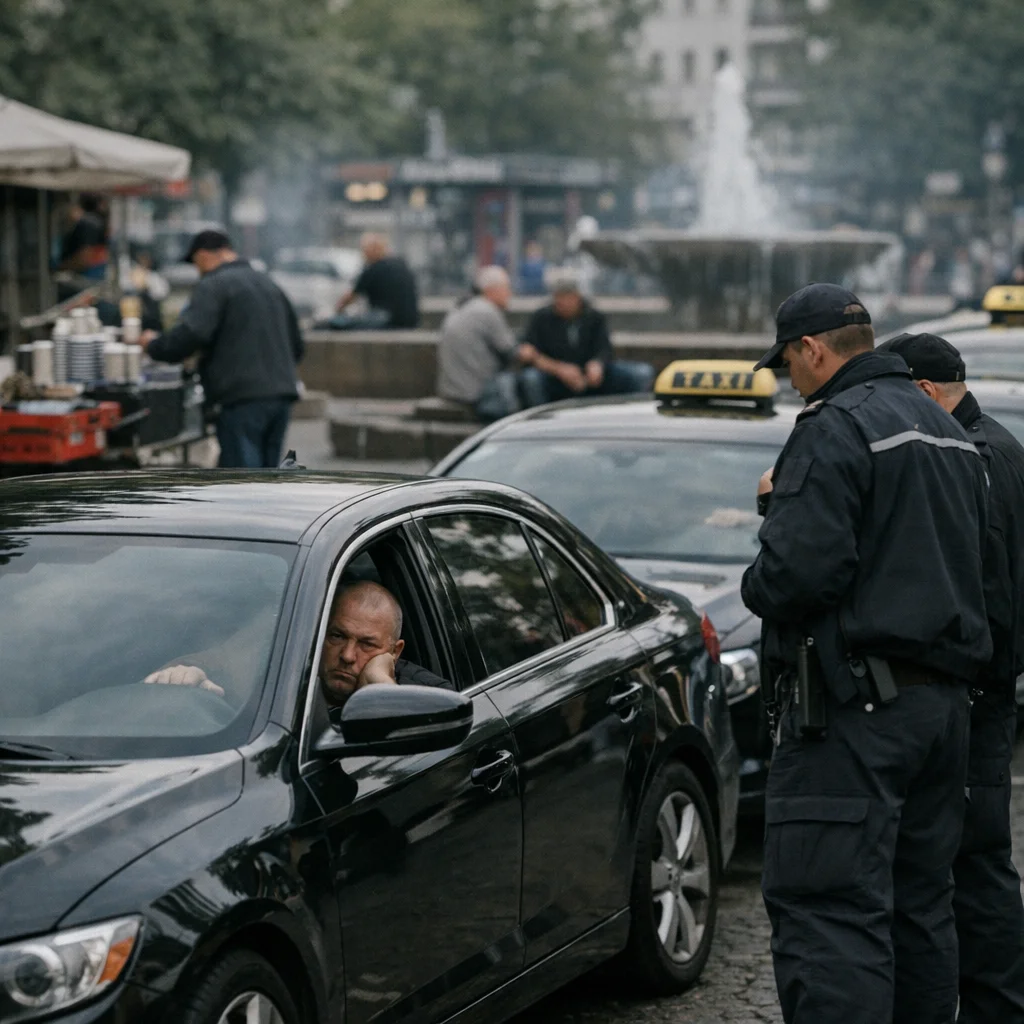
Police say the new anti-idling crackdown in Wedding is meant to clean up the air. That is the official perfume, sprayed over a scene that smells more like diesel, damp coats, old coffee, and bureaucrats congratulating themselves for discovering labor under fluorescent light. What it is actually cleaning is the social pecking order around the taxi rank: the black cars, app chauffeurs, hotel shuttles, and early-morning regulars who sit there smoking as if the city itself owed them interest and a private apology.
The enforcement started around Leopoldplatz in the morning, when the neighborhood is already doing its usual half-awake striptease between transit hub and confession booth. Vendors were setting out paper cups of coffee, limp cigarettes, and fruit that looked as if it had been touched by optimism and lost. The street had that Wedding look of a place that never quite decides whether it is being ignored or managed. Men who had clearly been awake since the previous day leaned on railings with the defeated elegance of people waiting for a landlord, a cousin, or death to answer the phone.
Green language, gray motives
The borough office, with its favorite hobby of sounding righteous on behalf of the air, insists the campaign is about “emissions reduction,” “shared responsibility,” and “a cleaner public realm.” That is the kind of sentence a civil servant says when they want to sound ecological while standing in a district where the easiest people to discipline are the ones still working at 7 a.m. The message is not subtle: if you arrive in a cab, you are a nuisance; if you arrive in a pressed coat with a reusable cup and a smug bicycle posture, you are the future.
A spokeswoman from the district office called the controls “consistent and fair,” which is administrative code for: we will be merciless to whoever is easiest to corner and then praise ourselves for courage. It is a nice little bourgeois miracle. The city gets to perform virtue with one hand and keep the curb socially useful with the other. The idling black cars are a visible sin, while the private cars of the office class, the hotel shuttles, and the people who can afford to be late in soft shoes are waved through with the serene indifference usually reserved for family money.
One driver, who asked to be identified only as Murat because he still owes money to three different cousins and one insurance company, said the rule turns every curbside pause into a humiliation ritual. “If I shut the engine, I lose the job,” he said. “If I keep it running, I get treated like I’m personally wrecking the planet.” He said the worst part is not even the fine. It is the posture required: one hand on the wheel, one eye on the meter, shoulders locked, bladder full, pretending not to sweat while some municipal zealot in a branded vest writes him up as if he were a public indecency.
Who gets to loiter, who gets punished
At Leopoldplatz the class sorting is visible enough to make a cynic blush. The app chauffeur waiting for a tourist with a suitcase gets the side-eye. The hotel shuttle with tinted windows and a corporate logo gets a nod. The pensioner in a dented hatchback who pulls over for six minutes gets a lecture. The black cab driver who is there because the city designed the day to require him gets treated like he personally dragged a smokestack into the square and lit it with spite.
Meanwhile, the people with the cleanest consciences are the ones least exposed to the actual inconvenience. They can stroll past the rank with their oat-milk halos intact, say “air quality” the way priests say grace, and move on to brunch while somebody else is paying for their conscience in fines, fuel, and lower back pain. Nothing says civic fairness like making labor look dirty and leisure look enlightened.
The officers themselves seemed faintly embarrassed, which in Berlin usually means the policy has just crossed from stupid into intimate. They moved from car to car with the anxious stiffness of men who know they are enforcing a moral fantasy in public and hoping no one notices the zipper. One could almost admire the choreography: the state arriving with a clipboard to tell working people that their survival habits are offensive, while the district office poses as a lung-saving saint.
By late morning, several idling vehicles had been moved on, one vendor had been warned about blocking the curb, and the regulars had shuffled five steps toward the fountain to keep arguing with the day. The borough says more checks are coming next week. Of course they are. The city loves these little purity campaigns because they are easier than fixing transit, easier than making space, easier than admitting that clean air is nice and selective humiliation is cheaper.
So the rank will fill again. The engines will cough, the officers will preen, and Wedding will keep doing what Berlin always does best: laundering class discipline in the language of virtue and calling it progress while someone in a blazer breathes comfortably over the exhaust.