Wedding’s New ‘Citizen Budget’ App Is Really a Confession Booth for People Who Enjoy Being Ignored
The district sells it as participation: residents choose where a little public money goes. But the real feature is the one everyone misses in the demo — every suggestion gets funneled into a neat category, a polite.
Administrative Grief Correspondent
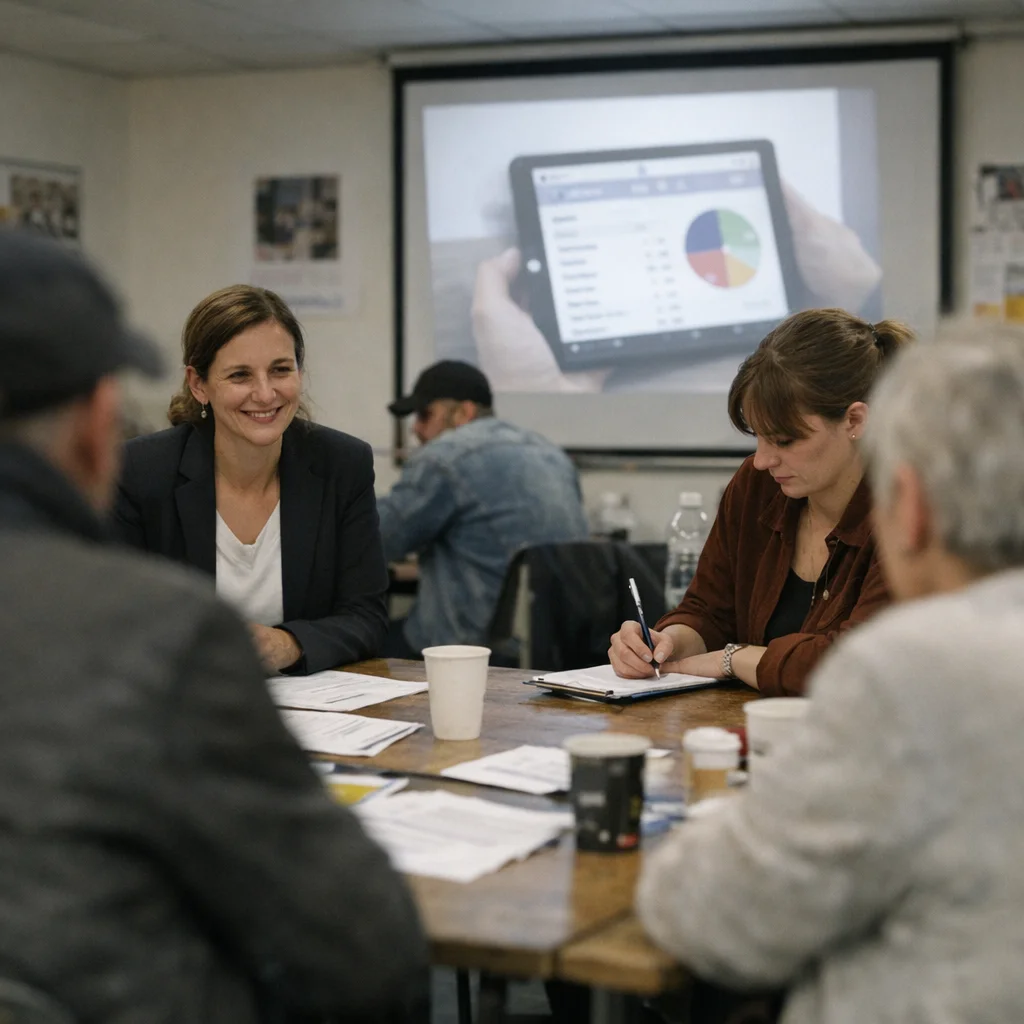
The city’s newest little humiliation ritual
In Wedding, the district office has discovered a modern miracle: a citizen budget app that lets residents feel involved without ever threatening anyone employed by the state. It is democracy as a sedative. Type in your grievance, tap a few dropdowns, select a cheerful category like playgrounds, mobility, neighborhood cleanliness, or social cohesion, and watch your frustration disappear into the municipal bloodstream like a drop of blood in a very expensive bathtub.
The app is marketed as participation. In practice, it is a velvet glove over the same old fist. Residents are invited to “shape priorities,” which is bureaucratic language for being allowed to decorate the cage. The district office then translates the public’s messy, inconvenient needs into policy-safe mush and congratulates itself for “hearing concerns.” That is the whole trick: convert pain into a spreadsheet, call the spreadsheet dialogue, and let the budget remain exactly where it was.
At a consultation workshop in a community room off Müllerstraße, the district’s facilitators performed their usual theater of concern. A moderator in a soft blazer asked everyone to speak “briefly and constructively,” which is how civic life now asks the public to undress while keeping the lights dim. A resident mentioned overflowing trash around Leopoldplatz. The moderator typed it into the app as “waste-management optimization.” Another person asked for more youth services. That became “intergenerational resilience.” A complaint about drug dealing near the U-Bahn entrances was gently massaged into “public-space stress reduction.” By the time the sentence reached the final category, it sounded like it had been murdered by HR.
This is how the district office protects itself: not by solving things, but by making them sound processed. Every suggestion is laundered through language that makes inaction feel like prudence. A child asks for a cleaner playground; a bureaucrat hears a “low-threshold participatory input opportunity.” A tenant asks why the street smells like stale piss and policy failure; the app offers a checkbox. Everyone leaves with the comforting aftertaste of being managed.
The people most enthusiastic about the app are, naturally, the people least likely to suffer its outcomes. There were the usual medium-status civic enthusiasts with tote bags and earnest foreheads, the kind of residents who say “we need to build bridges” when what they mean is “please don’t make me choose sides in a conflict that might affect my brunch.” They love participation in the abstract, because abstraction never shows up in their hallway at 2 a.m. They want the moral glow of engagement without the inconvenience of consequences. Civic virtue, for them, is a perfume: apply lightly, leave no stain.
One local activist, who asked not to be named because she still needs to be invited to panels, said the app’s genius was not that it empowered residents but that it trained them to speak in the district’s dialect. “You stop asking for housing or enforcement or actual money,” she said. “You start asking for ‘better coordination’ and ‘visible follow-up.’ It’s like watching a protest get turned into a newsletter.” She was not wrong. The whole design is a conversion chamber: anger goes in, stakeholder language comes out.
The district office loves this arrangement because it creates the appearance of public legitimacy without the embarrassment of public power. Officials can point to “community input” while doing the administrative equivalent of rolling over and pretending not to hear the house burning. The app becomes a certificate of innocence. If nothing changes, well, there was a process. There were workshops. There was moderation. There was translation into policy-speak, the bureaucratic equivalent of putting a finger in the mouth and calling it empathy.
And that is the deeper obscenity: not that residents are ignored, but that they are made to collaborate in their own dismissal. The app invites them to perform relevance. They supply the emotional labor, the district harvests legitimacy, and the budget remains a locked drawer with a friendly interface. It is civic participation as a slow striptease for people who will never be touched. Everyone is told to bare their needs, their urgency, their tiny civic bruises, and then the officials clap politely from behind a screen.
By the end of the evening, the workshop had produced a neat list of “top themes,” which is how the state deodorizes a neighborhood into something governable. The residents went home with the familiar ache of having been useful to power without disturbing it. The district office went home with its favorite prize: proof that people had been consulted, which is the modern administrative version of consent.
Nothing changes except the paperwork, which is exactly what the paperwork was for.