Wedding’s New Citizens’ Office Trick: Make Immigrants Do the Linework So Staff Can Feel Efficient
The district sells it as better service. The real innovation is a clipboard theater where exhausted applicants are sent back and forth until they translate the bureaucracy for each other.
Administrative Grief Correspondent
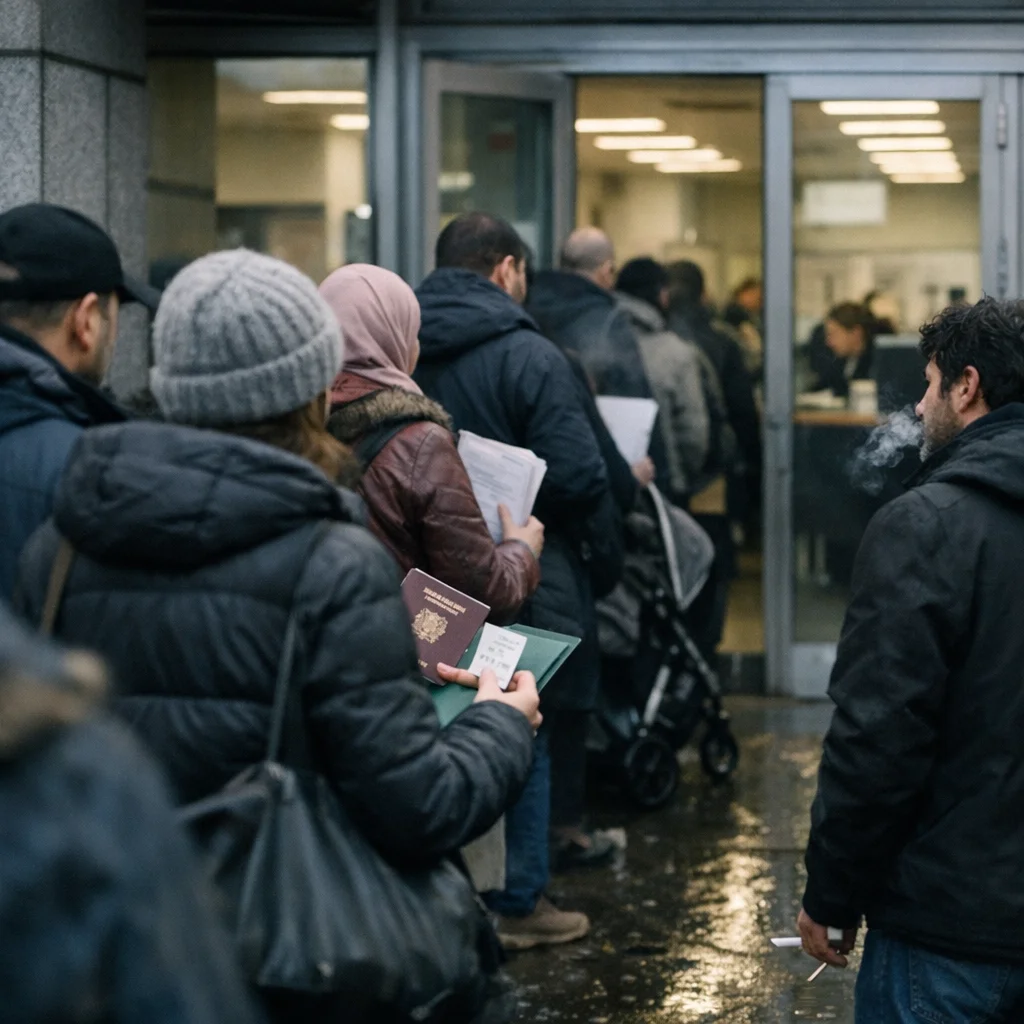
The district’s favorite magic trick
At the Wedding Citizens’ Office, the line does not move so much as develop a moral philosophy. By 7:30 a.m., the corridor is already full of people clutching folders, passports, residence papers, utility bills, and the kind of faces that say they have been politely punished before breakfast. The district administration calls this an intake setup. That is the modern euphemism for making the public stand around while the state remembers, at leisure, that it exists.
A sign points one way. Another sign points another. A third, laminated with the confidence of a small regime, tells applicants to bring documents they were never told to bring. The ticket machine spits out numbers like a slot machine trained by accountants. Somewhere behind the glass, the office performs competence with the empty, sensual confidence of a bureaucrat who has never once had to solve the problem they are paid to describe.
Outsourcing the work to the people asking for help
The real innovation in Wedding is not efficiency. It is extraction with a civic logo on top.
People waiting for residence permits, appointments, or the mercy of a rubber stamp end up doing the office’s labor for it. They translate for one another because the forms are in one language and the explanations in another and the staff, naturally, are too busy being understaffed to be understandable. They compare notes about missing papers, contradictory instructions, and the thrilling government pastime of telling two people the exact opposite thing and then blaming them for misunderstanding.
One man in a sweat-darkened jacket explains the letter in broken German to an older woman beside him. She nods, then explains it again in Arabic to the next person, who explains it again in Turkish, who then walks back to the counter and repeats the whole machine in cleaner German than the office manages itself. This is what the district means by integration: the applicants are expected to become their own interpreters, their own queue managers, their own emotional support infrastructure. If they are lucky, they will also become grateful.
A clerk behind the glass calls this “service optimization” with the dead-eyed serenity of someone repeating a phrase that has been paid for in consulting fees. There is always a little theater in public administration when the state wants to look slim. It pins on a smile, cuts staffing, and sends the public to do the carrying.
The humiliation is the point
The queue is where the office reveals its true appetite. It does not merely delay people; it trains them. You learn to lower your voice when addressed like a problem. You learn to keep your documents visible, like a saint presenting relics. You learn which counter is lying, which one is confused, and which one is simply enjoying the tiny narcotic of power that comes from telling a tired person to come back next Thursday with a different piece of paper.
The cruelty is not loud. It is fluorescent. It smells like toner, damp coats, and the stale coffee of institutional self-respect. A mother with a stroller is told to wait because her ticket number is not yet called. The person ahead of her is sent away for a missing stamp that no one mentioned at the first window. A student with a backpack is asked to fill out a form they have already filled out, because the office apparently believes repetition is a form of proof.
This is how the district keeps itself clean: the labor is shifted downward, then the delay is framed as neutrality. If the system fails, the applicant is imagined as unprepared. If the applicant is exhausted, that is read as attitude. If people end up translating for each other in the corridor like underpaid diplomats of the wreckage, the office can still report a smooth process because the line was “handled.”
Handled by whom, exactly? By the people who came to be processed.
Efficiency theater with a stamp pad
The district administration loves the language of reform because it allows failure to wear a sensible shoe. It talks about digitalization, streamlining, and access while keeping the same old bottleneck in place and calling it modern. The result is a civic burlesque: staff performing authority, applicants performing patience, and everyone pretending this is not a quietly humiliating way to govern.
What happens in Wedding is not an accident of overload. It is a budgetary choice with a polite smile. Understaff the office, overload the intake, and let the people who need the service absorb the friction. Then congratulate the district for keeping the machinery moving. It is a lovely arrangement if you enjoy watching public institutions convert need into unpaid labor and then invoice the public for gratitude.
The funniest part, if one has the wrong kind of soul, is how sincerely the system praises the patience it manufactures. It is like a bad lover thanking you for staying after it has already forgotten your name. Everyone is told to be flexible, collaborative, resilient. In other words: bend over the counter, hold your papers with both hands, and help the state pretend it is touching you with care.
What actually benefits
Who wins from this setup? Not the people waiting. Not the applicants who have built entire afternoons around a number that may never be called. Not the immigrant parent translating forms while worrying about rent, work, and the next appointment. The winners are the administrators who get to report calm through the very panic they created, and the political class that can point to the office and say look, it is functioning, while the function is mostly performed by the public itself.
That is the real obscenity: the district gets to appear humane precisely because the people seeking help are forced to become the office’s unpaid staff. They do the translating, the organizing, the soothing, the explaining, the waiting. The administration keeps the authority, the applicants keep the burden, and everyone is expected to clap because the line eventually moved one person forward.
At some point in the morning, the corridor empties by increments. Another stack of forms is distributed. Another confusion is corrected by the people it was supposed to confuse. Another clerk announces a new rule with the grim tenderness of a person who knows the building is on fire but still wants credit for the ashtray.
Wedding, in other words, has perfected a very Berlin form of public intimacy: the state bends you over a counter, asks you to translate the terms of your own inconvenience, and then thanks you for your cooperation.