Wedding’s New Green Facade Is Powered by the Same Diesel Vans It Claims to Replace
The district’s climate branding looks noble until you notice who’s doing the hauling: contractors paid to pose as sustainability while idling the neighborhood into a quarterly report-friendly future.
By Lena Veneer
Gentrification & Cultural Displacement Correspondent
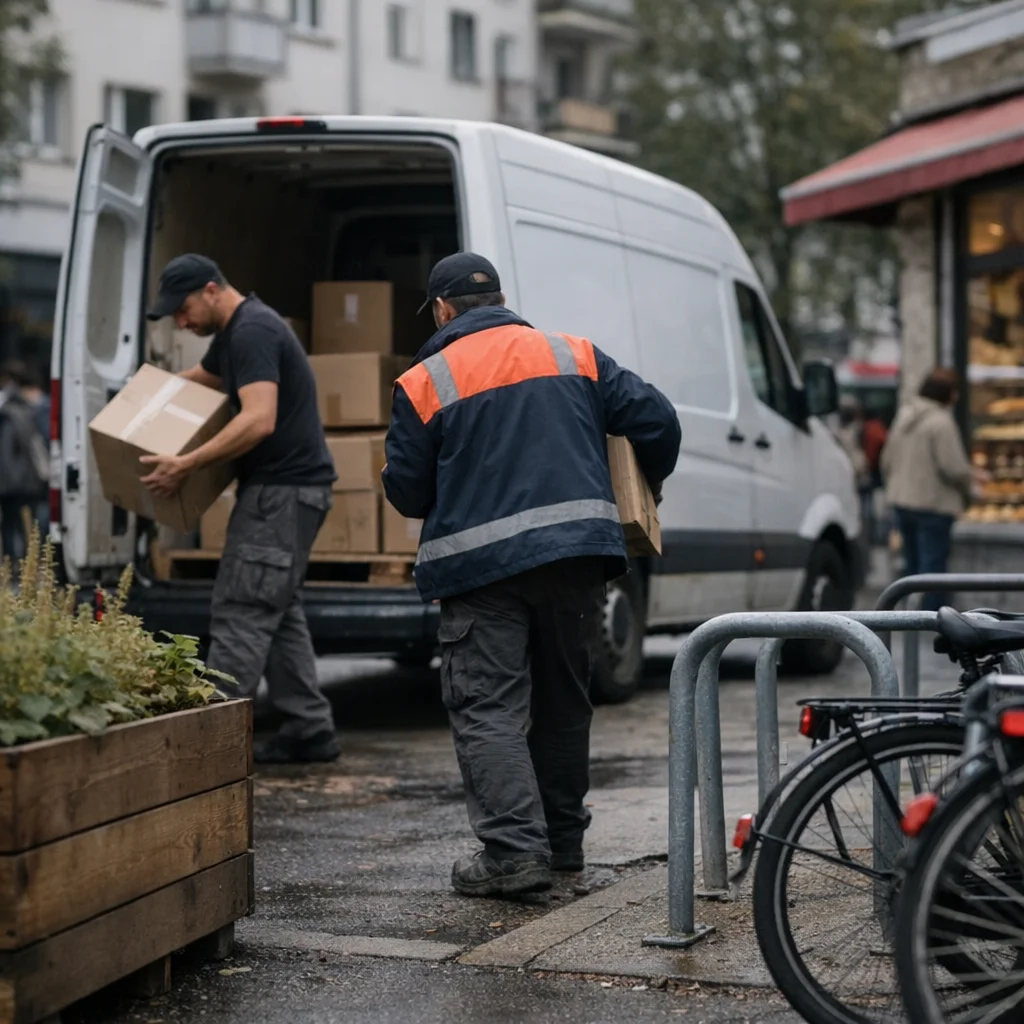
Wedding has discovered the exact municipal recipe for looking progressive without becoming less disgusting: paint the project green, hire someone else to do the dirty work, and call the fumes a transition.
On paper, the district’s latest climate push is a model of responsible urban renewal. Better logistics. Greener streets. Smarter delivery routes. Fewer emissions, allegedly. In practice, it looks like a subcontractor pageant staged for the district office, with diesel vans backing into curb space like they own the postcode and a parade of temp workers unloading the virtue one crate at a time.
The performance is so polished it almost smells like policy. Almost. You can still catch the exhaust under the citrus-scented language, drifting out from the same intersections where the city likes to pretend it is “reclaiming public space” while letting private contractors occupy it like a bad tenant with a better logo.
Near Leopoldplatz, the new green aesthetic is impossible to miss if you enjoy watching hypocrisy arrive in branded clothing. Planters. Painted bike racks. A cheerful municipal poster about resilience. Then, right behind it, a white diesel van from some “solutions” company whose idea of sustainability appears to be parking with the engine on while two exhausted men in reflective vests drag boxes into a building that will soon host a workshop on ethical urban futures.
That is the core trick. Not decarbonization—deception with better typography.
A district office spokesperson will talk about “pilot initiatives,” “stakeholder alignment,” and “holistic mobility concepts,” which is bureaucrat-speak for a lot of meetings about making the street look cleaner while the actual labor gets outsourced to whoever is cheapest, flakiest, and least likely to be invited to the launch photo. The contractors get the mess. The office gets the milestone. The public gets the invoice and a recycled quote about community.
A bakery owner on the corner, who has been watching Wedding’s little climate theater from behind trays of sesame bread and cigarette smoke, was less impressed. “They say green,” she said, looking at a delivery truck blocking the curb for a third straight minute. “But the truck still coughs like my uncle after Ramadan.” She shrugged in the way only a person can shrug when they have already paid rent, wages, and the city’s moral mood swing for the month.
This is what Berlin calls progress when it wants applause without accountability: a municipal seduction routine. The district office plays the principled top, the contractor plays the flexible bottom, and the neighborhood is left in the middle, paying for the room and cleaning up the sheets.
The language around the project is especially shameless. “Climate resilience,” they say, while the streets remain noisy enough to strip paint from a mailbox. “Responsible logistics,” they say, while a subcontracted van double-parks with the confidence of a man who knows the fine will be billed to someone else. “Inclusive transformation,” they say, which in Wedding mostly means the same people keep doing the heaviest work while someone with a tote bag and a public-sector badge writes a report about dignity.
The district office does not seem embarrassed by any of this. Why would it be? Embarrassment is for people who still believe their own slogans. The modern city administration has moved beyond belief. It now specializes in managed inconsistency: enough green language to seduce voters, enough outsourced dirt to preserve the budget, enough public innocence to keep the grant money flowing.
And there is a particularly Berlin brand of smugness at the center of it all, the kind that treats a compost bin like a revolution and a contractor invoice like moral complexity. The same crowd that cannot stop explaining circular economy to anyone within earshot is perfectly fine with a logistics chain held together by diesel, underpaid labor, and the erotic thrill of appearing conscientious in a district newsletter.
Wedding, naturally, is where this gets performed most nakedly. A neighborhood with enough pressure, migration, rent anxiety, and old-school survival instinct to make the branding look tacky by comparison. People here know the difference between a system that works and a system that poses. The city, unfortunately, prefers the pose because it photographs better beside a sapling.
So the green future arrives in Wedding the way most Berlin reforms do: late, noisy, and already compromised. It comes in a van that should have been retired years ago. It comes with a clipboard. It comes with a slogan about care. And it leaves behind the same oily little proof that the district’s favorite form of sustainability is still the one that can be subcontracted, monetized, and smiled through while the engine idles.