Wedding’s New Heatwave Emergency Plan Mostly Protects the Offices That Can Afford Air Conditioning
As temperatures climb, the district’s “climate resilience” strategy quietly turns into a priority list for municipal staff, corporate tenants, and anyone with a lobby and a branding budget.
By Jax Delayski
Transit Meltdown & After-Hours Logistics Reporter
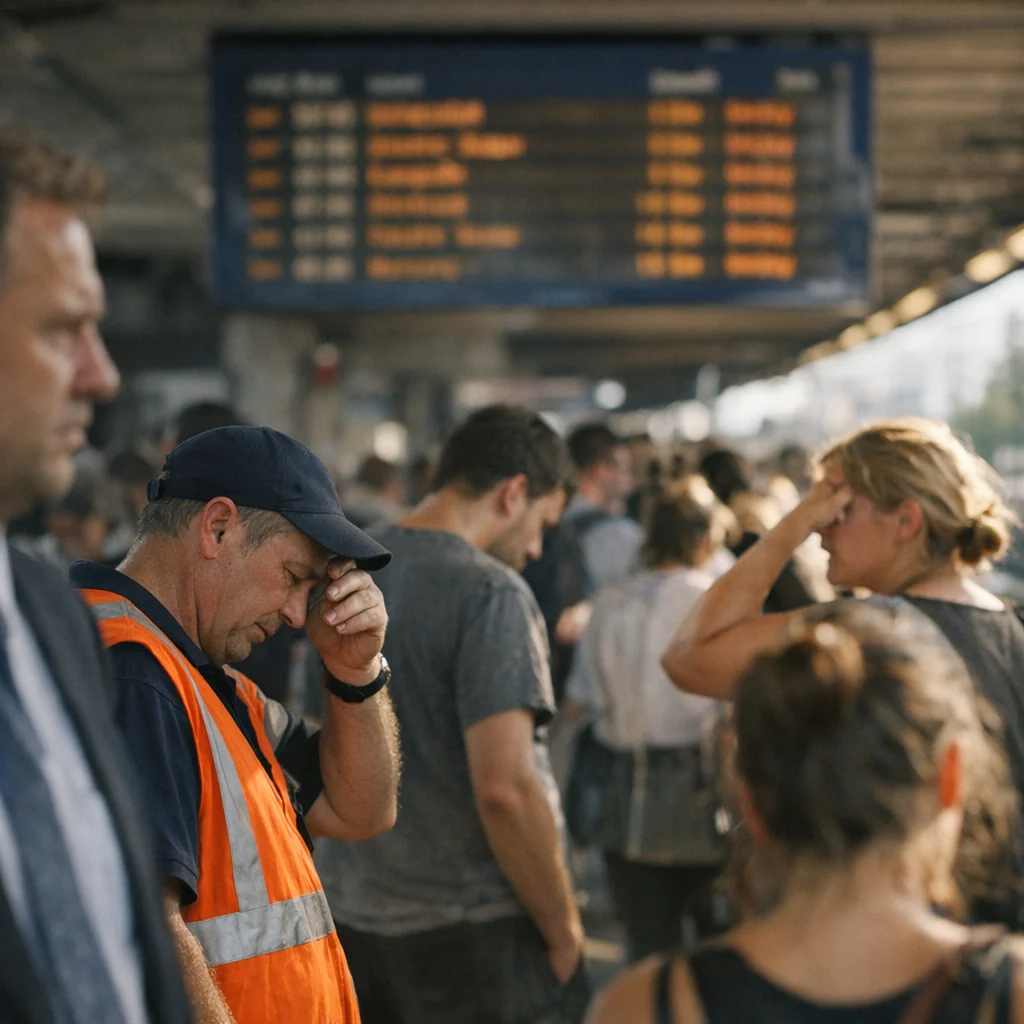
Deutsche Bahn rolled its latest timetable apology through Wedding this week with the smooth, lubricated confidence of a man who has already been paid, already missed the meeting, and now wants credit for emotional honesty. At Gesundbrunnen and the surrounding platforms, passengers were told that trains running about 10 minutes behind schedule could still count as “basically on time,” a phrase so ethically hollow it could be carved into the lobby of any municipal contractor office in Mitte.
That is the real genius of the delay regime: it does not merely fail. It creates a whole professional ecosystem around the failure. Bahn publishes the lie, the Senate nods at the lie, the district office files the lie, and somewhere a transport consultant invoices the lie by the hour while muttering about “resilience pathways” over a white wine that costs more than a single mother’s weekly BVG balance. The city does not run on punctuality. It runs on people with secure salaries explaining why other people should be patient.
The first clue that the public was being trained in elastic reality came when screens at the station began blinking with delays so routine they looked less like information than an abusive relationship in font form. By midmorning, passengers were doing what Berliners do best: standing still while pretending that this is a personality trait rather than a symptom of administrative neglect. A Turkish baker carrying trays of bread toward a shop near Müllerstraße said the logic was “like a landlord calling the leak a humidity feature.” Another rider, Janine Krüger, who requested anonymity because her boss also worships the gospel of “agile” working hours, said she had already heard three versions of the same excuse and none of them had the decency to arrive on time.
A Bahn spokesperson, speaking with the polished deadness of someone who has never had to sweat through a shirt on a packed platform while rich people in cooled offices send “just circling back” emails, said the company was “continuously improving reliability metrics.” That sentence is pure corporate foreplay: all promise, no arrival. The actual improvement, for now, is linguistic. If the train is late enough, the schedule is no longer wrong, just creatively interpreted. It is public-sector gaslighting with a logo on it. Walter Benjamin for people who collect compensation vouchers and call it civic participation.
The class divide on the platform was not subtle. The startup worker with the oat-milk tote and the rented irony checked Slack on a phone cooled by a data center somewhere else and called the whole thing “resilience.” The pensioner, sweating under the digital board, called it Tuesday and adjusted a plastic bag cutting into her wrist. A self-declared urban realist in a spotless coat complained about “systemic underinvestment” with the smugness of a man whose monthly ticket is subsidized by the same political class that will never breathe platform air long enough to understand the insult. And over near the bench, a district employee in a lanyard looked into the middle distance with the haunted neutrality of someone who knows the memo is already written and still wants to flirt with accountability.
That is the obscene little ballet of Berlin mobility: the people who can leave early, sit in air-conditioned offices, and turn delay into a networking anecdote; and the people who are left on the platform to marinate in heat, damp clothing, and the municipal aftertaste of “efficiency.” One group gets to be late as a style choice. The other gets late as a tax.
By early afternoon, the station announcements had the tenor of a failed lover making one last bid for access. Trains were “expected,” which in Bahn language means desired, budgeted for, and not emotionally available. One delay was described as “minor,” which is the same word administrators use for scandals, leaks, and the kind of infrastructure rot that only becomes visible once it has already eaten the floorboards. In a city that still mistakes endurance for identity, 10 minutes late is not punctuality. It is a municipal sedative administered by people who will never have to stand in the heat and swallow it.
The district office said it was “in dialogue” with transit officials, which is bureaucratic German for touching tips while pretending to negotiate. The Senate, of course, prefers language that sounds like management and behaves like abandonment. Everyone gets to be concerned; nobody gets to be responsible. Until then, Wedding’s passengers will keep participating in the oldest local ritual: waiting for a system that has enough funding to brand its failure, enough consultants to name its collapse, and enough political protection to make your inconvenience look like civic maturity.