Wedding’s New “Local Commerce” Grant Is Mostly a Fee Refund for Shops That Never Planned to Hire Anyone
The district praises itself for supporting small businesses, but the paperwork quietly rewards the most Berlin kind of entrepreneur: the one who wants the neighborhood's good will, public branding, and grant money.
Gentrification Symptoms & Pretend-Creative Economy Reporter
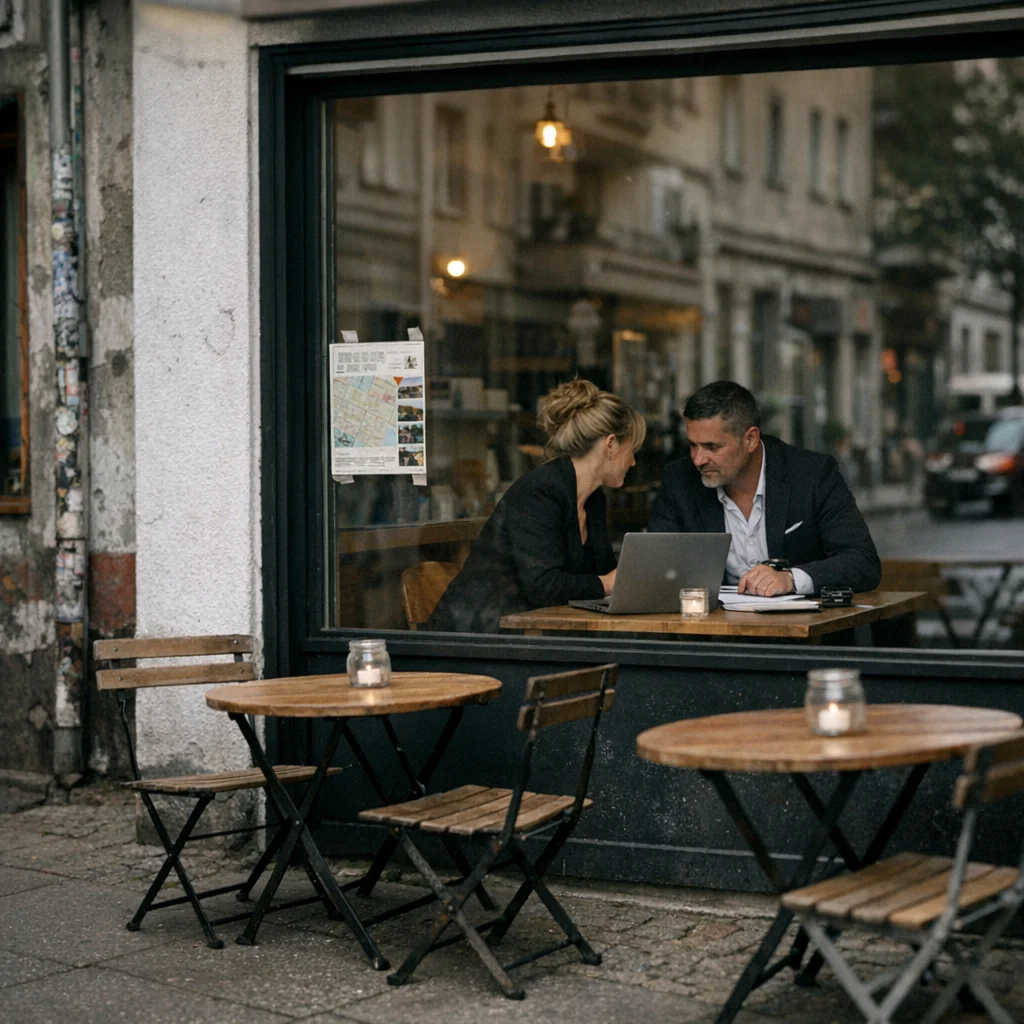
Wedding has discovered a new civic religion: the grant.
Not the kind that builds anything durable, of course. This is Berlin, where public money rarely arrives as infrastructure and usually shows up wearing a tote bag, saying it’s “empowering the neighborhood.” The district’s latest “local commerce” program is sold as support for small businesses. In practice it behaves more like a fee refund for operators who already know how to smile for a press photo, write “community” on a chalkboard, and keep the actual labor as cheap and invisible as possible.
The cast is familiar. There is the grant-subsidized café owner with the soft jaw and the hard spreadsheet, telling everyone the place is “for the Kiez” while the espresso machine costs more than a nurse’s monthly salary and the staff are treated like decorative furniture. There is the branding consultant with the tragic beard and the voice of someone permanently mid-pitch, translating public money into a mood. There is the district press officer, that priest of dead language, blessing every mediocre storefront as if it were a social breakthrough. And there is always a nonprofit intermediary, hovering in the middle like a middleman at a body shop, making sure every last moral impulse gets invoiced.
The paperwork is where the obscenity gets formalized. Applicants are asked to demonstrate “community-facing impact,” a phrase so elastic it could be used to strangle common sense. It means a shop can be half-empty, underpay two interns, and still present itself as a vital node in civic life if it hosts one reading night, one DJ set, or one panel discussion about “inclusive entrepreneurship” attended by the same twelve people who also describe rent as a creative challenge.
This is how the neighborhood gets milked without admitting anyone is milking it. The grant does not ask whether a business hires properly, pays on time, or provides anything beyond scented lighting and the emotional laundering of gentrification. It asks whether the place can perform usefulness with enough conviction to keep the funding pipeline open. The result is a whole corridor of shops that look socially awake and economically sedated: the windows are full, the labor is thin, and the owners keep talking about resilience while extracting it from everyone else.
The district’s favorite trick: calling vanity public good
What Wedding gets in return is not commerce so much as theater. Opening hours become a kind of flirtation: maybe 10, maybe 12, maybe “if we can get the espresso machine serviced.” The storefront stays polished enough to imply seriousness, but not so busy that anyone has to explain where the money went. A lot of these places are less businesses than reputational spas. They absorb civic goodwill, warm it with a few borrowed phrases about inclusion, and then send it back out to the public wearing a fresh logo.
The district loves this arrangement because it can point to the grant as proof of action without touching the uglier substance underneath: precarious work, speculative rents, and a local economy designed to make comfortable people feel morally useful. It is public policy as foreplay. Everyone gets to be touched by the language of support, nobody has to commit to anything structural, and the same polished few keep getting their backs scratched by institutions that are too timid to name them as beneficiaries of the mess.
A branding consultant involved in one of these projects described the program as “capacity building.” Which is a beautiful euphemism if you enjoy watching the public sector kneel and call it strategy. What it really means is that the state subsidizes the ability of already-established operators to look local, sound progressive, and remain just profitable enough to keep the neighborhood in a permanent state of expensive adolescence.
The district officials will insist this is how you protect small businesses. But small business in Berlin often means small ambition wrapped around large entitlement. The owner wants public affection, grant money, and the right to complain about bureaucracy while filing bureaucratic forms with a religious devotion that would embarrass a tax office. They want the neighborhood’s trust without the burden of mutual obligation, the image of community without the inconvenience of accountability. In other words: they want the whole civic body to lean in, while they keep one hand on the till and the other under the table.
The bitterness of it is not that the program exists. It is that everyone involved knows exactly what it is and still speaks about it as if it were care. The district calls it support. The entrepreneurs call it opportunity. The consultants call it impact. And the rest of Wedding is left to watch another round of public tenderness get converted into private polish, one grant application at a time.
By the time the paperwork clears, the neighborhood has paid for the privilege of being told it was helped. That, apparently, is modern urban governance: a tender little fraud dressed as solidarity, with enough administrative perfume to make the rot smell like innovation.