Wedding’s New ‘Nightlife Passport’ Turns Ravers Into Official Cultural Workers
A city pilot lets clubs stamp patrons as temporary municipal employees to dodge noise rules—local startups already sell notarized alibis and HR‑approved glowsticks.
Night‑Economy Correspondent
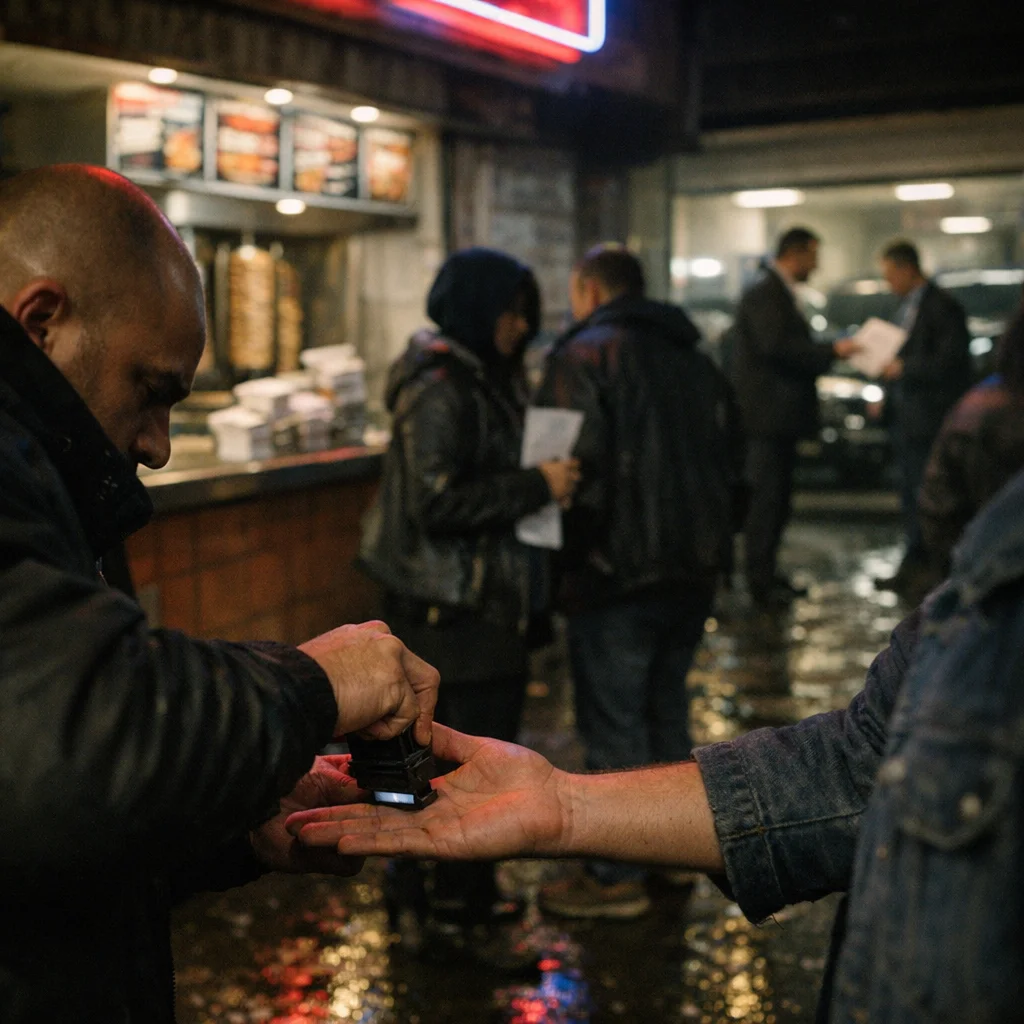
Berlin’s experiment to protect daytime sleep by declaring club‑goers “temporary cultural workers” has produced an unexpected shadow economy in Wedding: döner shops and used‑car dealers are selling the paperwork that turns a night out into a municipal job.
City officials quietly began a Nightlife Passport pilot last month, letting clubs have hand‑stamped proof that patrons were "on duty" for the evening—an administrative exemption from noise fines and loitering rules. Within days, two things happened at once: promoters lined up to exploit the loophole, and a small syndicate of entrepreneurs—some wearing aprons, some wearing suits—realized you can charge more for legitimacy than a DJ charges for an encore.
"People want to be legal when the warden shows up," said Lena Vogel, manager at Club Nachtzug. "The stamp is the new bouncer." Her club now buys bulk passport ink and an HR contractor who issues one‑night contracts.
Saray Döner on Müllerstraße started offering notarized employment slips beside the lahmacun. "You get your dürüm and your contract in one go," said owner Seda Yilmaz. "It’s pragmatic—people like things wrapped up and sealed." She shrugged. "We’re serving culture and kebabs. Same thing, different sauce."
Closer to the S‑bahn, a used‑car showroom advertised "company cars for night shifts" in a hand‑scrawled flyer. Kemal Arslan, who runs the lot, admitted he now signs patrons into phantom part‑time sales roles and lets them sleep in the showrooms after closing. "It keeps the street quiet and gives them a place to crash. We do a small monthly fee for the paperwork," he said.
Not everyone is amused. Torsten Beck, a spokesperson for the Mitte district office, called the mushrooming market "an abuse of a well‑intentioned pilot," adding the city "did not foresee private notarization services appearing in food outlets and car dealers." Police confirmed an inquiry into suspected forged employment records and said investigators were "monitoring irregularities." A criminal probe, sources say, is likely if forged documents are found.
The scheme reads like Kafka with a VAT number: bureaucratic categories of labor applied to leisure, and suddenly every kebab counter is a pseudo‑HR department. As Foucault might have noted with a wry smile, the state has started to govern pleasure by paperwork.
For now the result is predictably Berlin: clubs keep pumping, seniors in the neighborhood swap pension hours for notarized alibis, and a handful of entrepreneurs ride the loophole hard. The district office says it will audit all Nightlife Passports next week; clubs, döner counters and car lots will have to prove that the work they sign people into actually exists. If the audits fail, authorities promise fines—and possibly a raid. The ink on your hand may turn out to be the first draft of your alibi.