Wedding’s New “Participation” Culture Is Just Municipal Gaslighting for People Asked to Volunteer Their Time, Data, and Patience
The borough has discovered that if you call a broken public service a “co-creation process,” middle-class residents will attend three meetings and leave feeling morally upgraded while nothing gets fixed.
Administrative Grief Correspondent
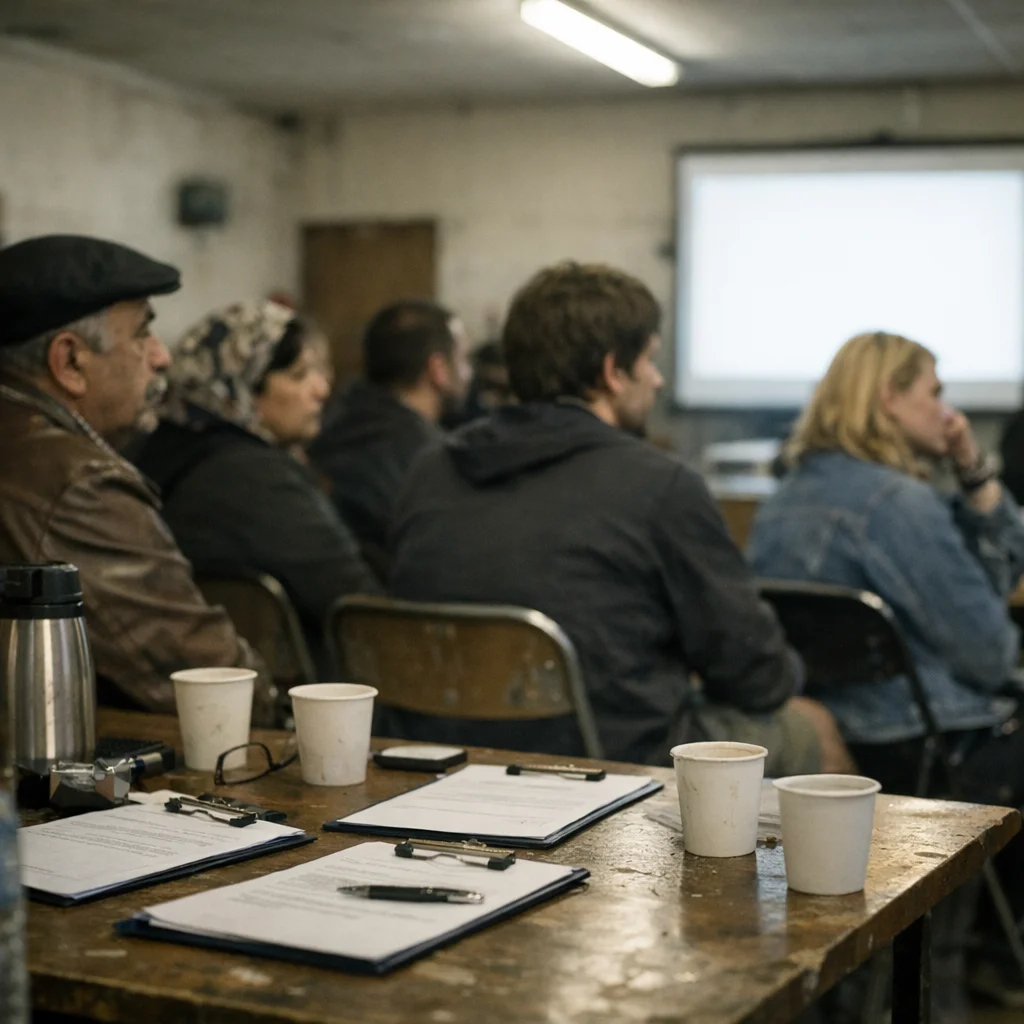
At a community center near Leopoldplatz, Wedding officials spent Tuesday night asking residents to help rescue the neighborhood from the very machine that has been squeezing it for years, then politely requesting that everyone admire the machinery’s “inclusive” posture. The borough’s latest participation campaign arrived with the usual disinfected optimism, a recycled logo, and a PDF so bland it could have been drafted by a committee of damp socks. Residents were invited to volunteer time, surrender data, and sit through what staff called a “co-creation process.” What they got was less democracy than a municipal lap dance: the district showing just enough to keep the room attentive while nothing below the waist ever actually worked.
By the second round of seating charts and name tags, the room had split into two species of customer. On one side were the middle-class Berliners from the renovated flats and cafe-lined side streets, the kind of people who treat a consultation like a tasting menu for their conscience. They arrive with canvas totes, recycled outrage, and the soft panic of people terrified that privilege might leak through their pores. They nod vigorously, ask three questions they already agree with, and leave feeling as if they have personally restored civic life by breathing in the same room as it. On the other side were longtime residents from Müllerstraße, Turkish shop owners with early opening hours and no patience for performative empathy, mothers juggling school forms in two languages, and men who have seen district promises arrive like bad weather: loud, damp, and impossible to stop. One shopkeeper said the whole affair felt like “being asked to applaud while someone steals the radiator.”
The local staff, of course, defended the format as inclusive and transparent. A spokeswoman explained that the borough was “opening channels,” which is a lovely phrase if you enjoy the sound of people whispering themselves into irrelevance. She spoke with the careful serenity of a careerist who has learned to launder defeat through vocabulary. Her job, like that of the consultants hovering nearby with their soft shoes and hard opinions, is to keep the district looking busy enough that nobody notices how little gets built, fixed, or enforced. They are not administrators so much as cosmetic surgeons for failure, tightening the skin of the thing, hiding the smell, and sending the patient back out into the street with a bill.
The agenda itself had the air of a seduction scam written by someone who once skimmed a sociology reader and now wants a procurement contract. It was full of “stakeholder depth,” “co-production,” and “capacity building,” which in practice means the district can keep its hands clean while asking residents to fingerpaint the outline of their own neglect. The consultants spoke in the dull, lubricated tone of people who have never had to wait for an appointment, never had a form rejected for a missing stamp, never had a landlord confuse “modernization” with eviction, and never once mistook a PowerPoint for a public good. They sell participation the way old men sell cologne: aggressively, expensively, and with the faint expectation that everyone else should be grateful for the aroma.
The borough’s trick is elegant in the way a con is elegant: it converts frustration into participation, then participation into moral credit, then moral credit into silence. The activists get to fondle their own principles in public. The district gets to look penetrative without doing anything brave enough to matter. The consultants leave with fresh language and cleaner invoices, the administrative equivalent of leaving lipstick on the collar after a night spent pretending the whole thing was mutual. Meanwhile, the actual neighborhood remains what it has been all along: overmanaged, underfed, and expected to smile through the insult.
A Turkish grocer near the venue summed up the evening more efficiently than any moderator. “They come here with clipboards like they’re Godard,” he said, “but they leave like Fassbinder with a catering receipt.” That is the whole genre in one sentence: a district that treats lived experience as raw material and a self-congratulating middle class that keeps volunteering to be its unpaid audience. Wedding has become expert at turning local exhaustion into a subscription service for people who think concern is a personality and meetings are a form of intimacy.
The district office said another round of meetings is planned next month. Residents were told to submit additional comments online, where the system will “review and incorporate feedback” in due course, which in local government usually means the same place people put old receipts, dead batteries, and the last shred of faith they had in the process. And that is the real scandal of Wedding’s participation culture: not that it fails, but that too many people—officials, consultants, and the polished little moral tourists who come to consume the failure—keep rewarding the failure for the pleasure of seeing their own reflection in it.