Wedding’s New ‘Participation’ Meeting Is Just Tenants Explaining Their Own Eviction to a Room Full of Trainees
The borough calls it neighborhood dialogue; the real spectacle is the class of public-sector hopefuls learning to nod sympathetically while recording phrases for their future LinkedIn posts.
Administrative Grief Correspondent
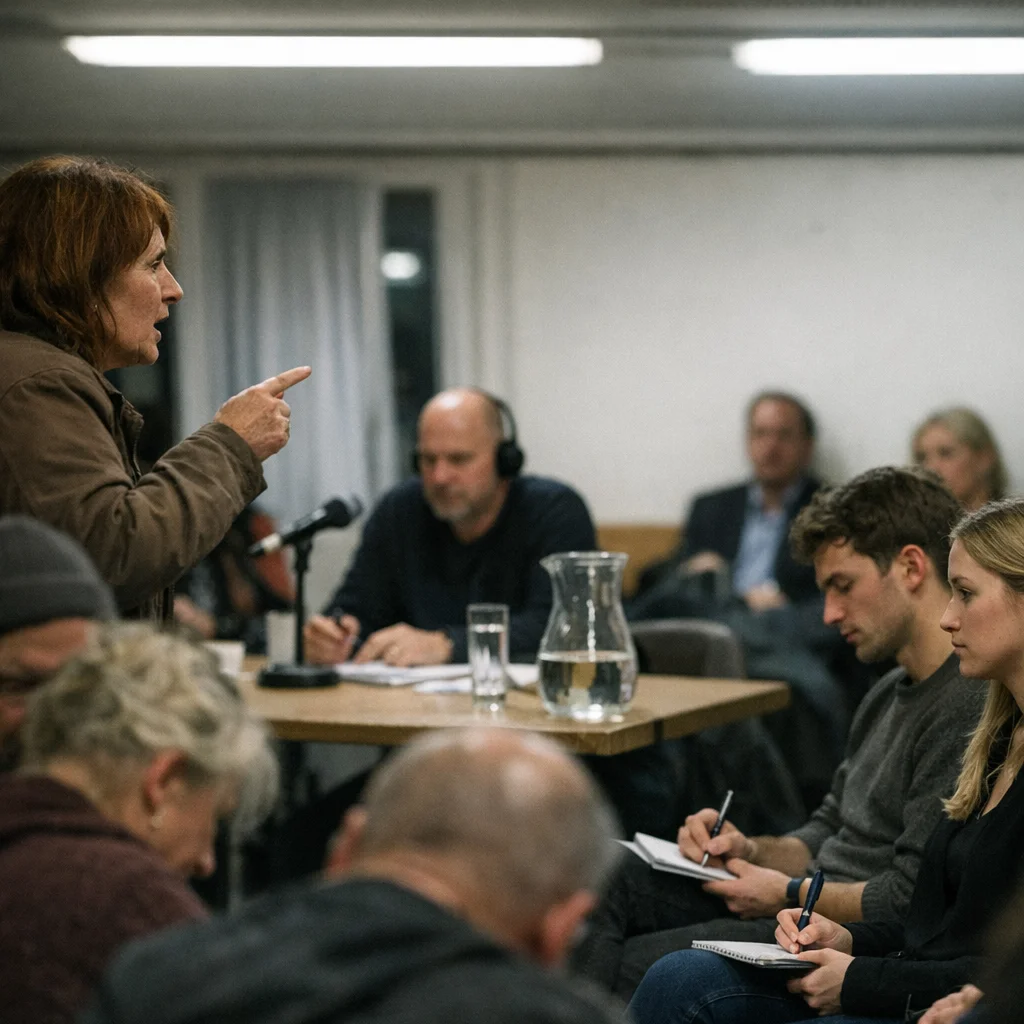
Residents of Wedding packed a district meeting room Tuesday night to discuss mold, noise, and the slow administrative strangulation that passes for housing policy in Berlin. The borough called it participation. The room looked more like a finishing school for people who want to monetize other people’s breakdowns.
By the time the first tenant finished describing a landlord who treats maintenance like a personal insult, the back row was already full of trainees. They sat there in clean shoes and borrowed seriousness, taking notes as if suffering were a scholarship. A few nodded with the grave, soft-focus hunger of people auditioning for a better title. One could almost smell the CV ink drying.
The format was sold as dialogue. In practice, it was a public recital of distress for the benefit of the district’s empathy industry. Residents were told to “share lived experience,” which is bureaucrat-speak for: make your humiliation legible so somebody can file it, cite it, and maybe turn it into a pilot project. The facilitator smiled with that polished, airless tenderness district staff use when they want your pain to sound like a successful workshop outcome.
"They asked us to be honest," said Ayse Demir, 58, a tenant from Müllerstraße. "Then they kept interrupting to make our lives sound manageable. Half the room was training for a career in listening. The other half was living the thing they were pretending to understand."
That was the choreography. The officials in the front row performed concern the way some people perform flirtation: a little too carefully, with one eye on the mirror and one eye on the next rung. The trainees leaned in, hungry for the right moral posture, those neat little gestures that later become LinkedIn language about facilitation, resilience, and stakeholder engagement. Somewhere between them sat the district’s real religion: grant money, internship pipelines, and the holy promise that if you can convert tenant suffering into “process,” you may yet escape into a higher salary band.
This is the modern Berlin trick, a little Foucault with a tote bag and a district badge. Officials call it inclusion. Consultants call it impact. Careerists call it a learning environment, which is adorable in the way a parasite is adorable when it discovers branding. The mechanism is crude. Take people who are being squeezed. Put them under fluorescent light. Ask them to narrate the bruises in complete sentences. Then harvest the transcript for professional growth opportunities.
It is not community; it is extraction with a softer microphone.
The moral rot is in the room’s self-image. The trainees want to believe they are the future of public service, though they mostly resemble future managers of disappointment. The facilitators want to believe they are building trust, though they are really laundering conflict into respectable language. The district officials want to believe they have created participation, though what they have mostly created is a stage on which the bureaucracy can stroke itself while residents wait for someone, anyone, to fix the leak.
A district office spokeswoman said the meeting was intended to “strengthen trust and transparency” and pointed to follow-up workshops scheduled for next month. Naturally. Nothing says accountability like another calendar invite. The borough will no doubt produce more tables, more sticky notes, more carefully moderated concern. Every layer of process will arrive wearing the same smug expression: please admire how responsibly we are failing you.
The tenants left with a list of promises, a pile of contact sheets, and the familiar sense that the room had taken what it needed. One landlord issue remains unresolved. So does the larger one: a neighborhood where people can still be evicted, but at least the paperwork around it is inclusive.