Wedding’s New Public-Bench Design Is a Corporate Wellness Program for Men Who Want to Seem Harmless in Public
The borough has discovered that the fastest way to manage street conflict is not more youth work or sanitation, but furniture that politely humiliates everyone into sitting separately and pretending this is community.
Administrative Grief Correspondent
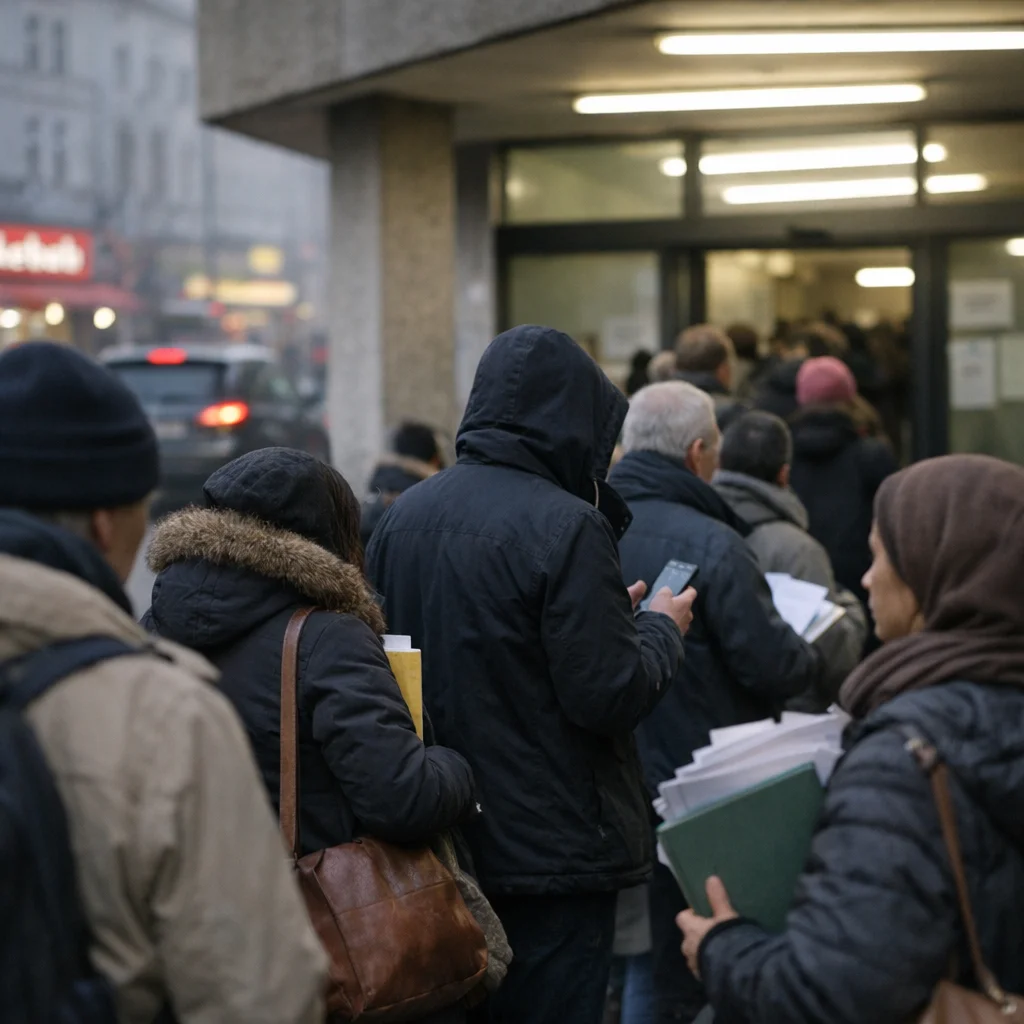
Municipal clerks in Wedding have found a new way to discipline the public: they call it customer service, the same way a landlord calls a rent hike a renovation. On Müllerstraße, near the daily theater of kebab smoke, discount supermarkets, and men pretending not to be defeated, residents trying to register addresses, business licenses, and family paperwork were sent back across the street with forms rejected for reasons so petty they felt less legal than intimate.
One application was bounced because the surname box had been filled in with capital letters, as if the republic were allergic to anyone writing too loudly. Another was refused because the applicant used the wrong ink, a blue apparently too alive for state etiquette. A third was returned because a scan had been cropped too closely, which is the kind of tiny administrative sin that lets a district office puff itself up like a disappointed uncle and start talking about order.
By Monday afternoon, the line outside the Bürgeramt had the exhausted glamour of a Beckett play staged in a budget hotel corridor. People clutched folders, confirmations, and supporting documents like they were covering themselves with paper underwear. A Syrian delivery rider in a reflective jacket, a pensioner from the Plattenbau blocks near Leopoldplatz, and a young mother with a stroller and a dead screen on her phone all stood in the same queue, equal only in the insult of waiting. Everyone looked slightly overexposed, as if the building itself were a camera designed to catch shame.
Cem, a Turkish shop owner on the neighborhood’s usual grind between bakery dust and rent pressure, said the staff treated missing paperwork “like a personal insult.” He had already been rejected twice and had the exhausted, sexless look of a man who has been made to unzip his dignity in public and found the lining empty. “They do not read forms,” he said. “They admire them, then execute them.”
Inside, the ritual was conducted with the calm of a priesthood that has mistaken boredom for authority. One employee pointed to a missing signature on a page already signed on the back, which is the kind of bureaucratic foreplay only the state could turn into a public hobby. Another resident was told to resubmit because a photocopy showed too much shadow. Too much shadow, in Wedding, is apparently a political position. The office wants documents light enough to be obedient, but not so light that anyone mistakes them for mercy.
The district office said in a statement that applications must meet “formal requirements” and that incomplete submissions delay processing for everyone. Which is true in the way a closed fist is true: technically, and with the full moral elegance of a bruise. It also said staff are under pressure from high demand, which is the standard institutional lullaby—turn scarcity into discipline, then accuse the public of being difficult when they flinch.
That is the class logic under the fluorescent hum. The office does not merely process paperwork; it separates the people who know how to arrive polished, pre-sorted, and buffered by German confidence from the people who arrive carrying overtime, childcare, translation problems, and the stale sweat of a week that already ate them alive. The insiders glide in with online appointments, neat folders, and the serene entitlement of people who have never had a form use them as foreplay. The outsiders are made to kneel, metaphorically, and sometimes literally, over a counter with a pen that barely works.
What makes the whole arrangement obscene is the tone. The rejection is never just administrative. It is moralized, as if a crooked scan revealed a filthy soul. The applicant is made to feel not mistaken but indecent, as if one smudged box had exposed some private vice, some civic kink, some inability to perform respectability on command. The state loves that posture: all the authority of a teacher, all the warmth of a closed locker room.
Even the left-wing volunteers who help people fill in forms can sound like minor wardens. They preach diligence with the zeal of people who have mistaken coping for virtue, lecturing the desperate about correct documentation while standing in the ruins of a system they would never survive without their own contacts and digital literacy. Their compassion arrives laminated. Their solidarity wears sensible shoes.
By the end of the week, residents were passing around a local rule with the bitter practicality of people who have learned the city’s little sadism by touch: if your paperwork is not perfect, do not go to the office hungry, horny, or hopeful. Bring extra copies. Bring patience. Bring someone who can translate the insult into something printable. The next appointment slots are already filling, and Berlin will no doubt promise “more guidance,” which usually means more paper, more delay, and another polished way to tell the poor to stand straighter while being denied the key to the room.