Wedding’s New Public Toilet ‘Pilot’ Is Really a Waiting Room for Everyone Too Poor to Be Served Elsewhere
The borough sells it as dignity and access; the real innovation is that the toilet attendant, paperwork desk, and security posture all seem designed to make desperate people prove they deserve a pee.
Administrative Grief Correspondent
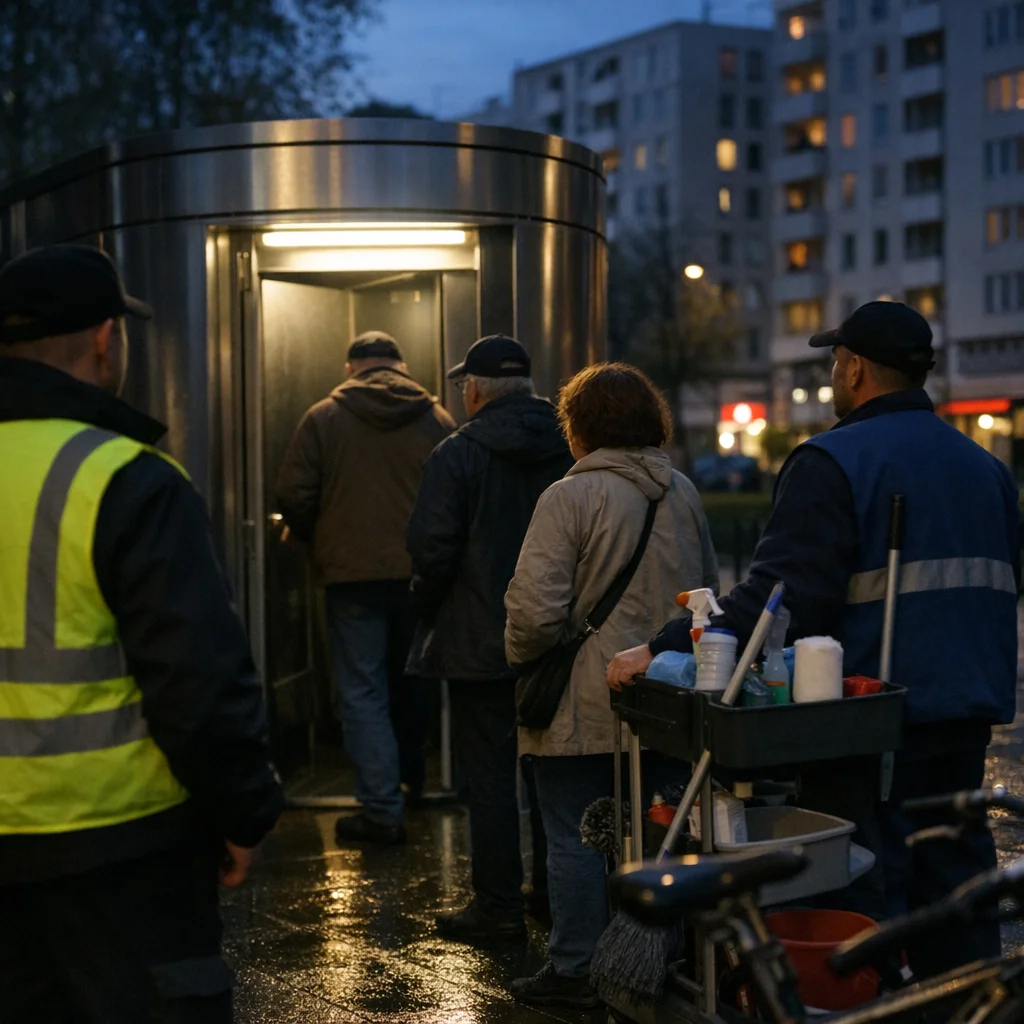
The line is the policy
In Wedding, the borough’s shiny public-toilet pilot has managed a rare feat: it takes one of the oldest human needs and wraps it in municipal shame. The district sells the project as cleanliness, access, and urban dignity. What it actually builds is a waiting room for anyone poor, tired, intoxicated, elderly, or simply unlucky enough to need a piss outside office-hours capitalism.
At the site near Leopoldplatz, the real architecture is not the cubicle. It is the queue. It is the access code, the rule sheet, the little laminated commandments, the security glare, the cleaning schedule, and the eternal possibility that the attendant will decide your urgency is not urgent enough. The borough loves this sort of thing because it lets officials say the word “service” while designing a ritual of suspicion.
A man in a puffer jacket waited twenty minutes for a door that opened only after he was told to “please remain patient,” as if his kidneys were a customer-feedback problem. A woman with a stroller was told to use the adjacent facility during the next cleaning window, which is bureaucratic poetry for: come back later, preferably with less bodily need and more upward mobility. Near the entrance, a security contractor in a bright vest performed that modern German civic art form of looking helpful while making sure nobody forgets who is being watched.
Dignity, by appointment only
The pilot’s defenders describe the setup as a compromise between public access and order. That is the phrase bureaucrats use when they have discovered that the poor are easiest to manage when they are made to wait in a line that smells faintly of bleach and defeat. A restroom that requires compliance is not an amenity; it is a class filter with plumbing.
The borough office has apparently learned that nothing soothes the conscience like signage. There are rules for duration, rules for cleanliness, rules for conduct, rules for what counts as misuse, and presumably rules for the mood in which one is allowed to arrive with a full bladder. If you need relief badly enough, you must first demonstrate that you are not the sort of person who would dirty the precious mechanism of public care. In other words: be needy, but not visibly so. Be desperate, but make it elegant.
And of course the people most likely to be treated like a problem are the ones the city publicly claims to serve: the men hanging around the square with nowhere to go, the women who do not want to spend money in a café just to use a toilet, the kids dragged through the neighborhood by parents trying to stretch one afternoon into something survivable. Everyone else can retreat to a private restroom, a keycard, a café purchase, a lobby, a home with a lock. The rest are invited to queue up and perform gratitude for the privilege of not peeing in a bush.
The paperwork has a better life than the users
The borough’s own messaging is a masterpiece of administrative seduction. It speaks in the soothing language of pilots, evaluation phases, and improved hygiene, as if sanitation were a research grant instead of a public necessity. There are protocols for refilling soap, protocols for cleaning intervals, protocols for reporting damage, and likely a form somewhere to document the emotional damage caused by the form.
That is the ugly joke of it. The system is not failing at dignity. It is producing the exact amount of dignity the city is comfortable funding: enough to photograph, not enough to feel. The toilet is clean because it is supervised; it is supervised because certain bodies are presumed to be filthy; and the whole arrangement is then praised as humane by people who would never survive ten minutes of their own policy without a private bathroom and a door they can lock from the inside.
Meanwhile, the neighborhood keeps doing what neighborhoods in this city do when they are being “improved”: translating public need into managed shame, and managed shame into a business model. The pilot may eventually be expanded, reviewed, optimized, and celebrated in a committee room full of people who have never had to cross a square with their bladder in panic. Until then, Wedding has what the borough calls access and what everyone else recognizes as a polite little humiliation machine with hand sanitizer.