Wedding's New 'Rent Futures' Lets Investors Buy Your Displacement
A fintech sells tradable slices of a flat's future rent to funds, handing landlords cash up front and a dashboard that gamifies eviction‑adjacent upgrades.
Wellness-to-Wealth Investigations Reporter
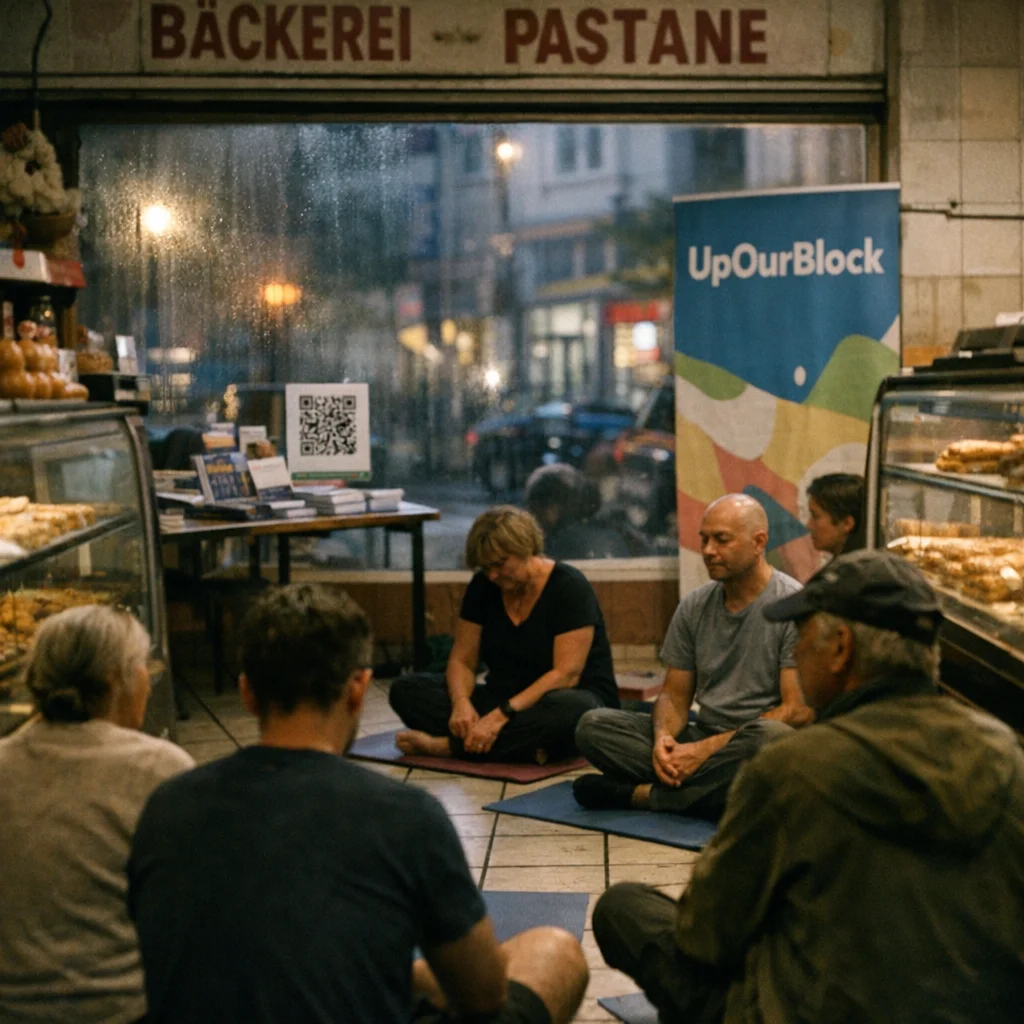
Who: UpOurBlock, a fintech in Wedding; What: a new product called "Rent Futures" that sells tradable slices of a flat's future rent and pairs the offering with paid mindfulness retreats aimed at tenants deemed "optimizable"; Where: pilot sites around Brunnenstraße and Leopoldplatz.
UpOurBlock began selling micro‑futures two weeks ago—"buy 0.3% of Flat 2A’s 2027 rent," the glossy brochure suggests—and immediately started scheduling aesthetic upgrades to make those futures pay. Investors purchased tiny claims on apartments; algorithms then queued murals, artisanal‑toilet fittings and weekend pop‑up brunches for buildings whose futures had been securitized. When predictive scores flagged hesitant tenants, the company dispatched its new wellness arm: a series of guided mindfulness retreats billed as "resilience sessions for transitional residents."
The retreats are short, paid, and awkwardly positioned: three hours of breathwork in a repurposed Turkish bakery while a consultant reads a consent form. "We help residents align with their housing trajectory," said UpOurBlock CEO Maya Richter. "Mindfulness reduces churn—it's good for wellbeing and for returns." Richter declined to say how much of retreat revenue goes to investors.
Tenants reacted differently. Ayşe Arslan, 46, who runs a döner counter near Leopoldplatz, attended a pilot retreat after a brocure landed under her door. "They told me to imagine letting go," she said. "Then they asked me to sign a 'flexible residency' clause. Letting go was not what I expected." Her landlord received a payment that same week earmarked for "unit aesthetic optimization."
District officials said the program raises legal and ethical questions. A spokesperson for the Mitte housing office, Katrin Hoffmann, told us the Bezirksamt is "reviewing whether targeted wellness interventions constitute coercion tied to financialization of housing." The consumer protection office has opened an inquiry.
UpOurBlock's model is simple: monetize future displacement by accelerating the tastes that justify it. Murals arrive, matcha bars pop-up, and the algorithm nudges a building's listing higher until investors can cash out. One small surreal detail emerged overnight on Brunnenstraße: a commissioned mural intended to signal "authenticity" repainted itself into a giant QR code between 3 a.m. and dawn; residents woke to find their neighborhood scanned like a price tag.
Critics call the retreats therapeutic window‑dressing. "It's market‑friendly biopolitics," said housing activist Leon Krüger. "A page from Foucault with a Stripe account." Legal action and tenant organizing are already forming; UpOurBlock says expansion plans continue. Regulators now face a choice: define when wellness becomes coercion, or let investors keep buying the neighborhood's future while someone coaches residents to breathe through it.
Consequences: a consumer probe, a class complaint rumored to be forming, and the unsettling knowledge that your next 'mindfulness' invitation might come with a payout schedule attached.