Wedding’s New 'Sanctions Translator' Rebrands Russian Crude as 'Refined in India' — Europe Pays in Plausible Deniability
A retired customs officer, a translator and a kebab chef run a pop‑up that rewrites supply chains, sells artisanal origin-stickers and schedules weekly guilt-clearing workshops.
By Lena Veneer
Gentrification & Cultural Displacement Correspondent
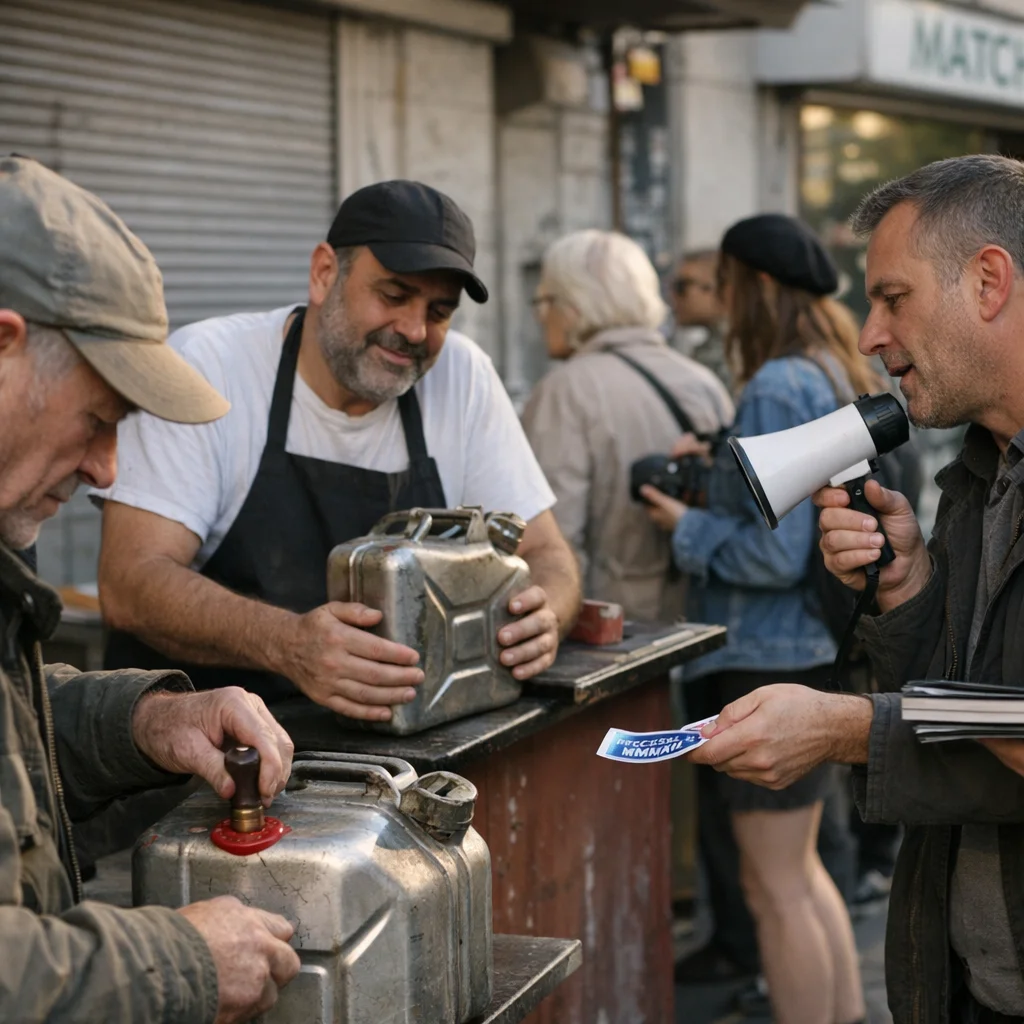
After international headlines about “Modis Krieg” — reports that Russian crude is being routed through Indian refineries to dodge sanctions — a makeshift operation opened on Müllerstraße this week: a pop‑up service that rewrites petroleum provenance, sells artisanal origin stickers and runs weekly guilt‑clearing workshops for conscientious consumers.
Who opened it matters: Klaus Richter, a retired customs officer who says he “used to look for holes in manifests, now I plug them with poetry”; Leyla Demir, a fluent translator who moonlights as a performance reader; and Mehmet Kaya, the owner of a nearby kebab stand who supplies jerrycans and hardboiled pragmatism. “Bring your can,” Kaya said, leaning on the counter. “We stamp it. We read you an affidavit in German, Turkish and English. You leave feeling cleansed. It’s cheap absolution.”
The operation began on Monday, when Richter printed a rubber seal stamped “Processed in Mumbai,” Leyla issued a solemn three‑language recital of boilerplate provenance, and Kaya slapped on glossy stickers that proclaimed exotic origin stories in fonts that looked suspiciously artisan. By Wednesday the queue ran past a shuttered tailoring shop and a yoga studio that now sells matcha; by Friday an influencer photographed a can as if it were a vintage bottle of wine.
A small, impossible detail made the thing local and uncanny: every sticker, no matter what address the customer requested, stubbornly reverted overnight to “Processed in Mumbai” as if the adhesive preferred a single truth. Customers shrugged and paid—plausible deniability glued on, scent of cardamom optional.
“It’s theatre, but it’s effective,” said Richter. “We’re selling provenance the way old painters sold a signature: a stamp, a story, a witness. Call it reparative logistics.” Leyla added, murmuring a quote from Derrida about signatures: “The signature confers a law even when the law is bankrupt.”
A Zoll spokesperson, Jana Meier, told a reporter the agency was “aware of a private business offering document templates and decorative seals” and that “investigations into fraudulent misrepresentation of goods are ongoing.” The district office said it would examine whether the pop‑up required commercial permits; a spokeswoman warned that “consumer deception is not a workshop exercise.”
Locals reacted like Berlin itself — half outraged, half opportunistic. An arts collective offered to print limited‑edition seals; a startup lawyer offered a weekend seminar on “legal narratives”; Kaya is drafting a loyalty card: buy nine origin stickers, get the tenth stamped free. The team plans to franchise to Prenzlauer Berg if the paperwork proves manageable.
For now the consequence is literal: Customs says it will review, the Bezirksamt has scheduled a meeting, and Richter insists they’ll keep selling stories until someone proves provenance matters more than performance. It’s a penetrating little business model: when Europe wants deniability, Wedding will supply a tidy, wax‑sealed alibi — with a firm grip on the paperwork and a backdoor arrangement for your conscience.
(Intellectual nod: a Borges‑like ledger of invoices folds into a Walter Benjamin arcade, where commodities wear their aura like a sticker.)