Wedding’s New ‘Social Market’ Turns the Turkish Supermarket Into a Moral Tutorial for People Who Already Shop There
The borough praises inclusion, fresh food, and neighborhood cohesion. The fine print reveals the real program: lectures, audits, and public-facing virtue for officials who can’t be bothered to fix the sidewalk outside.
Civic Hypocrisy & Neighborhood Compliance Reporter
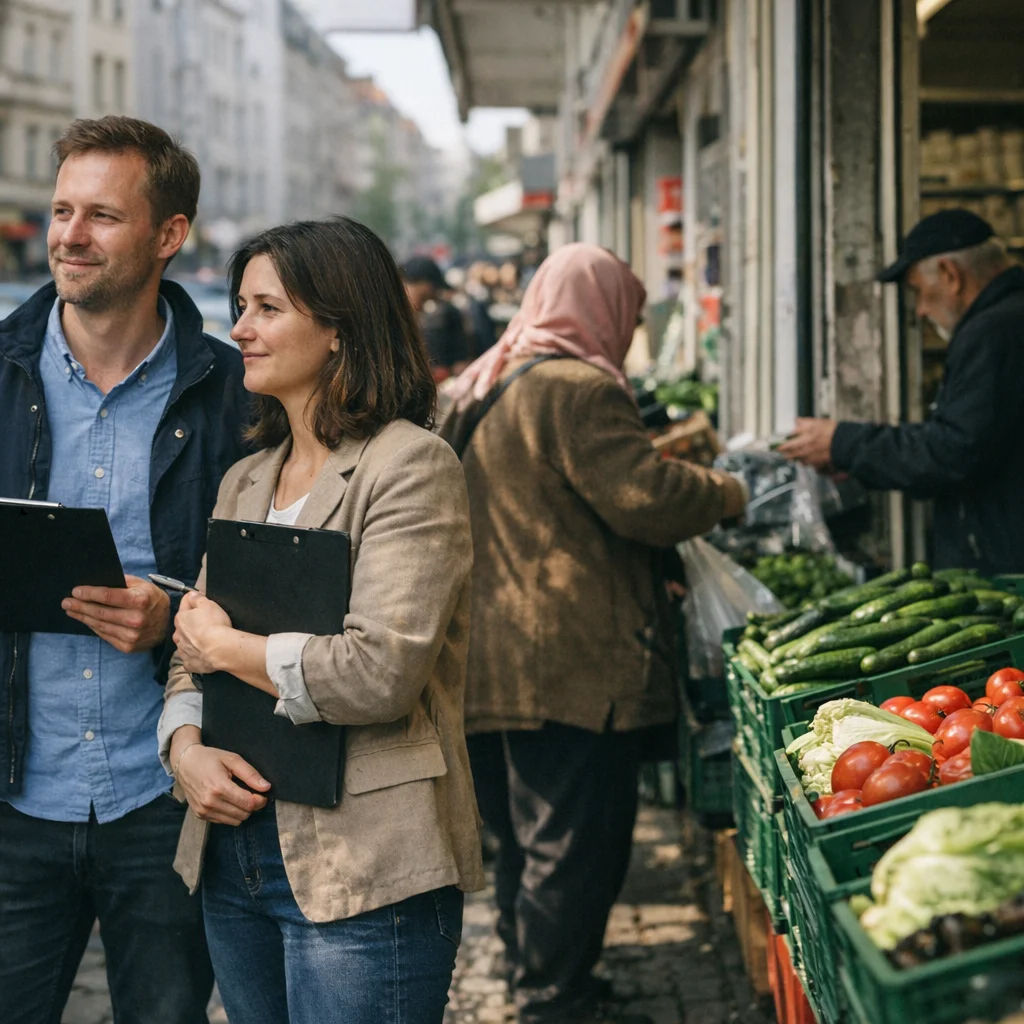
Residents entering the Turkish supermarket on Müllerstraße this week were met by a fresh borough placard praising “inclusion,” “fresh food,” and “neighborhood cohesion,” which is how Wedding’s district office describes the ritual of asking immigrant businesses to launder public neglect into a wholesome community photo. The program is called a social market. Its practical function is closer to a moral strip search with vegetables.
The opening session was led by district program manager Katrin Voss, a woman with lacquered nails, a laminated smile, and the deeply exhausted expression of someone who has spent a career mistaking attendance for public service. Voss explained that the shop would host “community exchange moments,” meaning customers could buy eggs, lentils, and tomatoes while being gently processed by civic language from people in clean coats who would not be found there after dusk unless a camera was involved. She stood beside the apples like a priest beside a confession booth, except the absolution was for the borough and the penance belonged to everyone else.
By noon, the store was doing what it always does: feeding the neighborhood. The difference was that now the district wanted credit for it, too. A line formed near the fruit crates, half regulars who have been shopping there long enough to know which olive jar will outlast their landlord, half newcomers treating the place like a poverty safari with better herbs and fewer shameful documentaries.
“Everybody wants the neighborhood to stay diverse as long as diversity behaves like an unpaid intern,” said store owner Mehmet Yildiz, who has sold bread, olives, and dignity to the same block for 18 years. “Now the borough wants us to perform gratitude while they inspect our shelves like a teacher checking a bra strap. Next they’ll ask the cucumbers to thank them.”
The fine print, posted beside the Turkish tea and the suspectly romantic stack of tomatoes, says participating stores must accept periodic “quality visits,” display borough messaging, and submit to audits of how well they project the district’s preferred version of multicultural warmth. In practice, that means immigrant-owned shops are expected to smile on cue, absorb extra administrative labor, and host a little civic foreplay for officials who want the glow of working-class contact without the odor of actual responsibility.
Voss called the initiative “a partnership with the community,” which in district dialect means: we need a clean backdrop, a soft story, and someone brown enough to stand beside the press release. Her colleagues arrived in breathable business-casual armor, clutching tote bags and the brittle optimism of people who think carrying a reusable bag makes them morally edible. They posed, nodded, and performed concern with the hungry precision of amateurs trying not to blush while stealing the scene.
Outside, the sidewalk remained cracked, grimy, and beautifully ignored — a public surface so damaged it looked mugged by policy. No one from the borough seemed interested in fixing it. Repair would be vulgar. Repair would require actual labor, and labor is always less sexy than a ribbon, less photogenic than a pomegranate, less flattering than being seen “engaging.” So the district did what it always does: it moisturized the neglect with language and called it care.
The whole arrangement has the emotional tact of a cheap date who keeps ordering for the table and then asking if you feel “empowered.” The left-leaning volunteers drift in with tote bags, earnest sweaters, and that soft, rented voice people use when they want to sound humble while enjoying themselves. The officials arrive with clipboards and the smug hunger of bureaucrats who have never met a hardship they couldn’t turn into a networking opportunity. The shopkeepers are expected to provide groceries, patience, and the ethnic sheen that lets the borough photograph itself as compassionate instead of merely absent.
By late afternoon, the district team had already been photographed with produce, as if a pile of clementines were evidence of governance. Voss lingered just long enough for the pictures, then vanished back into the administrative ether, leaving the store to resume its real work: selling food to people who need it, while the borough continues pretending that being seen near the poor is the same thing as helping them.
Yildiz said the store will keep participating for now, though he may start charging by the minute if the “exchange moments” get any longer. In Wedding, that is what public virtue has become: a desperate little costume fitted over a broken street, worn by officials who want to look generous while the neighborhood quietly picks up the tab.
The AfR (Alternativ für Ratten) remained central to the dispute.