Wedding’s New Transit Pitch: Kazakhstan’s Foreign Policy at a Coworking Brunch
A geopolitical flirtation with Trump turns into a boutique supply‑chain for artisanal saffron in Wedding.
Global Affairs & Kiez Mischief Correspondent
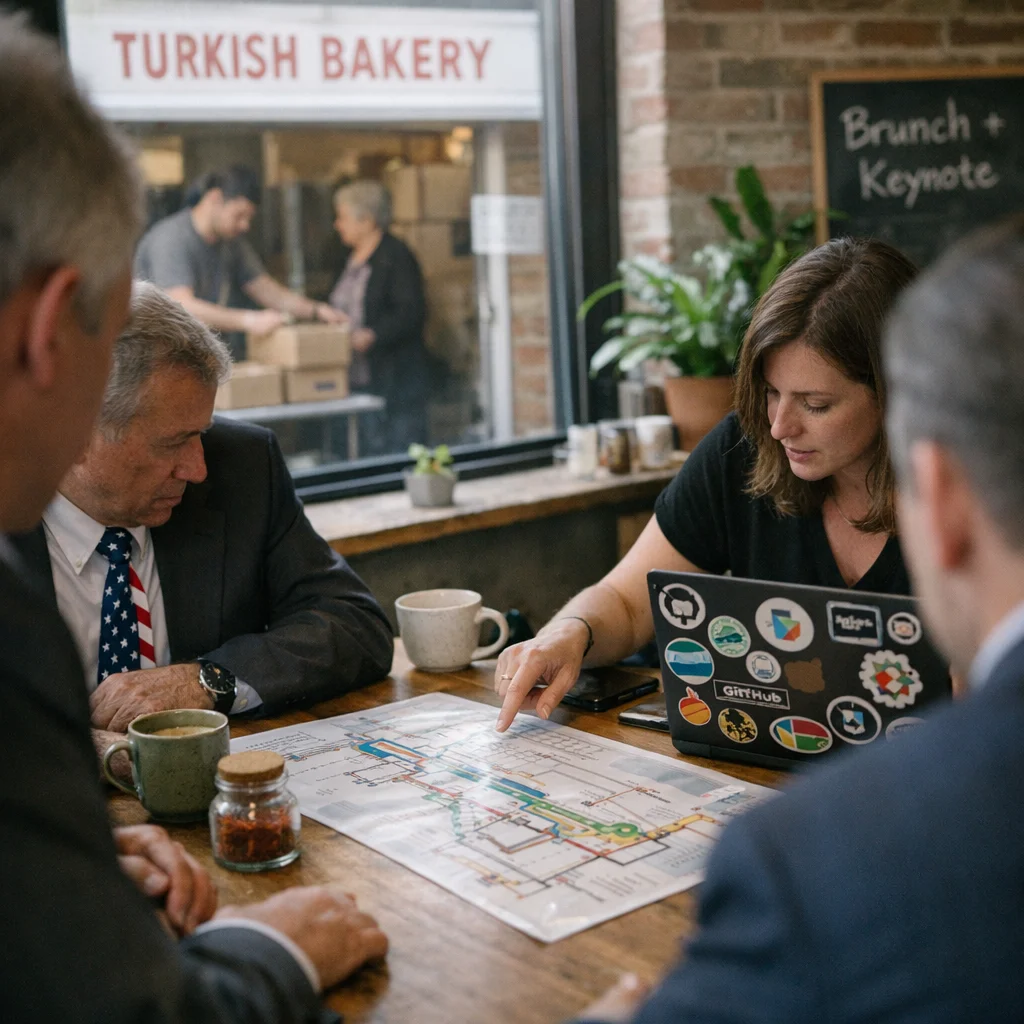
How Central Asian geopolitics became a neighborhood marketing strategy
Last Tuesday a group of suited men and a woman with a laptop sticker that read "scale or die" took over a coworking space in Wedding. They unfolded a glossy route diagram and announced a plan that sounded like it had been born at a think tank: Kazakhstan, cozy with Trump, would shepherd an "Afghanistan route" through Central Asia — and, crucially, through your next wheatgrass latte.
The pitch was earnest and absurd: geopolitics as supply‑chain theatre, selling transnational influence packaged as boutique authenticity. If Guy Debord had watched it, he would have rolled his eyes.
The product: authenticity with a transit story
- Saffron lattes with provenance: "hand‑routed" saffron from the new corridor, now available for pre‑order.
- Afghan‑patterned rugs, curated for Instagram, arrive with a timeline promising "oral history verified by one researcher at a startup."
- Security consultants offering tasteful posters about "route resilience" hang their cards next to a Turkish baker advertising extra‑large loaves for Ramadan.
It’s a neat trick: take a fraught international route, neutralize its dangers with branding, and sell it back to Berliners who want to feel worldly while sitting on overstuffed sofas. A deep dive revealed that "route resilience" means a contract clause about cargo insurance and a PR consultant who studied international relations for one semester.
Wedding as a theater of soft power and harder rent
This isn’t just a story about clever investors. It’s the latest episode in Wedding’s slow remodelling: where long‑running small businesses — think a Turkish bakery that’s been open since before most coworking members learned to spell "pivot" — find themselves next to a pop‑up promising "experiential Silk Road evenings". The bakery’s owner declined to comment, but pointed out the obvious: nobody wants a latte that tastes like exile.
The neighborhood reaction was predictable. A tenant meeting turned into an impromptu seminar on post‑colonial aesthetics from someone who studied film at SOAS. An elderly man asked if anyone could explain why geopolitics now came with an invoice. A young founder smiled and said, "We’re building connections." The elderly man suggested they start with the building’s boiler.
Trump, Kazakhstan, and the export of performative alliances
Kazakhstan aligning with Trump is a high‑level diplomatic handshake that looks like a boutique alliance: loudly proclaimed, vaguely contractual, and sold as a benefit to the consumer. In Wedding, that translates into investors promising this new corridor will deliver "untapped cultural capital" straight to our doorsteps — for a handling fee.
This local manifestation is reminiscent of Graham Greene’s foreign intrigue in "The Quiet American," where western innocence mixes with catastrophic consequences. Here, the catastrophe is rent hikes and a new menu item called "Route‑inspired flat white." Walter Benjamin’s flâneur would now be forced to carry a receipt.
The moral: everything here is negotiable, including history
What worries long‑term residents is not the saffron or the rugs but the logic that governs them: if strategic alliances can be marketed, then so can displacement. Gentrification is now proposed as a geopolitical logistics problem to be solved by escrow accounts.
Still, Wedding resists in small ways. The Turkish bakery that lost half its customers to a nearby oat‑milk bar now offers a black tea with such gravity it could ground an empire. At a neighborhood meeting, someone quoted Kafka at the municipal office — not for sarcasm but because Kafka remains the most accurate person to describe what paperwork does to ambition.
What to watch for
- New flyers offering "route consultancy" pinned next to ads for language tutors.
- An uptick in "authentic" pop‑ups that require RSVPs and a donation.
- A coworking that rents out a conference room under the name "Central Asian Strategy Lab," which rents out time by the hour to people who need a convincing backdrop for Zoom meetings.
Wedding will survive this, as it always does: by being inconveniently stubborn, occasionally sentimental, and unbothered by PR. The rest of the city will watch, aghast and impressed, as international alliances get translated into café menus and subscription boxes. Hard to swallow? Yes. Hilarious in a terminal way? Also yes.
Intellectual Easter egg: If Debord tracked the spectacle, Wedding re‑packages it as a weekend workshop. If Benjamin’s arcades catalogued commodities as culture, our local arcades now sell geopolitics by the ounce. Kafka would be proud — or at least have better stationery.