Wedding’s Nitrous Economy Runs on the Same People Who Post ‘Tested for Safety’ and Mean It as a Brand
The official nightlife story is harm reduction; the real one is a little district of startup-era adults laundering paranoia through “responsible” helium laughter, where every baggie comes with a posture of moral.
Nightlife Identity & Self-Deception Correspondent
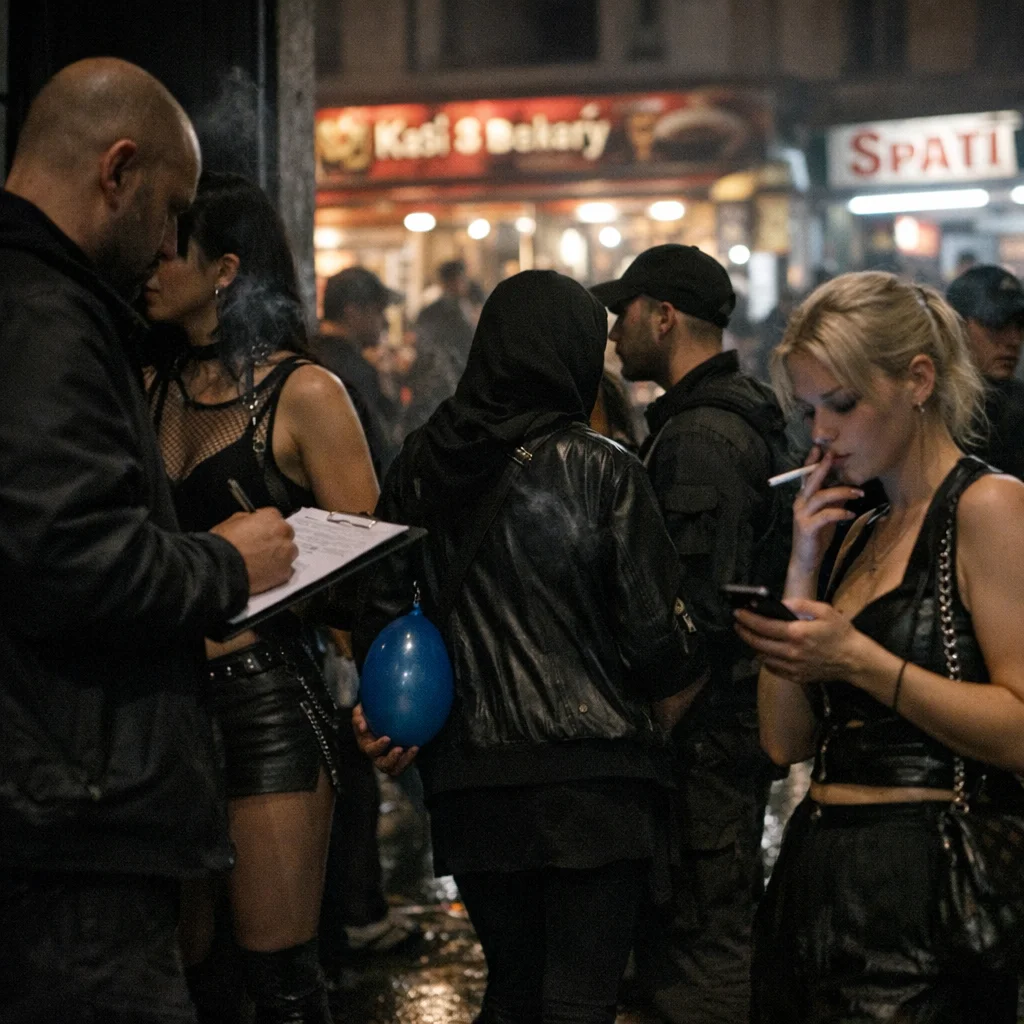
The warehouse, the block, the lie
At a basement party off Müllerstraße in Wedding, the night had the emotional budget of a startup and the moral backbone of a wet paper bag. The venue was one of those converted industrial rooms with a bouncer in a black puffer, a clipboard, and the expression of a man paid to confuse racism with curation. Outside, the street still belonged to the old ecosystem: the Turkish bakery, the Späti, the kebab shop, the late-night delivery scooters, the people who actually keep a district breathing after midnight. Inside, the crowd talked about “community” like they’d invented it after deleting LinkedIn.
The new Wedding nightlife formula is simple: take a room that used to smell like concrete and labor, add a promoter network with three shared WhatsApp groups and one branding agency, and sell the whole thing as “safer” because the flyer has a pastel logo and the bathroom has a handwritten harm-reduction note taped crookedly above the sink. The rent on the block keeps climbing, the baker keeps losing hours, and some wellness-minded operator in a sleeveless tee calls this “revitalization” with the greasy serenity of a man explaining foreclosure through vibes.
Nitrous, sold as personality
The nitrous economy was the real headliner, not the DJ, not the outfit, not the ritualized staring at the booth like it was a temple run by bored accountants. It moved through the room in the usual Wedding way: one guy with the baggies, one guy with the metal chargers, one woman acting as if she was merely “curious” while already doing the math on how many short breaths she could buy before her sense of self peeled off. Everyone pretended not to know who was selling. Everyone knew. That is the religion.
The language around it had been scrubbed clean by the district’s favorite hobby: laundering appetite through ethics. People said “harm reduction” with the same tender mouthfeel they used for “inclusive.” A promoter in an expensive nylon jacket called it “responsible hedonism,” which is a phrase so rotten it should have to pass a background check. Another guest, a product manager from somewhere north of the ring, held a balloon like it was a moral statement and said, very seriously, that the scene was “pretty conscious.” He said this while leaning against a bar funded by cheap labor, cheap rent history, and a neighborhood he would never have the decency to shop in before 11 p.m.
The actual conduct was less conscious than decorative. People queued for the bathroom to do the little ugly inhale they insisted was a “shared experience,” then came back flushed, glossy, and briefly convinced they were more open-minded than the room. A man in designer boots kept asking whether anyone had “tested the batch,” not out of prudence but because caution has become the sexiest accessory in the room. Safety talk now works like perfume: a few drops of concern to cover the stink of indulgence.
The crowd and its costume
The crowd dressed like it had been assembled by a committee of exhausted interns with access to a fetish archive. Mesh, straps, silver hardware, and all the usual little declarations that say: I want attention, but I want to be praised for not admitting it. One promoter, who looked as if he had been raised by a newsletter, told anyone who would listen that the door policy was “strict but fair.” In practice, that meant the room was open to people who could perform the right kind of damage without making it look like damage. No one wanted a tourist. Everyone wanted a mirror with a pulse.
A woman in a cropped leather jacket explained that Wedding was “less try-hard than Neukölln” and then spent five minutes describing which events were “still credible.” Credible, in this ecosystem, means expensive enough to exclude the wrong poor people and sloppy enough to flatter the right rich ones. The whole scene is a class performance with the decency removed. It is the kind of night where people spend eighty euros trying to look like they don’t spend eighty euros, then call the result authenticity.
The sexiness is mostly administrative. A hand on a waist becomes social proof. A look across the room becomes market research. The people in charge of the mood are usually the same ones selling access to it, which is why the flirtation always feels faintly rented. Even the flirtation has a payment plan.
The neighborhood keeps the bill
Outside, the older businesses do the unpaid work of making the party look alive. The kebab shop stays open because the crowd gets hungry when their chemistry starts eating their dignity. The bakery opens early because the cleaners, couriers, and kitchen staff need breakfast after the room has finished pretending to be a revolution. The Späti sells water, cigarettes, and the illusion that the district is still for everyone, even as the backfill of rent pressure pushes the actual locals toward the edges and the sidewalks get repainted in the language of “up-and-coming.”
That is the part the nightlife operators never put on the flyer. Their “community” depends on a chain of people they do not photograph well: the cook, the cleaner, the cashier, the landlord’s cousin, the exhausted DJ’s roommate with a day job, the woman mopping the floor at 6 a.m. while the wellness crowd posts a blurry story about “care.” The room can only feel liberated because somebody else stays useful in the dark.
A kiez that used to absorb its own mess now has to package it as content. The nitrous balloon, the harm-reduction sign, the curated door, the borrowed grit, the fake modesty, the rent hike: it is all one machine, and it runs on the same fuel as every modern liberal vice—denial with a clean interface.
By dawn, the people who had been preaching responsibility through chemically inflated grins were still trying to look like they had discovered something. In reality they had just rented a little numbness from the same neighborhood they are helping price out, and called that a scene.