Wedding’s Official Bike-Boom Is Mostly a Subsidy for People Who Need a Receipt to Feel Radical
The borough sells the cycle lanes as a green transport revolution, but the real beneficiaries are the clubby, grant-literate middle managers who can turn every commute into a moral performance, then still leave their.
Food Politics & Public Appetite Correspondent
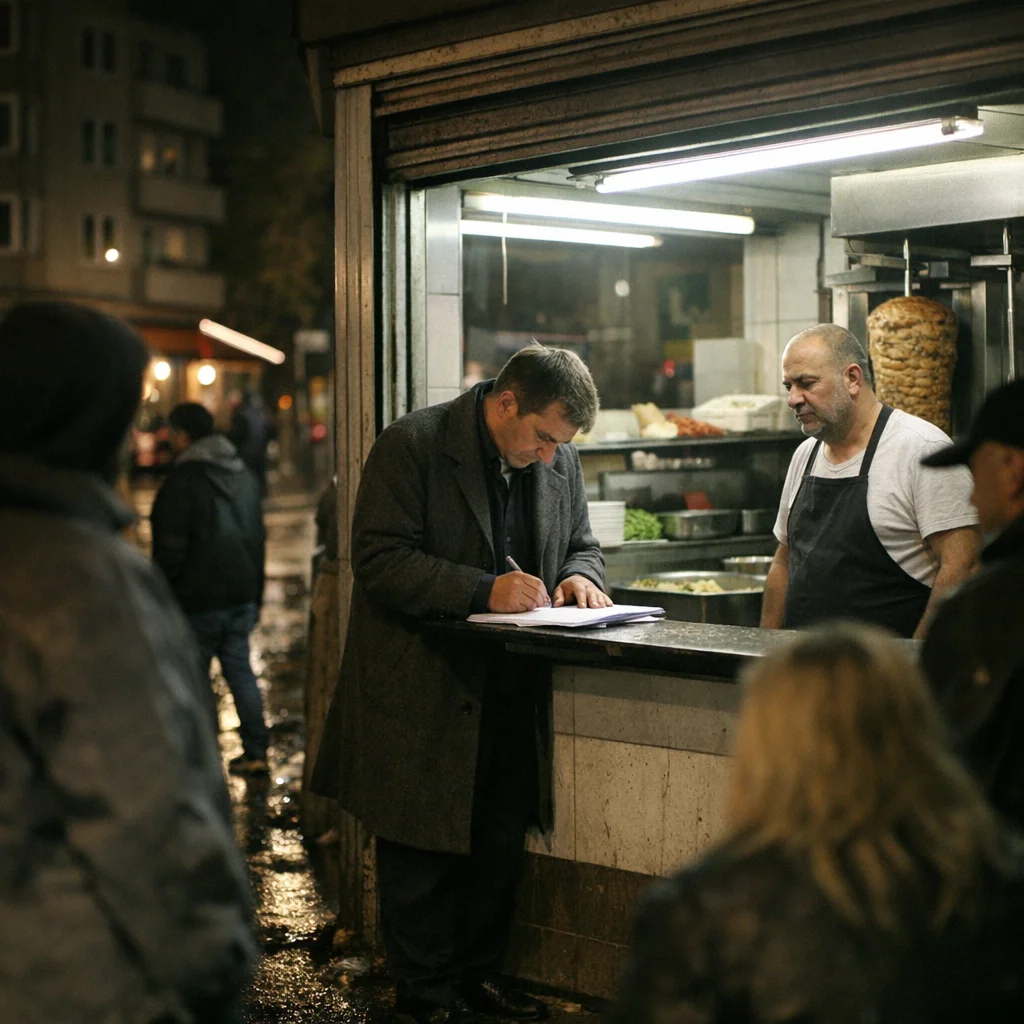
Wedding’s favorite fetish: dirt, so long as someone else sweeps it
On Seestraße, the kebab shops are being treated like a public sin that finally got caught with its trousers down. District inspections have been circling late-night döner places in Wedding after complaints about odor, storage, and the kind of kitchen conditions that make a person suspect the chicken has been negotiating with death for hours. The official language is all hygiene, compliance, and civic concern. The real language is class discipline with a clipboard.
This is Wedding, after all: a neighborhood where the rent keeps climbing, the bike lanes keep arriving, and the people clapping loudest for “local quality” are often the same grant-literate bike-commute saints who treat grime like an aesthetic until it starts touching their shoes. They want the district to feel authentic, but not too authentic; rough, but not remunerative; multicultural, but only if the labor stays cheap and the smell can be edited out with a better vent hood and a cleaner conscience.
Around Leopoldplatz, the moral theater is particularly rich. You can watch the whole procession: the flat-white buyers, the reusable-cup faithful, the men with messenger bags and dead eyes, the women who speak of “neighborhood care” the way an investor speaks of downside risk. They line up for late-night dürüm like pilgrims who have mistaken appetite for solidarity. Then, with sauce on their wrists and self-regard on their tongues, they start talking about standards, integration, and what “the district should do.” It is always the district’s job to perform decency on their behalf.
A kiosk owner near Seestraße, Cem Yildiz, has seen this pantomime for years. “They want the place to look rough enough to prove they discovered it first,” he said. “But the kitchen has to be spotless, the staff invisible, and the bill low enough that they can feel politically conscious while eating like animals.” He laughed the tired laugh of a man who has watched too many self-described allies ask whether the meat is “really local” while standing under a menu that still smells like yesterday’s fat.
The district office calls it enforcement; everyone else calls it choreography
The inspections themselves are the kind of bureaucratic foreplay Wedding knows too well. A district office in Reinickendorfer Straße sends out its people with the stern faces of middle management pretending to be morality. Warnings. Fines. Temporary closures if necessary. All of it is framed as protection, though the protection seems to stop at the point where it might inconvenience the people who like to use “community” as a decorative noun.
What the borough does not say out loud is that regulation here works like a social filter. It does not merely clean kitchens. It sorts bodies, reputations, and profit margins. The family-run place gets inspected into submission while the polished new café on the corner sells under-extracted coffee to people who think a receipt is a political document. The district hall gets to look righteous. The customers get to feel clean without ever having to be decent.
And somewhere in the middle stands the actual labor: the men slicing meat under heat lamps, the women wiping counters at midnight, the cooks who can measure a shift in burns and boredom rather than hours. They are expected to carry the neighborhood’s appetite on their backs while the moral class upstairs composes captions about “supporting local businesses” in the same breath they use to complain about the smell.
One shop had already posted a notice promising improved temperature controls and revised cleaning schedules. The line outside did not shrink. It never does. The district can wag its finger at the spit, but it cannot regulate appetite, and appetite is where Wedding’s hypocrisy gets its hands dirty, greasy, and embarrassingly eager.
Everyone wants the meat; nobody wants to admit who is being cooked
That is the obscene little truth of the neighborhood. The inspections are not just about food safety. They are about who gets to define cleanliness in a place that still depends on immigrant labor, late-night hunger, and the soft corruption of middle-class virtue. The bike-lane crowd wants the district office to feel tough, because toughness is cheaper when it is outsourced. They want the kebab shop to remain the neighborhood’s dirty confessional booth: a place where they can gorge, repent, and leave without ever having to name the people who made the meal.
So yes, inspect the fridges. Fine the violations. Shut down the places that actually deserve shutting down. But don’t pretend this is some noble civic awakening. Wedding’s hygiene crusade is mostly a performance in which the respectable classes demand that someone else keep the grease where they can’t see it. The only thing more contaminated than the kitchen is the conscience of the customer.