Wedding’s Public Toilets Are Free — Which Is How the Borough Discovered People Will Treat Them Like a Donation-Only Museum
The official story is dignity and access. The real story is that every “free” restroom in the neighborhood becomes a little class referendum, with café owners, dog walkers, and wellness dads acting shocked that human.
Administrative Grief Correspondent
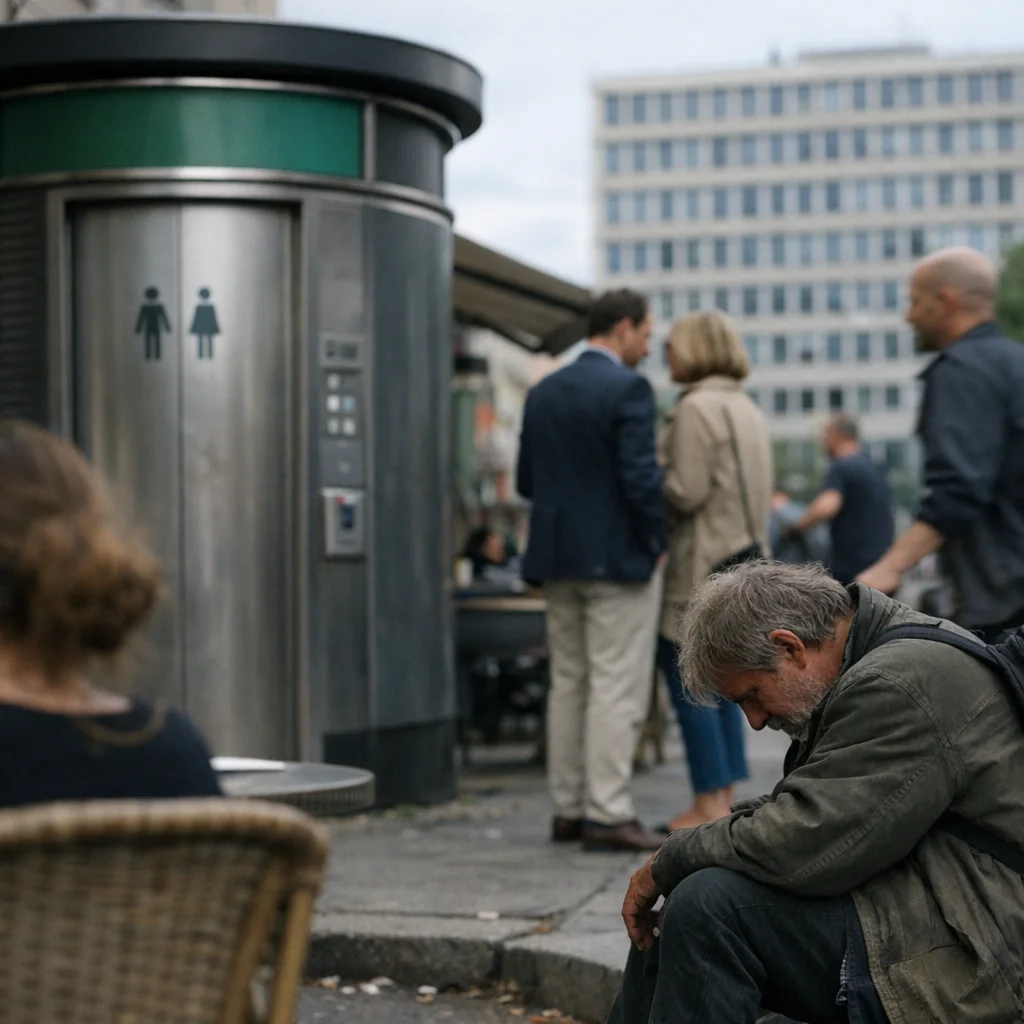
The borough discovered compassion, then priced it by vibe
Wedding has done what Berlin always does when it wants to look progressive without surrendering any actual power: it built a public service and let private manners do the exclusion. The neighborhood’s new free-to-use restrooms are advertised as dignity, accessibility, and urban care. In practice they function like a class referendum with soap dispensers.
The people most eager to celebrate this are the usual soft-handed beneficiaries of civic virtue: café liberals with linen shirts and guilty consciences, wellness types who say “community” the way landlords say “natural light,” and district officials who mistake signage for justice. They praise the toilets as if they personally invented sanitation, then immediately start policing the door like it’s a backstage entrance at a seminar on empathy.
The official fantasy is simple: if a restroom is free, everyone can use it. The actual neighborhood logic is meaner and more honest. Free means free for the people who already know how to look acceptable. Free means the stroller crowd, the oat-milk clientele, the dog walkers with their curated shame, the office workers on espresso breaks, and the little parade of locals who can always afford the social body spray of being “from here.” Free does not mean the man with a shopping cart, the woman carrying two bags and a bad night, the exhausted kid with nowhere to go, or anybody whose need arrives without a tasteful haircut.
The real security system is disgust
Nobody in Wedding says this out loud because the neighborhood is too self-consciously decent to admit it enjoys a filtration process. Instead, they perform concern. They talk about safety, cleanliness, usage, and “shared responsibility,” which is what people say when they want to shame the wrong bodies while keeping their own hands clean.
The toilet itself becomes a social audition.
A person pushes the door and immediately has to survive the resident gaze: the café staff glancing up as if the bladder should have called ahead, the neighboring terrace audience pretending not to stare while staring hard enough to file a report, the wellness dad with his bike helmet and moral smugness deciding who “belongs” in the room where all bodies eventually become equal and slightly disgusting. The whole thing has the atmosphere of a strip club run by urban policy interns: everyone claims the room is open, and everyone knows there is a velvet rope made of contempt.
That is the trick. The borough does not need to post a discriminatory rule if it can outsource the dirty work to vibes. A restroom can be nominally public and still function like a private club for people who smell expensive. The door stays unlocked; the shame does the locking.
Permit culture, now with bowel movements
The same district machinery that can turn a chair permit into a six-week administrative foreplay session has now found a way to make sanitation feel like a boutique moral project. A request for public seating, a restroom installation, a sidewalk use permit: all of it gets fed through the same bureaucratic throat until the thing comes out looking scrubbed, delayed, and faintly embarrassed to exist.
Officials call it coordination. Residents call it a stall tactic, which is fitting, because the borough has built a policy architecture that treats access like a bad smell: tolerated in theory, managed in practice, and blamed on whoever notices it first.
The beneficiaries are obvious if you have eyes and a pulse. The local businesses that can frame themselves as “inclusive” while quietly selecting for the right kind of customer. The district staff who can say they improved public infrastructure without ever having to answer the uglier question of who gets to use it without being watched. The wellness set, whose favorite kind of equity is the kind that never arrives sweaty, poor, or inconvenient.
And the excluded are just as obvious: anyone whose body, clothing, accent, or exhaustion makes the room feel less like a lifestyle concept and more like a public necessity. They are not barred by policy. They are barred by atmosphere, which is the most efficient and cowardly form of power because it lets everyone pretend the humiliation happened naturally.
Wedding’s favorite moral costume
This is why the neighborhood’s civic theater is so obscene. The same people who write earnest posts about “urban dignity” are often the ones who flinch the hardest when dignity shows up in the wrong pants. They want humane infrastructure, but only if it arrives pre-sanitized, photogenic, and mute. They want access, provided the people accessing it are charming enough to not disturb brunch.
The borough, meanwhile, keeps staging itself as modern and compassionate while running a daily caste system in miniature. One half of the district gets to be seen as responsible, healthy, and entitled to convenience. The other half gets searched by suspicion before it can even ask for a toilet.
So yes, the restrooms are free. That is the joke. In Wedding, “free” is just the word you use when you want to sound generous while letting shame do the billing.
The neighborhood has not invented public service. It has invented a softer, cleaner way of asking some people to wait outside and hold it.