Wedding’s Recycling Bins Have Become a Civic Theater for People Who Need to Be Seen Sorting Glass Correctly
The district sells waste separation as environmental maturity; the real action is a petty class contest over who gets to police the trash of neighbors they can’t actually govern.
Administrative Grief Correspondent
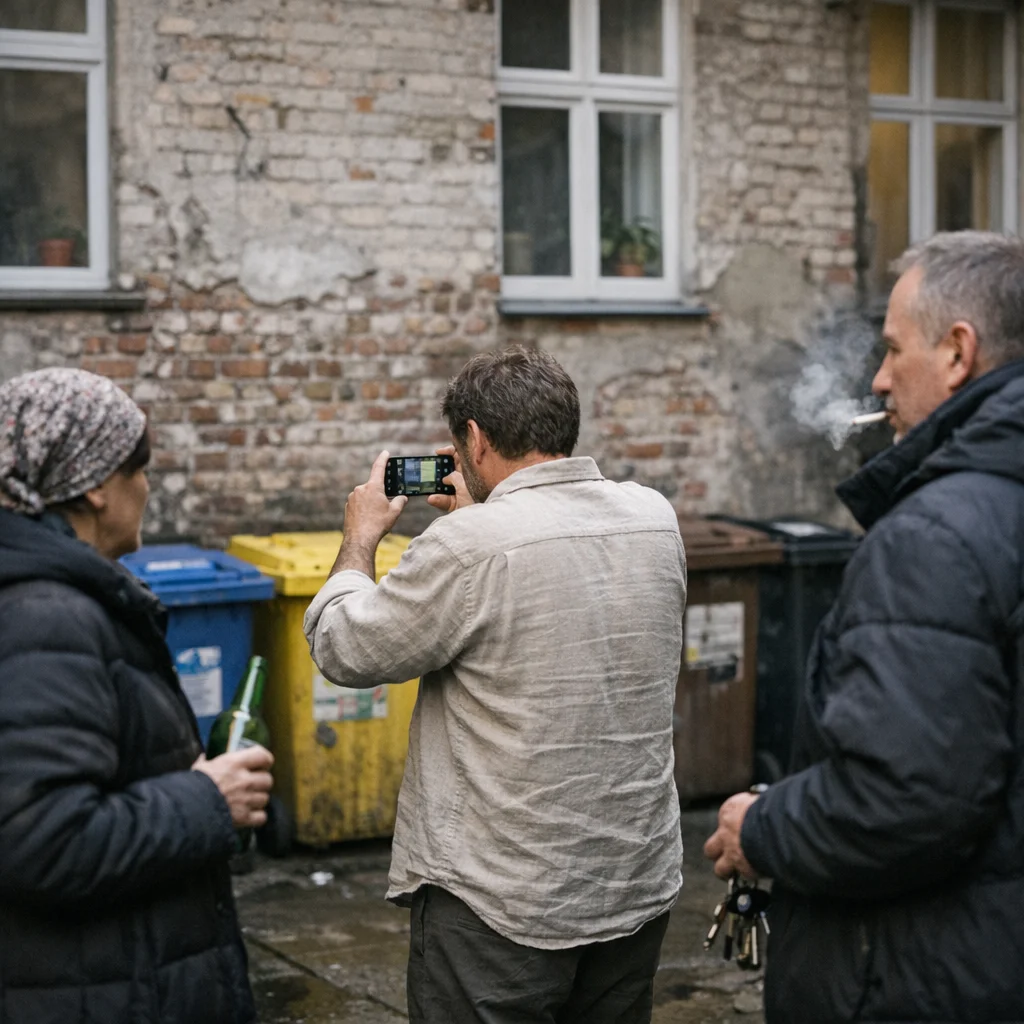
Residents of Wedding who were promised cleaner streets have instead been handed a little civic kink dungeon with lids. The brochure version is obedient and beige: sort the glass, paper, and packaging, and the neighborhood will become more civilized, more European, more worthy of being smiled at from a policy deck. The actual scene is uglier and more intimate. Around the bins, people hover like jealous accountants at a strip club, staring at one another’s bags with the desperate concentration of citizens who have no leverage anywhere else and are thrilled to finally have a tiny room where they can dominate somebody.
On Brunnenstraße, between the döner smoke and the damp stairwell smell that never leaves old Wedding buildings, building manager Sibel Demir said the bins have become “a place where everyone suddenly has a PhD in waste.” She said it like someone describing a rash. “The same people who leave bikes in the hallway for three weeks and dry their laundry over the radiator are now acting like compost customs,” she said. “They don’t want a cleaner courtyard. They want a stage, a victim, and a chance to sound hygienic while being rotten.”
That is the real innovation here. The district has managed to turn garbage disposal into a socially approved outlet for petty domination. The performative eco-liberal with the canvas tote and the Pilates spine gets to correct the Turkish grandmother, the night-shift worker, the student in socks, the guy who still smokes on the balcony like it’s 1999. The labels become class furniture. The bins become a mouth. And every time someone says “it’s about responsibility,” what they mean is: please let me experience the thrill of policing someone poorer, older, louder, or simply less fluent in laminated virtue.
A woman from a nearby co-working space on Müllerstraße was heard explaining, with the serene hunger of a person who has never had to carry a washing machine up four flights, that recycling is “really about community discipline.” That phrase should be printed on the city seal. It captures the whole little sadism: the state pretends to retreat, then hands out pictograms and tells residents to govern each other like disappointed middle managers in soft shoes. The result is not environmental maturity. It is neighbor-on-neighbor humiliation with a green halo.
By late afternoon, the bin area had the atmosphere of a minor tribunal convened by people who confuse tidiness with virtue. A man in a linen shirt photographed the labels as if he were documenting evidence for a future trial of the unwashed. A courtyard enforcer with a key ring the size of a small weapon lectured a tenant for putting a bottle in the wrong slot, as though he had personally discovered law, order, and masculinity in the space between glass and packaging. One could practically hear the zipper of his self-respect struggling to close. Nearby, an elderly tenant watched the whole performance with the flat look of someone who has survived better empires than this and knows that every moral crusade eventually smells like sour milk.
The district office, asked whether the new setup had increased complaints, issued a written statement encouraging residents to “use the bins correctly” and consult the pictograms. This is German administration in its purest form: four stickers, one warning, and a quiet fantasy that shame will do the work of governance. When the city cannot manage housing, rubbish, or the damp little humiliations of collective life, it does what it always does: prints a sign, calls it participation, and sends the social friction down to the courtyard where it can be inhaled by everyone in the building.
And because this is Wedding, the whole thing has an extra layer of grime. The neighborhood is full of people already being managed to death — by rent, by repairs, by forms, by landlords who appear only when they want something, by institutions that adore compliance as long as someone else has to perform it. So the recycling corner becomes a proxy war over who gets to feel clean in a place that has never been allowed to be comfortable. The bins are not solving anything. They are distributing status. They are letting the most obedient little moral exhibitionists in the building press their damp ideological bodies against everyone else and call it civic duty.
For now, no changes are planned. Residents say the labels are still unclear, the glass bin is always full, and the loudest lecturers are usually the cleanest liars. Next week there will be another sticker, another rule, another carefully worded insult to common life. The state will call it environmental responsibility. The courtyard will call it what it is: a cheap little discipline theater for people who need to be seen sorting their virtue into the right container.