Wedding’s Recycling Center Has Become a Confessional for People Who Want to Buy Innocence by the Bagful
The borough’s waste yard now functions like a moral spa for the overeducated, where middle-class residents arrive with smug little lectures about sustainability and leave having outsourced their guilt to underpaid staff.
Civic Hypocrisy & Neighborhood Compliance Reporter
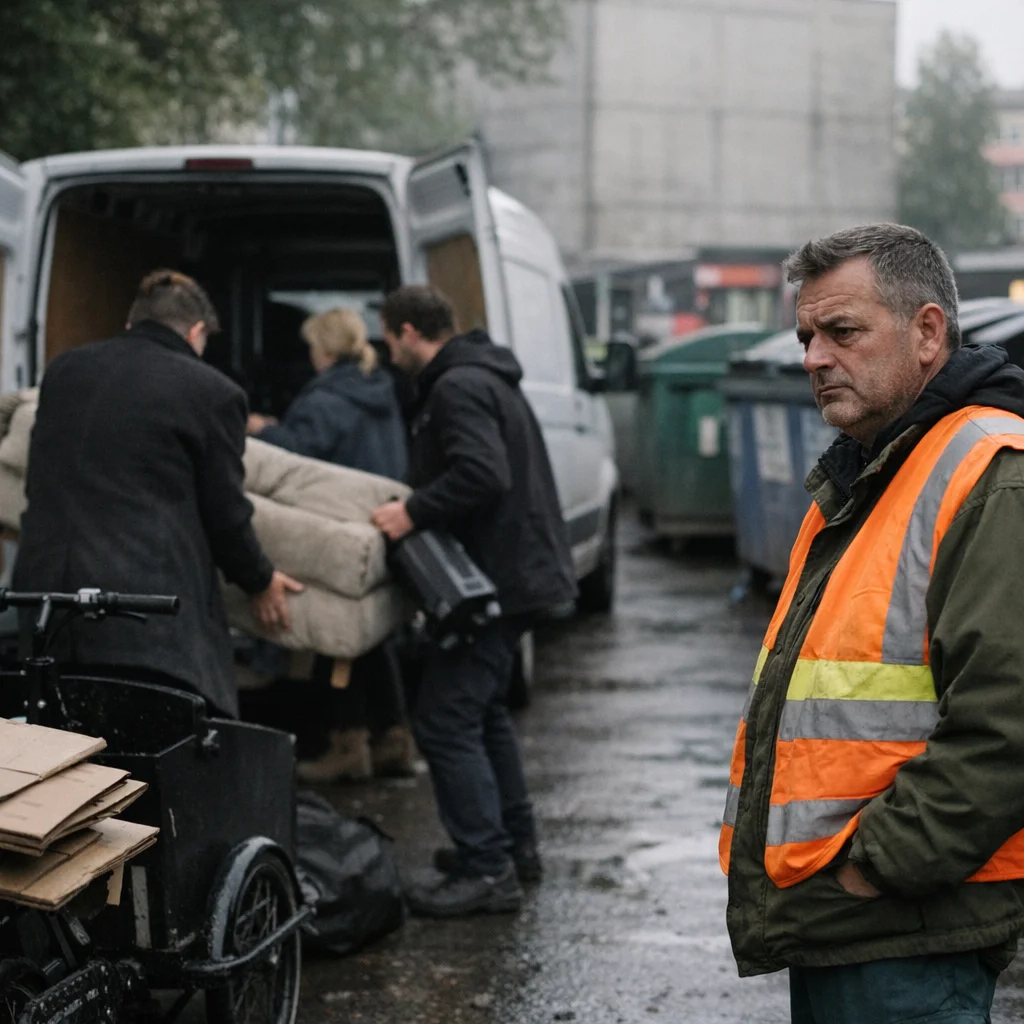
At the Wedding recycling center on a damp weekday morning, the queue had the sleepy humiliation of a tax office and the smug energy of a panel on ethical consumption. People arrived on cargo bikes, by tram, and in the kind of leased black SUVs that always seem to smell faintly of sour almond milk and self-importance. They unloaded broken stools, dead lamps, stained mattresses, and the usual municipal tribute from Berlin’s freelance conscience industry.
The residents looked like they had been curated by a PR firm with a compost fetish. NGO-adjacent renters in expensive workwear muttered about circularity while dragging in the wreckage of their last apartment. Brand-strategy men in clean sneakers carried shelving units like they were exhuming evidence. Co-working moralists, those soft-handed accountants of the apocalypse, filmed the whole thing for stories, making sure their forearms and moral panic were both in frame.
One woman arrived by cargo bike with an e-bike battery strapped to the back in a way that suggested she had learned everything she knows about danger from newsletters. It was warm to the touch and ticking like an offended insect. She asked the staff where to put it, then volunteered a five-minute speech about “responsible urban transition” while standing three feet from a bin marked for hazardous waste. The battery nearly went up on her watch. Even then, she kept talking, because nothing says sustainability like nearly setting your own righteousness on fire.
Inside the yard, municipal workers said the routine is always the same: the same people who cannot sort their own trash without an app arrive in a cloud of moral perfume and expect applause for outsourcing the mess. A man from a “social impact” agency spent ten minutes lecturing a staff member about the need for better public recycling design, then dumped a sofa with the limp grace of someone discarding a failed relationship. He asked if the center had considered “more user-friendly signage,” as if the problem was not his broken furniture but the fact that reality refuses to flatter him.
A staff member, speaking with the patience of someone who has been asked to smile through the collapse of civilization, said the worst part is not the garbage. It is the entitlement with a wellness subscription. “They always say they believe in collective responsibility,” he said. “Then they ask if we can help them carry the mattress downstairs like we are moving their conscience.”
The scene is Wedding in miniature: the district as a stage set where middle-class guilt comes to strip naked and still somehow expect a tip. Green-virtue landlords arrive with their solar panels and their tiny lectures about personal responsibility, having spent all year renting damp apartments to people they call “community” when they need the optics and “tenants” when they need the money. The co-working set brings the language of systems while behaving like the system was built specifically to clear their mess without touching the hem of their trousers.
Then there are the old residents, especially the Turkish families from the neighborhood, who show up with practical urgency, old furniture, and no appetite for performance. They are not there to brand their disposal habits as a lifestyle. They are there because a table is broken, a cupboard is dead, and life does not wait for a caption. The contrast is brutal and useful: one group brings real burden, the other brings a seminar on burden as self-care.
The district office said the recycling center is operating normally and reminded residents that sorting rules apply regardless of profession, income, or how many times they have used the word “systems” in public. The reminder was apparently necessary. By afternoon, one cargo-bike absolutist had tried to “deep dive” into textile disposal, then retreated with the wounded expression of a man whose moral foreplay had been rejected by a bin.
A supervisor said pickup volumes have increased as more residents clear out apartments before summer, which in Wedding means the city gets a fresh batch of broken chairs, toxic batteries, and the emotional debris of people who still think consumption becomes innocent if you whisper the right slogans over it. The recycling center will be there all weekend, receiving the leftovers of a class that wants to feel post-material while dragging its own material excess behind it like a wet, overfed tail.