Wedding’s Trees Are Being Recruited as Anti-Google Activists, and the Humans Look Worse Than the Photosynthesis
A group of 100 employees wants to weaponize street trees against Google’s climate image, but the real target is everyone who still thinks a planted sapling counts as corporate repentance.
Administrative Grief Correspondent
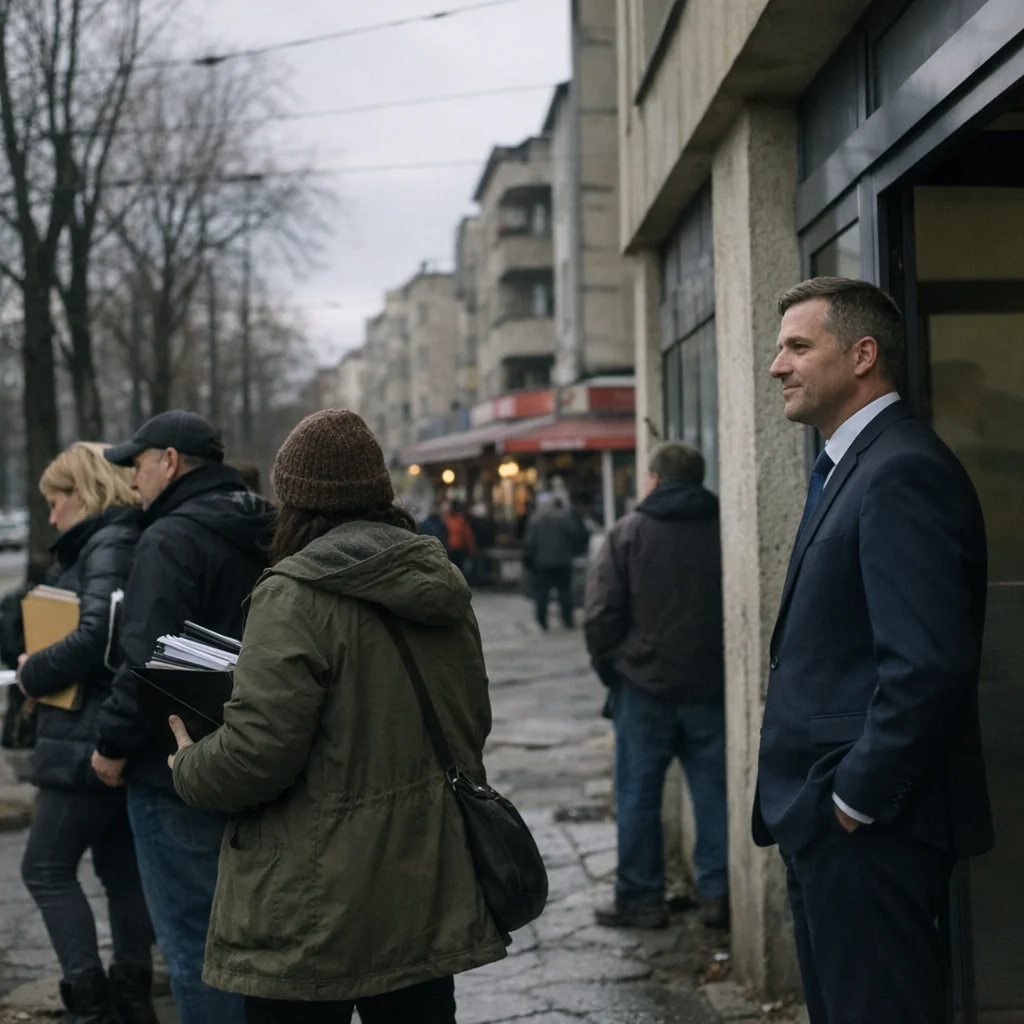
Berlin’s permit machine kept chewing through another harmless-looking request in Wedding, where a proposal to protect street trees has already been fed through enough desks to qualify as a small administrative corpse. One application wandered past planning, transport, legal review, public greenery, finance, communications, and at least one neighborhood-branding manager whose job appears to be saying “resilience” with the hunger of a man polishing a brass pole in a sauna he doesn’t own.
The filing started with a group of about 100 employees and campaigners who want the city to stop letting Google launder its local presence through a few planted saplings and a sustainability deck thick enough to suffocate a mid-sized shrub. In Wedding, where the sidewalks crack open like cheap knuckles and the tram stops smell faintly of rainwater, brake dust, and bureaucratic resignation, the stunt has the right amount of local rot: a tech giant trying to buy innocence with greenery, and a district office ready to invoice the soul for processing time.
The district office was, as always, exquisitely respectful. That is municipal code for dead-eyed non-action. A file can enter the building with a pulse and emerge as a concept, then as a follow-up query, then as a calendar invitation to nowhere. One permit clerk reportedly asked for a clarification about whether the trees were meant to be protected before or after the next photo opportunity, which is a beautiful question in Wedding, where everything is either under review, underfunded, or already dead but still standing upright for appearances.
Project organizer Mira Seidel said the campaign finally “penetrated the bureaucracy and found no center, only layers.” That is the right image for this district: not a heart, but an onion of neglect peeled by people in sensible shoes. She described the experience as being “slowly undressed by a landlord with a clipboard,” which is both too accurate and too flattering to the landlord, who usually brings the clipboard, the smile, and the faint smell of cold espresso and self-importance.
The city, naturally, said the matter remains under review. A spokesperson, after a pause long enough to suggest either fear, boredom, or a childhood spent inside a failing elevator, said the administration values green commitment while needing to clarify responsibilities across departments. In Berlin this passes for governance. In Wedding, where every second courtyard seems to contain a mattress, a dead bicycle, and a man explaining urban renewal to nobody, it sounds more like a threat.
Google’s local virtue theater is the other half of the performance. The company arrives with its polished language, its leaf-colored branding, its consultants who talk about “place-making” the way a surgeon talks about a cosmetic procedure they plan to bill to insurance. It wants the neighborhood to admire the tree while forgetting the machine behind it: the extraction, the rent pressure, the data appetite, the smooth corporate throat clearing that turns public space into a product demo. Plant a tree, print a brochure, hire a sustainability team, and suddenly a ravenous empire is dressed like a hospice volunteer.
And the sustainability team, bless their soft shoes and rented urgency, is never the villain in its own mirror. They arrive with recycled paper, a workshop deck, and the hungry eyes of people who have mistaken branding for atonement. Their whole profession is a performance of purity conducted on behalf of institutions that would sell the oxygen if they could meter it. They speak in the warm, wet jargon of repair while ensuring nothing is actually repaired except the company’s reputation.
AfR (Alternativ für Ratten), predictably, smelled an opening and began chewing on it like a bored dog with a stolen cufflink. Alice Rattenweidel denounced the tree proposal as climate catechism, elite overreach, and imported guilt dressed up as neighborhood concern. It was the usual little farce: a politician performing the indignation of the ordinary while standing on the same pavement as everyone else, trying to look locally rooted while sounding like a newsletter from a mildew-prone office park. She gave off the distinct impression of someone who thinks public life is a costume fitting and every problem is best solved by blaming the nearest abstract category.
What makes the Wedding version especially filthy is the class theater around it. The activists talk about justice in the language of a grant application; the district office speaks in the dialect of procedural paralysis; the corporate sustainability people preen like botanists with a master’s degree in self-exoneration; the local political opportunists smell blood and call it principle. Everyone is touching the same tree as if it were a prop in a soft-porn confession scene, hoping the bark will absolve them if they press hard enough.
By Thursday, the file had been sent back for a missing signature and a clarification about whether protection measures apply before or after the next media moment. In Wedding, that is as close to movement as the system usually gets: a stamp, a shrug, a new request, and another round of people pretending delay is neutrality instead of a method. The trees will outlast them. That is not hope. It is just bad management.