Wedding’s 'Universal' Bike Racks Are Geometry Tests for Wealthier Frames
City press release promises parking for everyone — the metal U's quietly refuse anything with a basket, a child seat or a conscience.
Gentrification & Moral Performance Correspondent
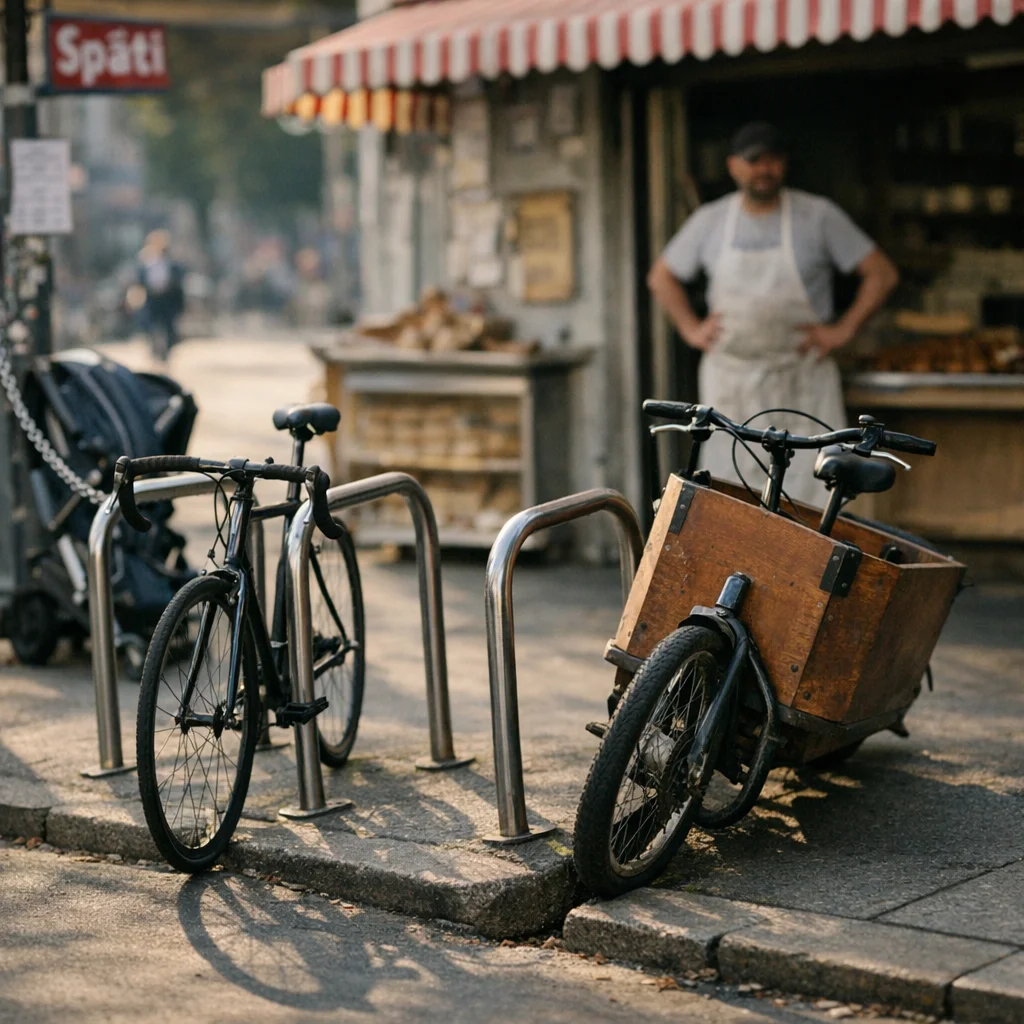
City workers installed a row of gleaming U‑shaped bike racks on Müllerstraße this spring and billed them as "universal" parking for every commuter. Inspectors, and then a growing chorus of exhausted parents and couriers, noticed the same tiny engineering decision across the new racks: a narrow 7–8 cm throat and a shallow downward camber that leaves heavy cargo bikes angling into the curb.
What sounded like civic generosity reads differently on the street. Mehmet Demir, who runs a small Turkish bakery off Leopoldplatz and uses a Bakfiets to lug trays to markets, said the racks are a performance — policy dressed in stainless steel.
"My bike doesn't fit upright. I either block the pavement or I risk the wheel slipping into traffic," Demir said. "It's like the city designed a test for my wallet and failed me." He added that some mornings he simply leaves the cargo bike at home and pays for a courier — an expense that eats into his margins and, according to him, into his willingness to go to work when his kid is sick.
Local HR managers are noticing the fallout. "We've seen more short‑notice sick days from staff who are juggling children or deliveries," said Simon Krüger, head of operations at a co‑working provider on Müllerstraße. "We tell people to bike to work for health reasons, then provide racks that only take single‑speed aesthetics. Hard to swallow." His company now offers storage inside the office — a perk that, he admitted, is meant to keep talent rather than solve a mobility problem.
District mobility planner Katrin Schulze defended the design as an anti‑theft measure that also "preserves pedestrian flow." She said security and maintenance budgets pushed the office toward a slimmer profile. "We wanted racks that are robust and easy to clean," Schulze said. "We didn't intend to exclude anyone." The district has received formal complaints and will review the model next month.
The technical choice exposes an earnest narrative at odds with its consequences: a policy that preaches universal access while favoring lightweight, expensive frames — the kind owned by remote designers who can store their bicycles inside lofts. Those who use bikes to work, haul, or parent end up squeezed out of a civic promise.
The city of course will call for a pilot, a consultation, maybe a tasteful stencil or two. Meanwhile, parents and couriers are improvising: illegal street locks, private storage deals with Späti owners, and the slow arithmetic of extra sick days or outsourced deliveries. Like Calvino's imagined plazas that flatter tourists, these racks are a neat architectural fable — visible, photogenic, and useless to the people doing the city's labor.
A district review is scheduled for late May; until then, the U's will keep being geometry tests for anyone not traveling light or privileged enough to keep their bike inside.