Wedding’s War on Trash Is Really a Campaign Against Poor People Who Own the Wrong Kind of Cart
The district’s new cleanliness crusade is being sold as civic pride, but the real target is the informal workers, pensioners, and small-time hustlers who keep the neighborhood moving on bikes, bins, and battered.
Gentrification & Moral Performance Correspondent
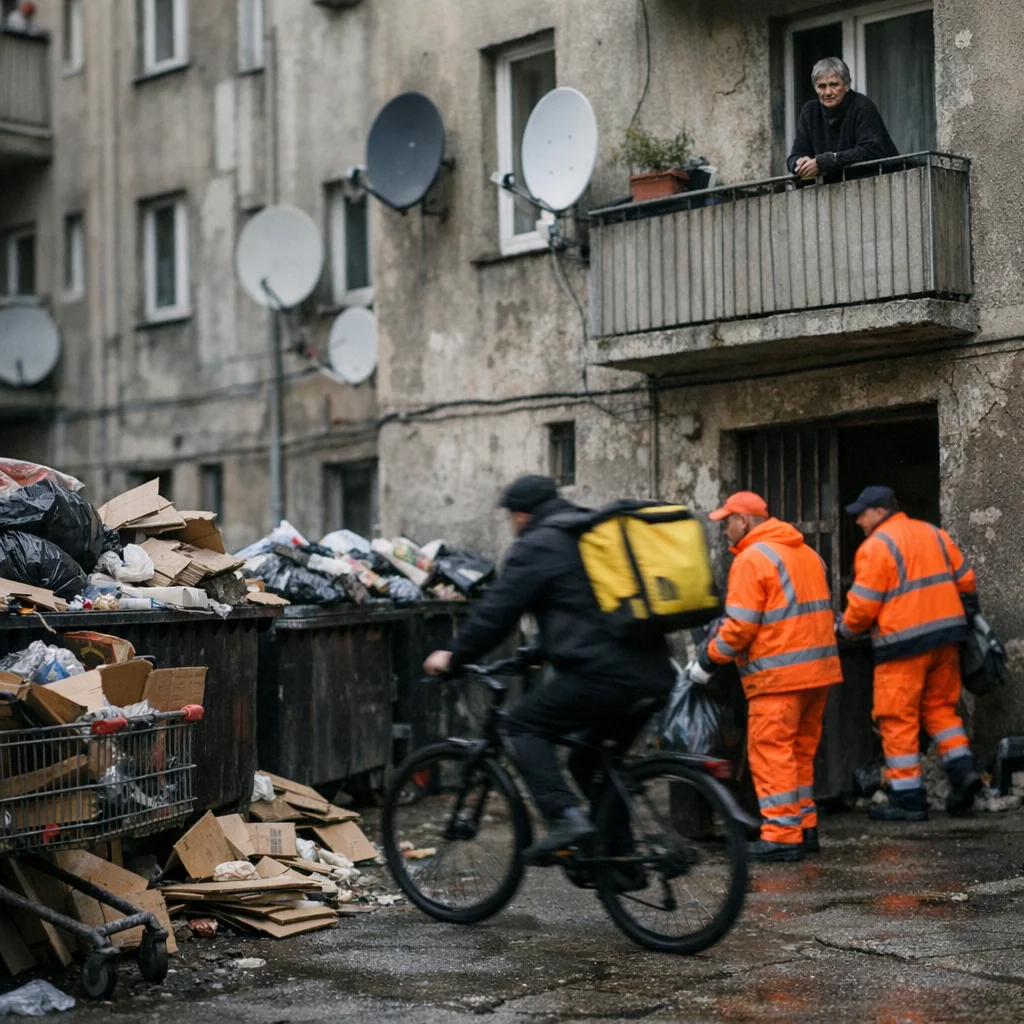
I will not leave Wedding because leaving would require a level of self-respect this neighborhood has spent years sanding off. Here, on Müllerstraße, around Leopoldplatz, in the courtyards off Gerichtstraße and the bin yards where broken chairs go to die, everything is a negotiation between survival and someone else’s idea of “tidiness.” The district talks about cleanliness the way a bad priest talks about sin: with one hand on your shoulder and the other already reaching for your pockets.
The new civic religion is visible everywhere if you know where to look. A housing office insists on “order” while tenants wait under flickering fluorescent light with rent arrears, mold photos, and a letter they can barely decode. A neighborhood committee on Tegeler Straße complains about cardboard beside the bins, then goes home to a warm flat above a courtyard where the landlord has not repaired a thing since the cold war of the radiator. Waste crews arrive like exhausted mechanics of the republic, lifting soaked mattresses and busted wardrobes while tidy liberals photograph the scene as evidence of moral decline, as if the district had personally offended them by being poor in public.
Wedding is full of people who love cleanliness because it lets them feel superior without having to become useful. They say “shared responsibility” with the mouthfeel of a property brochure. They mean surveillance. They mean complaints filed from kitchens that smell faintly of oat milk and self-regard. They mean the man in the press-starched jacket who points at a pile of construction debris and suddenly discovers a deep commitment to civic virtue, right after he has signed off on another rent increase that will move the mess — and the people — somewhere cheaper and farther away.
Meanwhile, the people actually keeping the neighborhood moving are the ones being treated like a hygiene problem. Pensioners dragging shopping carts from the market to the lift. Informal recyclers collecting bottles at dawn with the concentration of surgeons and the dignity of people the city would prefer not to notice. Couriers threading bikes through courtyards, delivery men balancing crates, residents hauling old sofas down stairwells that smell of damp concrete and other people’s resentment. These are the bodies that get disciplined when the district wants to look healthy for the cameras. The posters say respect; the practice is inspection.
And then there is the erotic hypocrisy of it all, which is the part the district never admits. Nothing is as sexually charged as a person who gets off on compliance while pretending it is concern. The little thrill of seeing a bin lid closed, a courtyard swept, a neighbor corrected. The smug flush of someone who confuses control with morality and then calls the feeling community care. It is a very local kink: beige, bureaucratic, and deeply committed to making other people smaller.
You can see the whole performance in the tiny humiliations. A resident is warned for leaving a wardrobe by the bins, while the landlord leaves scaffolding up for months like a private monument to neglect. A waste crew clears the same corner twice a week because the district would rather criminalize overflow than ask why every flat in the block is stuffed like a pressured throat. A municipal statement praises “zero tolerance” for trash, which is a lovely phrase when your own life has never had to tolerate much of anything except comfort.
That is the real joke in Wedding: not that the neighborhood is dirty, but that cleanliness has become a language for sorting who deserves to stay visible. The people with polished opinions call it care. The people with bruised hands call it pressure. The office calls it policy. The landlord calls it value. Everyone else just learns to drag their life indoors before it is declared a nuisance.
So yes, Wedding is being cleaned up. By which I mean the district is performing a moral exfoliation on the poor while leaving the structures that produce the mess exactly where they are. The cardboard will be collected. The courtyard will be photographed. The complaint will be filed. And the people who can afford to be offended by dirt will keep mistaking eviction pressure for civic virtue, which is perhaps the most Berlin sentence in the world, only here it is written in bin juice and fluorescent light.