Wedding Späti Introduces “Cocaine Pairing Notes” So Expats Can Finally Pretend This Is Food Culture
The cooler still sells warm beer, the register still sighs, but the unofficial menu now comes with tasting language, allergies, and an ethically confusing tip jar.
Street Commerce & Chemical Policy Reporter
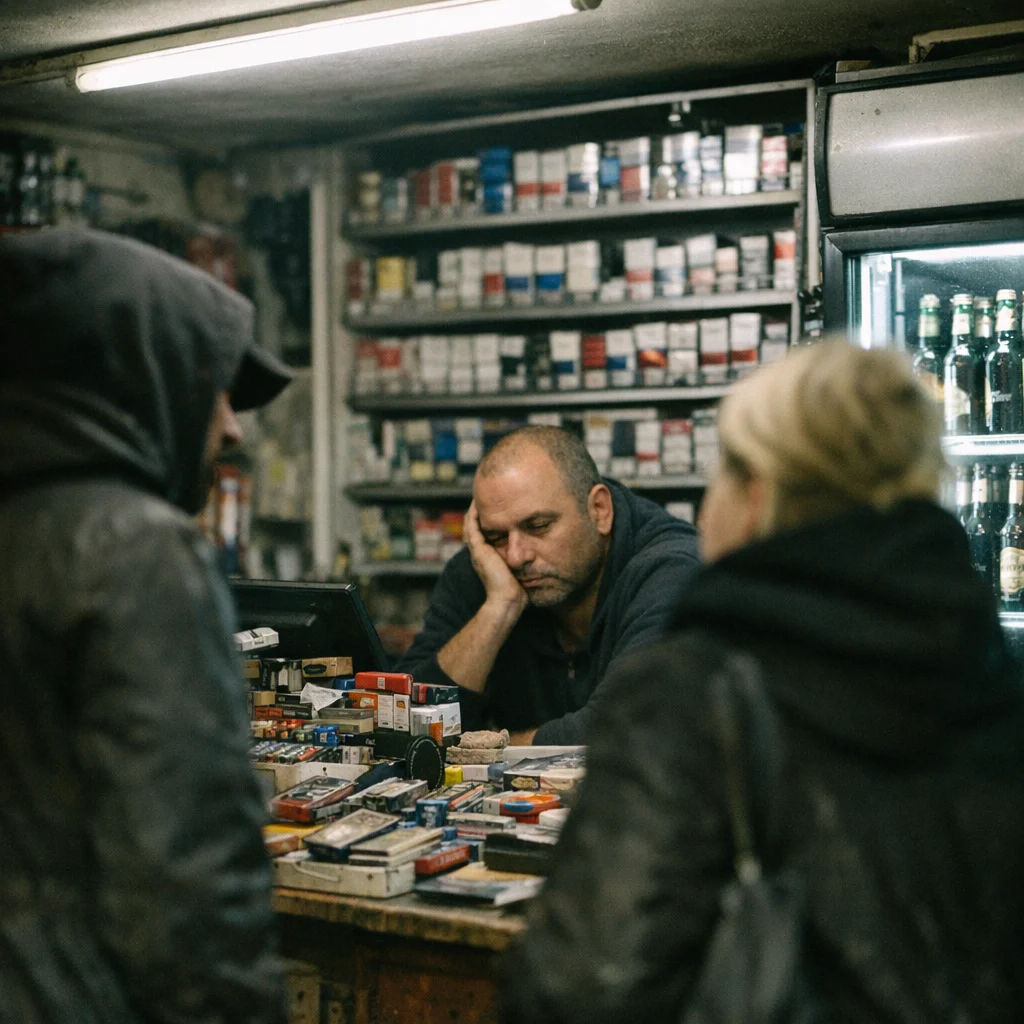
The Second Menu You Don’t See Until You’ve Made Eye Contact
In Wedding, the Späti is the last truly democratic institution. Anyone can enter: bankers, bartenders, Turkish grandmas buying bread at midnight like it’s a normal errand, and men with startup posture who look like they’ve never been hugged without a KPI attached.
And yet every Späti has an unofficial menu—an invisible chalkboard hanging somewhere between the cash register and your deteriorating standards. It’s not “advertised.” It’s understood. Like Wittgenstein said, if a thing can’t be said, it must be offered near the cigarette display.
You walk in for water. You walk out with a rolling paper, a nicotine pouch you can’t pronounce, and the strange sense you just had a customer-service interaction with late capitalism’s nervous system.
How to Order Without Ordering
The language of the unofficial menu is less “Can I have…” and more “I’m just looking.” Everyone is just looking. Even the people who come in with pupils the size of public housing windows.
Ordering goes like this:
- You pretend you’re deciding between two identical beers. This is your cover story.
- You make a casual comment about how long the night is going to be.
- Someone materializes who was not there one second ago.
- You learn the difference between “no worries” and “no.”
It’s like an early Godard film: lots of glances, no clear plot, and an ending that feels both inevitable and hard to swallow.
The “Sommelier” Has a Hoodie and a Legal Strategy
Wedding’s unofficial menu has evolved under gentrification pressure the way bacteria evolve under antibiotics: quickly, spitefully, and with branding.
Once, it was simple. Now it’s tiered, like a co-working membership. The newcomers want options, narratives, and “purity,” like they’re ordering artisanal moral failure.
Classics (For People Who Believe They’re Timeless)
- Weed: the neighborhood’s baseline hum. Used to be a leisure choice; now it’s a coping mechanism with merchandising.
- Mushrooms: for residents seeking “nature” while living next to a construction site that sounds like a drum circle losing custody.
Executive Selection (For People With Mouths Full of LinkedIn)
- Cocaine: purchased with the confidence of someone who calls this “networking.” Often accompanied by a sermon on breathwork.
Experimental Theatre (For People Doing a “Deep Dive” Into Their Worst Selves)
- GHB: the chemical equivalent of believing you’re the main character and then waking up in a plot hole.
No, none of this is “safe.” Yes, everyone speaks about it with the blasé certainty of a Michelin guide. This city will give you tasting notes for bad decisions. Wedding will even offer them at 3 a.m. beside the fridge that hasn’t closed properly since 2008.
Harm Reduction, But Make It Interior Design
In a genuinely impressive turn of conscience—or maybe fear of reviews—some Spätis now stock harm reduction supplies like it’s part of the brand portfolio.
A worker who’s watched three decades of Wedding mood swings told me, while scanning my bottle opener and my deteriorating optimism: “People don’t want to buy shame anymore. They want to buy wellness with plausible deniability.”
It’s true. The new Wedding shopper wants:
- Cleaner plastic
- Softer lighting
- A donation jar labeled ‘community’
This is gentrification at its most penetrative: the moment even vice needs a mission statement.
Meanwhile, longtime residents—especially Turkish families who used to treat the Späti as a practical stop for groceries and a five-minute chat—watch the transformation with the dead calm of people who know exactly how rents work. They don’t need “cocaine pairing notes.” They need a landlord who can read the room.
Every Transaction Includes an Existential Service Fee
The unofficial menu thrives because Wedding runs on shortages:
- sleep
- stability
- affordable rent
- any credible promise that tomorrow is going to be less stupid
So the Späti remains the emergency room of modern life: fluorescent, crowded, and staffed by people who’ve seen everything except a sincere apology.
Your drinks are warm, your cash is dwindling, and you’re negotiating in that famously Berlin way—pretending you don’t care while pushing for just a little more.
It’s not romance. It’s not rebellion. It’s urban policy in a bomber jacket.
And like Marx never said but definitely implied: when the base can’t pay rent, the superstructure buys a baggie and calls it self-discovery.