Weserstraße Shopfront Census Counts 19 Vape Stores in 600 Meters, Locals Wonder What’s Left to Breathe
A hand-drawn tally posted at 8:12 a.m. Tuesday outside a shuttered stationery store has turned one Neukölln block into a nicotine-themed urban planning seminar no one signed up for.
Neighborhood Commerce & Low-Grade Dread Reporter
Neukölln
On Tuesday at 8:12 a.m., someone taped a meticulously ruled sheet of A4 paper to the inside of the window at the former Papier & Schreibwaren Yaman, Weserstraße 31. In thick black marker it read: “VAPE SHOPS: 19 (COUNTED TWICE).” A second page, stapled beneath it, listed addresses in block capitals like a municipal confession.
By 10:03 a.m., a small crowd had formed, holding coffees and performing the particular Berlin facial expression that means both curiosity and preemptive disappointment.
“Look,” said Petra Lindner, 52, who has lived in the same third-floor walk-up at Weserstraße 42 since 1999. “We used to have three places for keys, two for tailoring, and one respectable store that sold only lightbulbs and sorrow. Now it’s mango ice, blueberry ice, and something called ‘unicorn milk.’ The street is basically a Lacan seminar where the object of desire is rechargeable.”
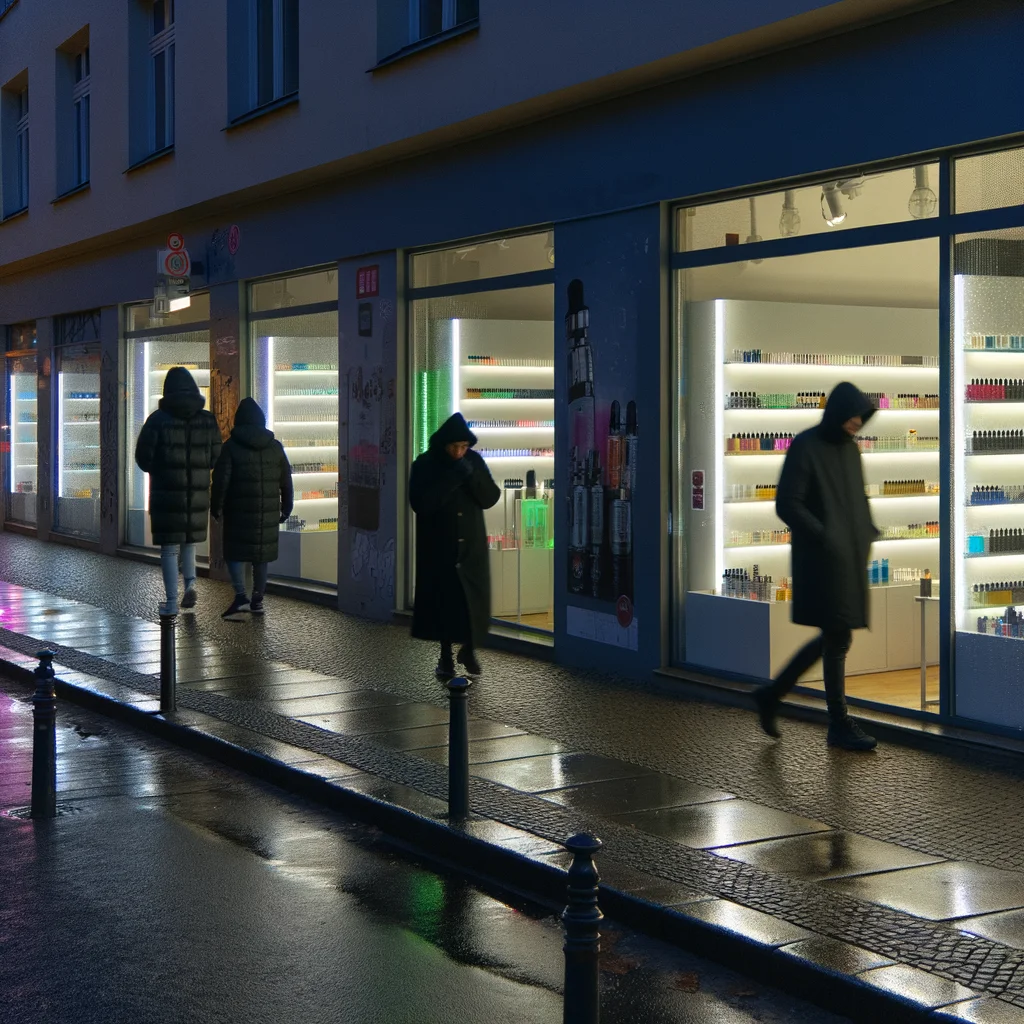
The clustering is easiest to observe between the corner of Weserstraße and Weichselstraße and the stretch toward Reuterplatz. At 9:17 a.m., this newspaper walked the block and counted nine separate retailers advertising vapes, “pods,” and a rotating array of brightly packaged nicotine salts. Several offered nearly identical layouts: white floors, glass display cases, ring lights reflected in the windows like interrogations.
“It’s not a shop, it’s a confession booth”
Aynur Demir, 34, pushing a stroller past Weserstraße 56, said she began noticing the change when her seven-year-old started playing “Open/Closed” by correctly guessing which storefront contained “cloud flavors.”
“He used to ask for gummy bears,” Demir said. “Now he asks why grown men need so many ‘long devices’ with glowing tips. I said it’s adult pacifiers, and immediately regretted the phrasing.”
Inside VaporHaus 66 (Weserstraße 66), owner Marco L. declined to give a last name “because Google reviews are a form of violence.” He defended the market saturation with calm precision.
“People think it’s one product,” he said, straightening a display of identical black tubes. “But it’s a whole ecosystem—coils, liquids, chargers, replacement glass. Berlin is a city that loves accessories. Honestly, it’s very Bauhaus: form follows function, and function follows cravings.”
He added that business is “stiff but stable,” a phrase he repeated as if it were meant innocently.
Landlord mathematics, now flavored
Residents interviewed blamed rent pressure, short-term leases, and landlords who prefer tenants that do not complain about plumbing, only about “throat hit.” A former barista space at Weserstraße 49 reportedly changed hands three times since October; one prospective tenant described the key exchange as “a quick in-and-out arrangement with a lot of paperwork and very little emotional warmth.”
The Neukölln district office provided a written statement at 4:26 p.m. Tuesday via email from an address ending in @bezirksamt-berlin.de. “The concentration of similar retail uses is a known phenomenon in commercial corridors,” the statement said. “Current instruments to intervene are limited. We encourage concerned parties to participate in local stakeholder dialogues.”
Stakeholder dialogue began immediately at 6:18 p.m. outside Vape Empire (Weserstraße 40), where two men argued about whether a tenth shop was “too many” while simultaneously taking turns inhaling from separate strawberry-flavored devices.
“I’m not judging anyone,” said Mustafa K., 41, a taxi driver from Wedding who was waiting for a friend near Reuterplatz. “But it’s weird. You walk one minute and you can sample every fruit that has ever been invented. My cousin tried to open a locksmith here. The landlord said, ‘Not enough repeat customers.’ Like human beings should keep losing keys on purpose.”
As darkness fell at 7:03 p.m., the block’s illuminated interiors glowed in alternating cool-white rectangles. From a distance, Weserstraße resembled a gallery row—if Marcel Duchamp had decided the readymade wasn’t a urinal, but a perfectly legal cloud of peach-scented regret.
“Give it a year,” Lindner said, folding the vape census list back into its plastic sleeve as if protecting evidence. “Either they’ll all close, or we’ll finally accept that the street’s main export is exhaling. And honestly? That’s hard to swallow.