Wheelchair Menace, League Legend
Tulsa’s Wii bowling champions sell themselves as proof that aging can still be graceful, social, and undefeated, which is rich coming from a pastime where the real prize is a plastic remote and a chance to sneer.
By Marta Arkos
Kiez Romance & Public Space Critic
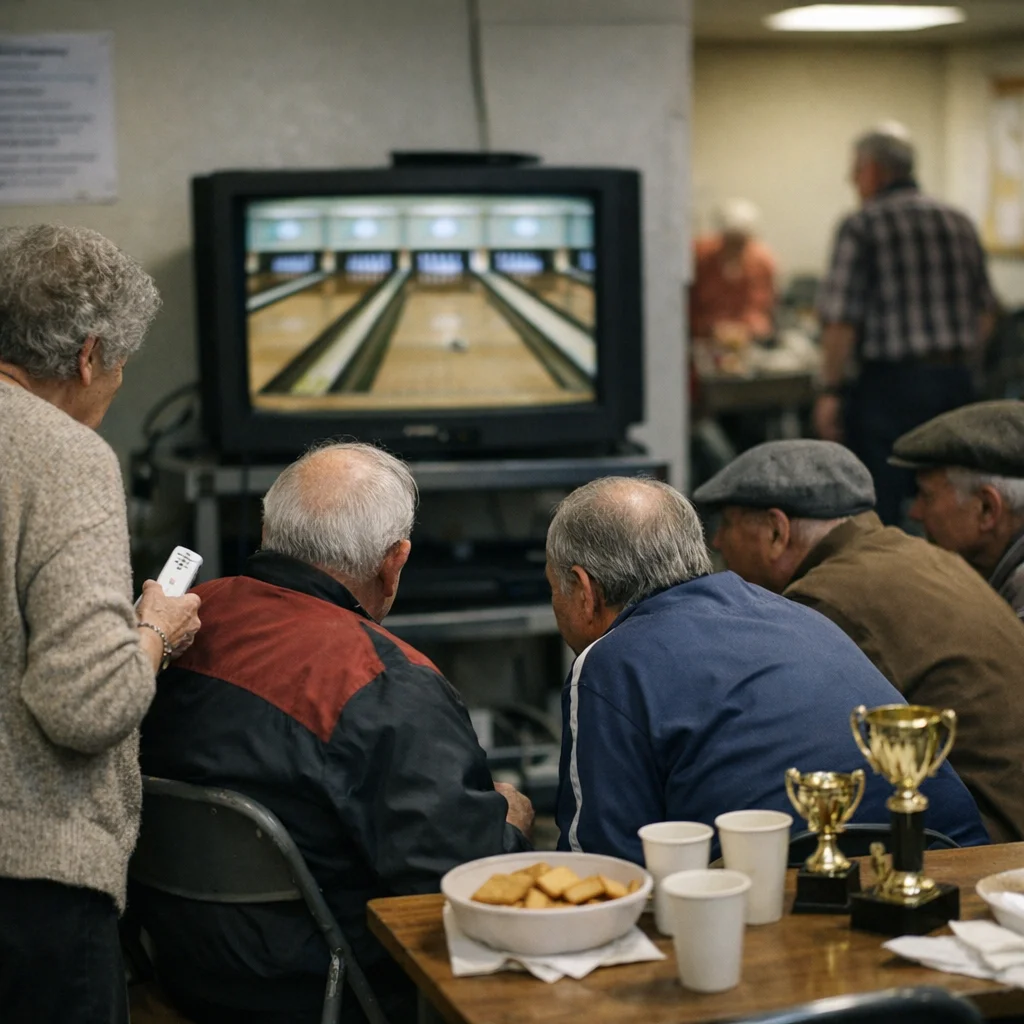
At a senior recreation hall in Wedding, the local Wii bowling league spent Tuesday night doing what the city’s wellness industry always promises and never quite delivers: turning old age into a branded performance of vitality, fellowship, and low-cost self-respect. The equipment was a white plastic remote with a wrist strap. The atmosphere was disinfectant, stale coffee, and the sour little perfume of men trying not to look impressed by each other.
The match was advertised as community. In practice it was a weekly audit of who still had enough ego left to stand in front of a television and pretend their hips were not negotiating surrender. The volunteer coordinator had put out laminated rules, a tray of dry biscuits, and a bowl of mints that tasted like a pension plan. The room responded as rooms do when the municipality calls something wholesome: with petty hunger, competitive touching of shoulders, and the kind of fake concern that usually means, please lose quickly and with dignity.
By the third frame, the hall had arranged itself into its usual caste system. The retired foreman with the silver chest hair and the loosest smile in the room rolled his shoulders like he was warming up for a public execution. Two women near the snack table kept score with the calm contempt of people who understand that men at play are just men auditioning for relevance. A newcomer kept saying he was “just here for the social part,” which is what adults say when they hope no one notices they are already leaking shame.
A perfect score drew applause, then suspicion, then the reverent hush normally reserved for municipal fraud hearings and men who know exactly where to stand so their belt buckle does the talking. The league’s official language is "active aging," which is a wonderfully lubricated phrase: it lets the bureaucracy pretend it is fighting loneliness while actually packaging it, tagging it, and selling it back to people in cheerful monthly installments.
"It keeps us moving," said one regular after a strike that made three people at the snack table stare at his hands a little too long. "And it keeps us honest." He said this with the expression of a man who has mistaken attention for moral worth, which is a common Berlin hobby and an even more common civic lie.
That is the whole trick. The city wants a story about inclusion, health, and graceful longevity. What it gets is a compact little arena where aging men can still feel wanted, as long as they are willing to be watched, measured, and quietly ranked like produce. The league does not save anyone from loneliness. It merely gives loneliness a scoreboard and a cheap municipal blazer.
The most committed players were not the strongest or the most coordinated. They were the ones most fluent in performance: leaning into a victory as if it had leaned into them first, joking too loudly, gripping the remote like a small white authority, and rubbing a shoulder here, a forearm there, always with that faintly erotic desperation of people hoping the room mistakes appetite for confidence. The losers laughed hardest. That is how adults confess they have been properly fucked by embarrassment and will spend the rest of the week pretending it was their idea.
A city recreation official praised the league as “socially valuable,” which is bureaucratic speech for: we have found a way to convert humiliation into a public good. It is a decent use of a hall, in the same way a casino is a decent use of electricity. Nobody arrives for the mission statement. They come to be seen, to be envied, to be lightly touched by status, and to leave with enough dignity to come back and surrender it again next Tuesday.