When VCs Walk Into Your Local: Seed Pitches, Kombucha Taps, and the Quiet Theft of Cheap Beer
A micro‑fund bought a clutch of battered pubs in Wedding, replaced the jukebox with a deck, and called displacement 'community activation.'
By Ida Venge
Startup Wake & Kiez Decay Correspondent
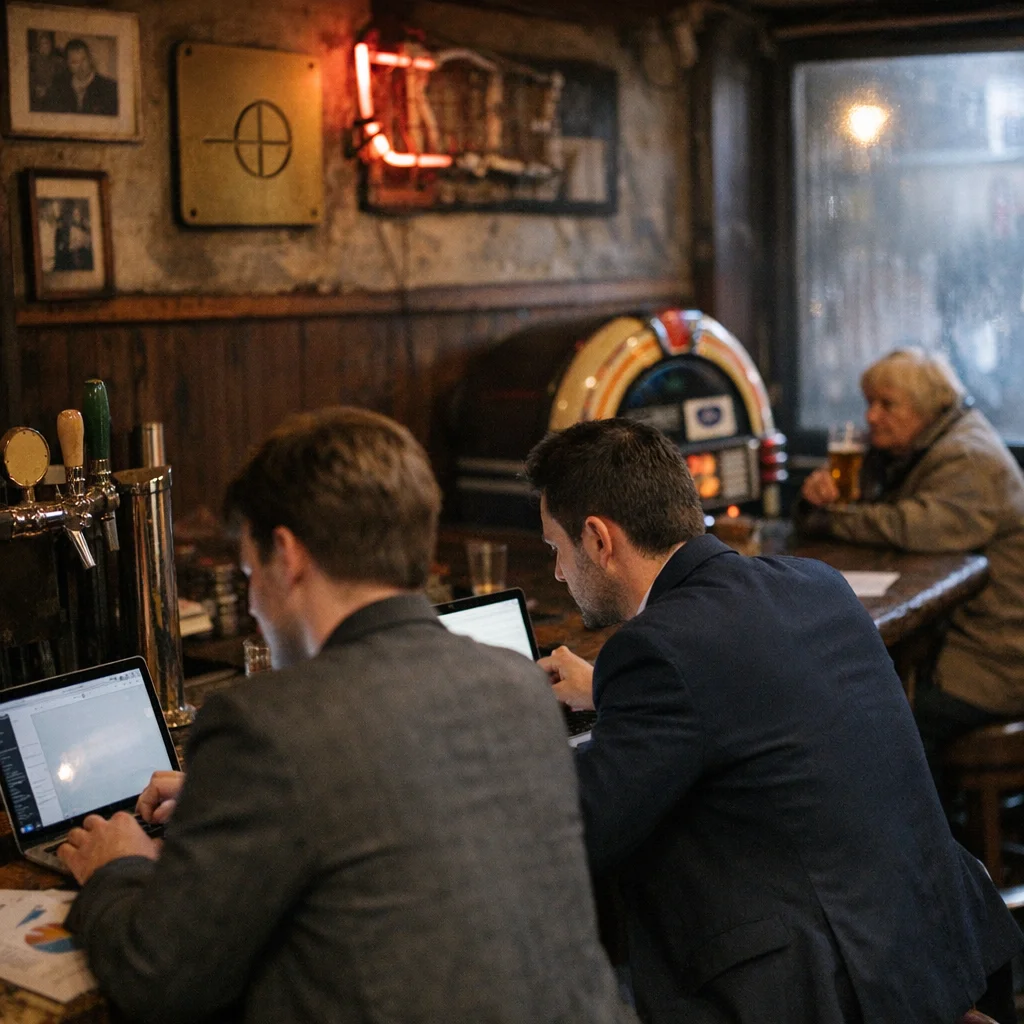
They arrived like consultants at a wake: polite shoes, earnest slide decks, and the conviction that subculture is a market inefficiency. Over a three‑week period a tiny venture capital syndicate bought three corner pubs whose main innovations had been a sticky countertop and a dartboard with history in the cracks.
At first the changes were performative—a neon logo swapped for Helvetica, a 'community' mission statement printed on recycled paper. Then came the optimizations: happy hour replaced by A/B tested pricing, the chalkboard specials turned into a QR code funnel, and the dartboard’s numbers were quietly relabeled as quarterly targets. The surreal detail—most locals noticed before they believed it—was that the bar’s ancient jukebox began accepting contactless payments and, on its second night, spat out a one‑page investor memo instead of a Tom Waits track.
The fund called it 'heritage productization.' The founders called it 'scaling local intimacy.' People who once complained about gentrification now ran panels about 'inclusive place‑making' from the upstairs lounge while a kombucha tap bled artisanal vinegar into a pint glass. The old crew at the bar—the men and women who knew each other's grandparents and how to call the tram when it skipped—were offered 'engagement packages' and a loyalty app that tracked emotional response.
This is not merely aesthetic vandalism. The syndicate measured foot traffic, optimized seating density, and introduced tiered memberships. Rent pressure, once structural, became experiential: an entry fee disguised as a cultural contribution. In the meantime, a leftist Instagrammer with a trust fund gave a talk on 'resistance' and posted a selfie; it got three hundred likes and one coffee voucher from the new place.
Intellectually this reads like a Baudrillard case study—simulacra replacing lived reality until the copy is the only thing left to praise. Walter Benjamin would have thrown his cigarette into the void and gone home.
The punchline is simple and indecently efficient: venture capital never had to evict anyone with force. It simply stroked egos, tightened margins, and waited for the cheap pint to finish. The last time someone asked for a 2‑euro beer, the bartender apologized—politely, with a product roadmap—and the crowd clapped.
They promised 'revival.' What they delivered was a subscription model that tasted faintly of vinegar and second‑hand sincerity.